
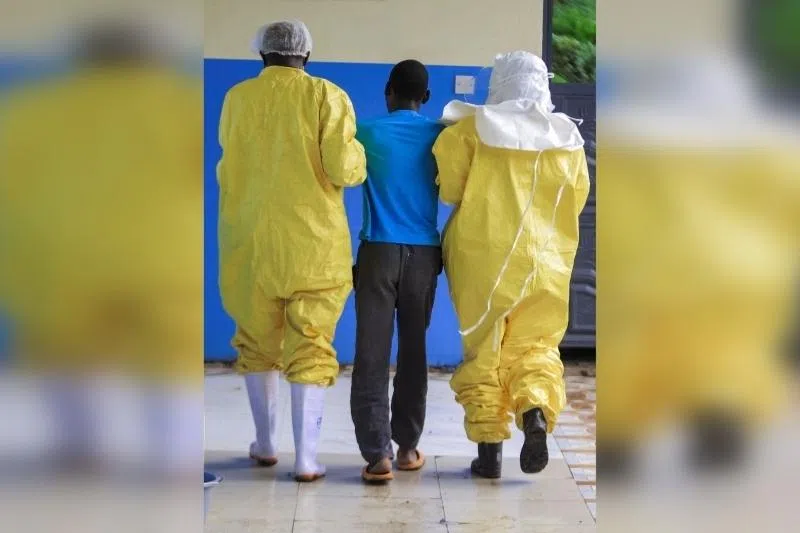
The Challenge of the Bundibugyo Strain
The current Ebola escalation in eastern Congo represents a critical failure in pharmaceutical preparedness. Unlike more common outbreaks caused by the Zaire ebolavirus, for which effective vaccines and monoclonal antibody treatments have been deployed, the current crisis is driven by the Bundibugyo strain. This rarer variant lacks an approved vaccine, leaving healthcare workers and the public without the primary tools used to truncate modern epidemics.
Dr Jean Kaseya, director-general of the Africa Centres for Disease Control (CDC) and Prevention, highlighted the severity of this deficit: “It’s like you are a soldier. You go to fight without ammunition. We have to rely on public health measures.”
The absence of a tailored medical countermeasure means that containment depends entirely on traditional epidemiological interventions-contact tracing, isolation, and behavioral modification-all of which are being hindered by systemic instability in the region. The World Health Organization’s determination of the epidemic as a public health emergency of international concern places the Bundibugyo outbreak under the same legally binding International Health Regulations that govern states’ obligations on surveillance, reporting, and cross-border control, raising the stakes for national authorities and donors alike.
Surveillance Gaps and Systemic Fragility
The scale of the outbreak is compounded by a significant failure in surveillance. In the epicenters of the Ituri province, the ability to track the virus has been overwhelmed, creating a dangerous gap in the response chain and undermining the early-warning systems on which both national governments and international partners rely.
| Metric (as of May 22) | Recorded Data |
|---|---|
| Confirmed Infections | 91 |
| Suspected Cases | 867 |
| Probable Deaths | 204 |
| Identified Contacts Under Monitoring | 1,745 |
| Contact Tracing Success Rate | Approximately 20% |
These figures, already stark, are widely viewed by responders as an undercount. In parts of Ituri, insecurity has limited access to villages where unusual clusters of deaths have been reported, making it difficult for national surveillance teams to distinguish between confirmed cases, probable cases, and community rumors. That opacity not only blunts the effectiveness of local containment; it also complicates regional risk assessments and the allocation of scarce international resources.
Infrastructure deficits have further complicated clinical management. In Bunia, the lack of dedicated Ebola treatment centers has forced the use of ordinary hospital wards, increasing the risk of nosocomial transmission and eroding public confidence in health facilities. This logistical failure is matched by a critical shortage of essential supplies.
“Why are we still lacking PPE?” Dr Kaseya questioned, referring to the gap between international funding pledges and the arrival of personal protective equipment, laboratory supplies, and treatment space at the frontline. For ministries of health trying to implement national preparedness plans, the lag between announcements in donor capitals and actual deliveries on the ground has become a decisive variable in whether the response gets ahead of the virus or remains perennially behind it.
Cross-Border Health Security and Regulatory Response
The geographic location of the outbreak near the Ugandan border has transformed a national health crisis into a regional security threat. The mobility of populations through mining and trade corridors makes containment nearly impossible without synchronized international policy and practical cooperation at major land crossings.
The following factors are currently accelerating the risk of wider transmission across East and Central Africa:
- Porous Borders: Unregulated movement between Congo, Uganda, and South Sudan, including informal footpaths and river crossings that sit outside formal immigration controls.
- Economic Migration: High-traffic mining and trade corridors that draw workers from multiple provinces and neighboring countries, increasing the likelihood of long-distance spread.
- Humanitarian Instability: Widespread population displacement due to conflict, which weakens routine health services and complicates screening or follow-up.
- Regional Spread: Uganda has already reported five confirmed infections, triggering its own emergency protocols along the border.
In response, the Congolese transport ministry has suspended all commercial, private, and special flights to and from Bunia, allowing only authorized humanitarian and medical aircraft. The measure underscores the growing role of transport and aviation regulators in front-line outbreak control and puts immediate pressure on humanitarian logistics chains that depend on commercial lift.
Simultaneously, the US has implemented enhanced airport screening for travelers from Congo, Uganda, and South Sudan, while deploying disaster response teams and emergency funding. These steps are calibrated to align with obligations under the International Health Regulations, which seek to balance the need to prevent transnational spread with the imperative to avoid unnecessary interference with trade and travel. For policymakers in the region, the Bundibugyo outbreak is fast becoming a test of whether existing cross-border coordination mechanisms can function at the speed of a fast-moving epidemic.
Sociocultural Barriers to Infection Control
A significant hurdle in the containment effort is the clash between clinical safety protocols and deeply embedded cultural practices. Ebola is primarily transmitted through direct contact with infected bodily fluids, making traditional burial rites a primary driver of transmission when bodies are washed, dressed, and touched by mourners.
Tensions have already peaked near Bunia, where clashes between grieving families and health workers led to the burning of Ebola treatment tents operated by the aid group Alima. Dr Kaseya noted that these conflicts often stem from the desire to honor deceased community leaders: “This young person was a leader of a group. They have their own way to celebrate their leaders when they pass on.”
The burden of transmission is disproportionately high among women, who represent more than 60 percent of suspected cases. This is largely attributed to gendered societal expectations regarding the care of the deceased and of the sick at home, placing women at the center of both caregiving and exposure. “To show that you really loved your husband,” Dr Kaseya explained, “you need to touch the body.”
To mitigate this, the Africa CDC is shifting its strategy toward community-led engagement. By partnering with religious and local leaders who can communicate in local languages and simple terms, health officials hope to modify behaviors without alienating the population. The approach is intended not only to improve compliance with safe-burial protocols but also to rebuild trust in state and international responders after years of conflict and uneven service delivery.
“When you start to use local leaders who are not medical doctors, who can speak in a more simple way, use local language, give more examples, then we can achieve something,” Dr Kaseya stated. He emphasized that the goal is not to abolish ceremonies, but to adapt them: “They can still have the funerals, but differently.” For officials drafting local bylaws and enforcement measures, that distinction-adapting rather than banning-may prove pivotal to avoiding further confrontation.
Financial Requirements for Regional Stabilization
The financial scale of the required response is immense, with a total request of US$319 million for emergency preparedness. The majority of these funds-roughly 84 percent-are designated for Congo and Uganda, with the remainder allocated to other high-risk neighboring states that must reinforce surveillance, border health posts, and referral systems before the virus arrives.
Critical spending priorities include:
- Infection Prevention and Control (IPC): Procurement of PPE, sterilization equipment, and training for frontline staff across public and private facilities.
- WASH Programs: Implementation of water and sanitation infrastructure in health centers and high-risk communities to reduce transmission.
- Case Management: Establishing dedicated treatment centers to isolate patients from general wards and ensure standardized clinical protocols.
- Surveillance and Logistics: Expanding testing capacity, data systems, and contact-tracing capabilities, including secure transport for samples and patients.
While partnerships, such as a recent agreement with India to deliver 20 tons of medical supplies, provide some relief, the speed of disbursement remains a primary concern. Finance ministries across the region are being asked to reallocate budgets in real time, often before pledged external funds have cleared, amplifying domestic political pressure over competing priorities.
“We need to act with urgency,” Dr Kaseya concluded. “We need to make sure pledges that we got today can be translated into concrete money very quickly.” For governments and international lenders, the Bundibugyo crisis is sharpening a familiar dilemma: whether to treat outbreak funding as a temporary line item, or as part of a longer-term investment in health security that will shape the region’s resilience long after this epidemic ends.
Related reading
