
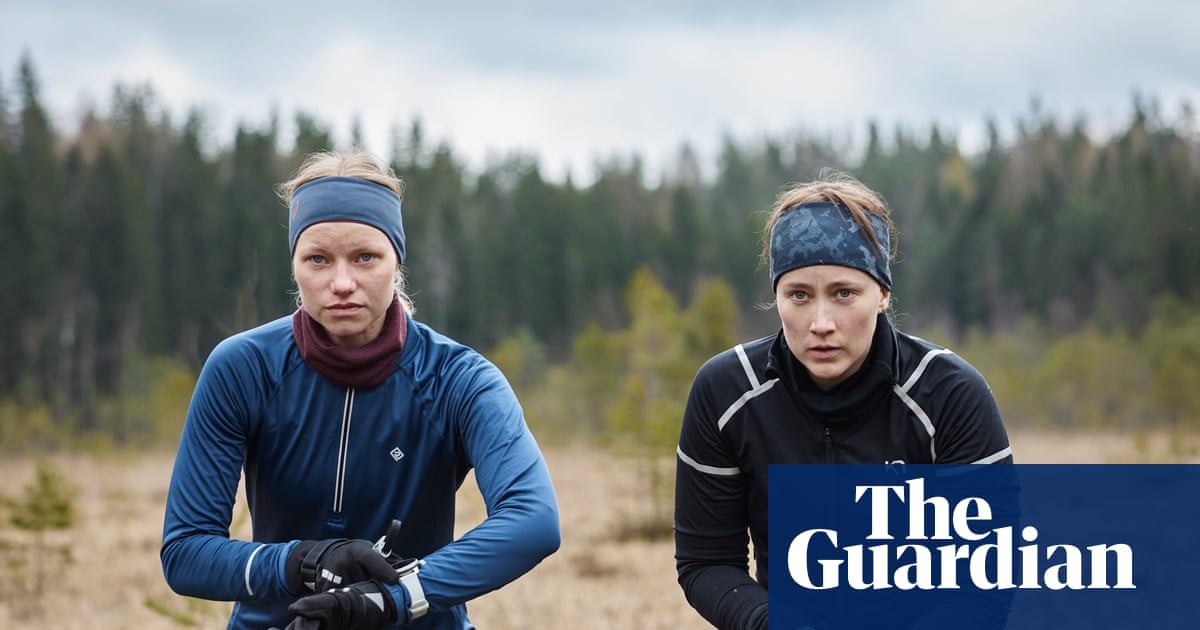
HELSINKI – Finnish actress Roosa Söderholm has won the best performance award at the Canneseries festival for her role in the psychological drama Guts, a series detailing the high-pressure environment of professional female cross-country skiing.
The production, commissioned by the Finnish public broadcaster Yle, arrives as part of a broader industry trend incorporating winter sports into scripted narratives, following the release of the Canadian ice hockey series Heated Rivalry. By utilizing the cultural concept of sisu-a Finnish term for inner strength and perseverance-the series aims to capture an international market through a blend of regional specificity and universal themes of competitive ambition.
Production Strategy and Thematic Framework
Created and written by Jemina Jokisalo, the series is billed in Finland as “Black Swan in snow,” referencing Darren Aronofsky’s 2010 film. The narrative focuses on the mental and physical toll of elite athletics, incorporating elements of female rivalry, hallucinations, and the complex power dynamics between athletes and male coaches within tightly controlled training systems.
Suvi Mansnerus, executive producer and commissioner for Yle Drama, stated that the project was designed to appeal to both domestic and international audiences, at a moment when European public broadcasters are under sustained pressure to justify spending on high-end drama. Mansnerus emphasized that the series is not primarily a sports show, but rather utilizes athletics as a structural device for storytelling and as a prism for examining gender, power and mental health in elite systems.
“It reveals the uniqueness of athletes and their ultimate competitive spirit, something we can relate to, but never fully understand or experience ourselves,” Mansnerus said. “Cross-country skiing, with its extreme physical and mental demands, provides the perfect backdrop for exploring these intense human stories.”
The series also reflects a wider shift in how publicly funded media address sport: not only as competition and national branding, but as workplaces governed by codes of conduct, safeguarding rules and broader equality obligations. In Finland, Yle’s remit is anchored in the country’s Act on Yleisradio Oy, which requires the broadcaster to promote education, culture and equality-an obligation that gives dramas such as Guts a quasi-institutional role in shaping public debate around women’s sport and high-performance coaching cultures.
Performance, Technical Preparation and Athlete Realism
Lead actress Roosa Söderholm spent two years in training with expert coaches to acquire the technical skills required for the role, working to mirror the biomechanics and race routines of professional skiers rather than relying on body doubles. Söderholm, who had basic skiing knowledge from childhood but lacked professional technique, continued her preparation through the summer using roller skis and targeted strength training to approximate the year-round conditioning schedule of national-team athletes.
Regarding the international recognition at Canneseries, Söderholm said, “It is quite rare for Finnish people to be awarded internationally, so I am quite speechless about it still.” She described the Cannes win as an important signal that stories about women’s sport, and about the psychological cost of chasing medals, can travel beyond traditional Nordic markets.
Söderholm also noted that the show’s focus on women’s sport remains a rare occurrence in television, despite growing policy concerns about safeguarding, harassment and mental health in elite training environments. Those issues have increasingly been addressed in national sports strategies across Europe and by international bodies such as the International Olympic Committee, which has published athlete-safeguarding guidelines that inform how federations and, indirectly, dramatists portray coach-athlete relationships and duty of care on screen.
Broadcaster Pipeline and Public-Media Strategy
The success of Guts aligns with Yle’s broader programming strategy to invest in serialized drama that can contribute to Finland’s cultural export goals while meeting domestic expectations of impartial, diverse storytelling. The broadcaster has scheduled an additional drama centered on figure skating for its autumn programming, extending its focus on ice and snow sports as a way to interrogate themes of body image, performance pressure and national identity.
Yle has scheduled a figure skating drama for its autumn release, positioning the two series as companion pieces in a longer-term push to build a slate of sports-related dramas that speak to both entertainment markets and the public-interest mandate of European public service media.
Worth a look
