
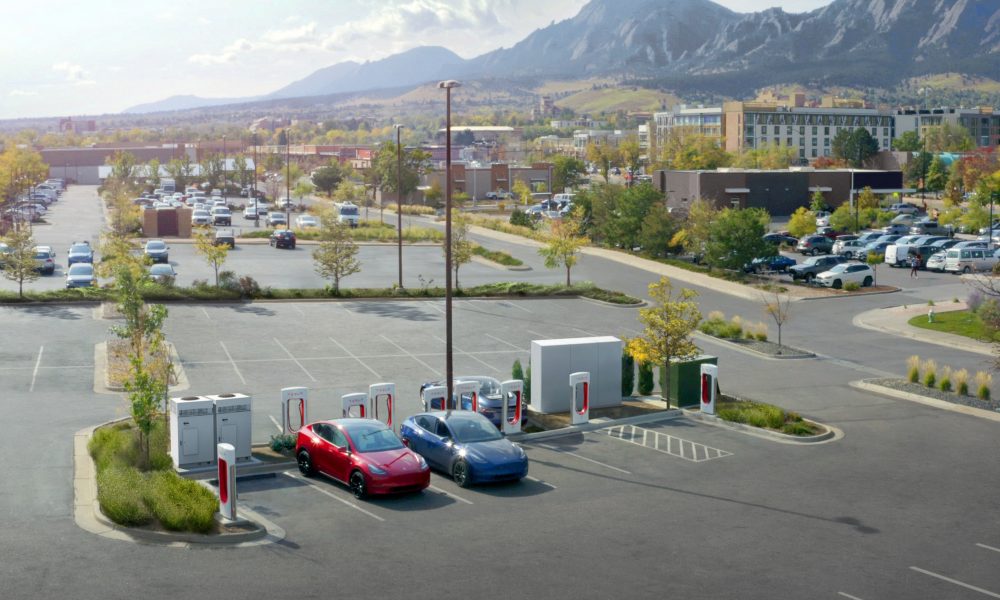
AUSTIN – Tesla has shifted its incentive strategy for the North American market, introducing a complimentary Supercharging program for its mass-market sedan to stimulate sales volume.
The move marks a departure from previous corporate patterns where free charging was reserved for high-margin flagship vehicles. By applying this incentive to the Model 3, the company is leveraging its proprietary charging network to maintain demand for its entry-level performance tiers and to differentiate its pricing strategy from more conventional cash rebates and dealer discounts.
The strategy addresses a tightening electric vehicle market where pricing pressure and the volatility of federal subsidies have impacted consumer adoption rates. By bundling services rather than reducing the manufacturer’s suggested retail price (MSRP), Tesla aims to protect its brand equity and residual vehicle values while signaling to investors that headline pricing for core models remains intact.
The terms of the current incentive are as follows:
- Eligibility: New orders placed on or after April 24, 2026, with delivery typically required within a limited promotional window.
- Applicable Models: Model 3 Premium (Long Range) and Model 3 Performance.
- Exclusions: Existing vehicle owners, the base Rear-Wheel Drive trim, and most commercial or fleet purchases.
- Benefit: One full year of complimentary Supercharging access for the original purchaser, subject to Tesla’s standard Supercharger terms of use.
The offer was first flagged in a social post from Tesla’s regional account:
New orders of Model 3 Premium & Performance now come with 1 year of free Supercharging 🇺🇸
Also, all Teslas pay the lowest Supercharging rates – all others pay a ~40% premium or need a subscription
– Tesla North America (@tesla_na) April 24, 2026
Charging Infrastructure Economics
The incentive underscores how central the Supercharger network has become to Tesla’s business model, functioning as both a customer amenity and a competitive moat. While Tesla has opened segments of its network to other manufacturers through its self-defined North American Charging Standard (NACS), it maintains a tiered pricing model that privileges its own hardware and software ecosystem.
In parallel, the company is working with federal and state agencies seeking to qualify a portion of its network for public funding under the U.S. National Electric Vehicle Infrastructure program, which is administered by the Federal Highway Administration and governed by guidance under the National Electric Vehicle Infrastructure (NEVI) Formula Program. That framework requires open-access charging and standard connectors on subsidized stations, putting regulatory parameters around how far Tesla can differentiate pricing for Tesla and non-Tesla drivers at qualifying sites.
Tesla vehicles currently access the lowest available charging rates. Non-Tesla electric vehicles utilizing the network pay a premium of approximately 40 percent per kWh or are required to purchase a monthly subscription to reach standard rates, a structure that effectively bundles network loyalty into the original vehicle purchase decision.
For the consumer, the financial impact of the one-year incentive is tied directly to annual mileage and the share of charging done away from home. For a typical driver logging between 12,000 and 15,000 miles per year, and with average fast-charging costs ranging from $0.40 to $0.50 per kWh, the avoided expense is estimated between $800 and $1,200-material enough to offset a portion of higher interest rates or the loss of a tax credit in the first year of ownership.
Inventory, Policy Headwinds and Demand Management
The decision to target the Model 3 Premium and Performance variants suggests a strategic effort to clear specific inventory and maintain production cadence at Tesla’s North American plants. The company has historically used charging incentives to move units before the introduction of refreshed hardware or software upgrades, particularly when facelifts or new battery configurations are expected to blur price points in the lineup.
Beyond inventory management, the incentive serves as a tactical response to the loss of the $7,500 federal EV tax credit last year for certain configurations under rules set by the Internal Revenue Service and the U.S. Department of the Treasury pursuant to clean vehicle provisions in the Inflation Reduction Act, detailed in the government’s official federal clean vehicle credit guidance. Those rules tightened battery sourcing and assembly requirements, and several Tesla models cycled in and out of eligibility as guidance evolved, adding uncertainty for buyers who had previously assumed the credit would reliably reduce the effective purchase price.
The move also aligns with Tesla’s data acquisition goals. Increased utilization of the Supercharger network by a larger fleet of Model 3 vehicles provides more real-world data points on charging behavior, route selection and software performance, which the company uses to refine its autonomous driving algorithms, in-car energy management and network load balancing. That operational data has become strategically important as regulators in the United States and abroad scrutinize the safety and transparency of driver-assistance systems.
As other automakers expand their own charging partnerships and offer aggressive lease incentives to keep monthly payments competitive, Tesla is sharpening its pitch around total cost of ownership. For new adopters, a year of no-fee fast charging directly reduces the perceived operating cost of long-distance travel at a moment when some potential buyers remain concerned about charging reliability and price volatility on third-party networks.
The current market condition is defined by a transition toward more standardized charging infrastructure across North America, as public agencies and private operators converge on common connector formats and interoperability rules. Within that landscape, Tesla is using preferential network access and targeted incentives not only as a sales tool, but as a way to navigate policy headwinds, preserve pricing power and keep its flagship mass-market sedan at the center of the EV adoption curve.
