
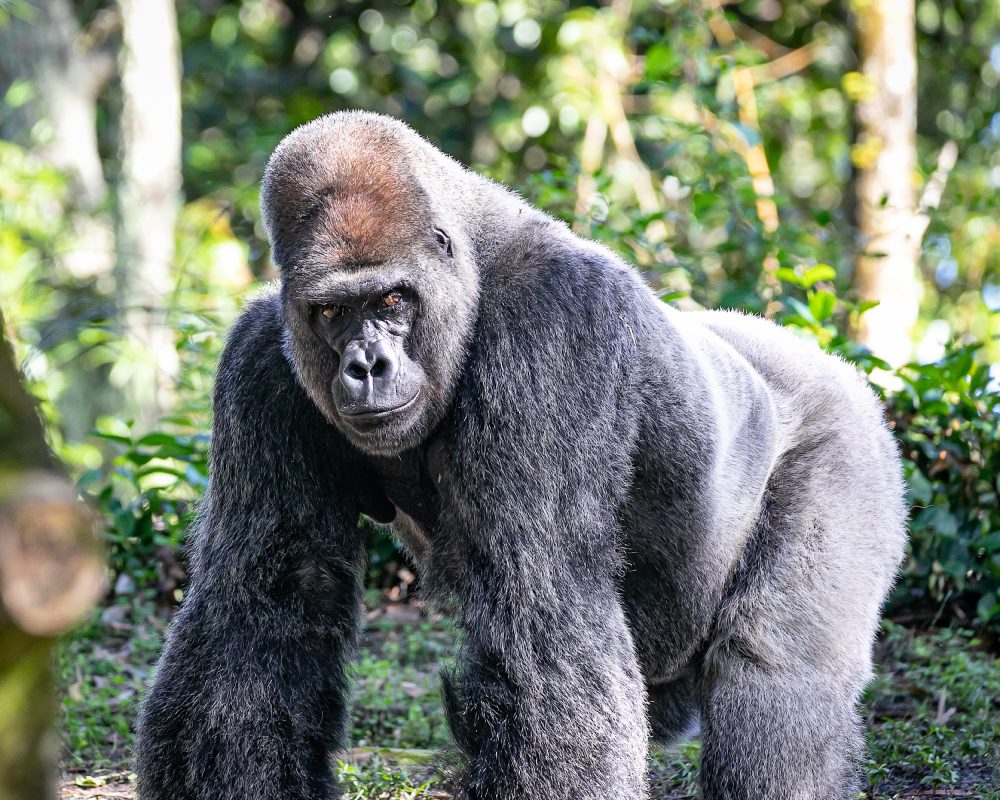
LEIPZIG – Researchers have unveiled the largest open-access record of great ape cognitive experiments to date, consolidating 18 years of fragmented research into a single, standardized resource designed to decode how primates think, learn, and make decisions.
The compilation of the EVApeCognition Dataset represents a significant shift in primatology, moving the field away from isolated, short-term studies toward a longitudinal understanding of ape intelligence. By aggregating data from 2004 through 2021, the project allows scientists to track the same individual animals across multiple studies, providing a window into cognitive development that was previously obscured by the episodic nature of academic publishing.
This effort arrives as the global scientific community grapples with a “reproducibility crisis,” where the lack of raw data often makes it impossible to verify old findings. By adhering to the FAIR (Findable, Accessible, Interoperable, and Reusable) principles, the project ensures that rare behavioral data is preserved against the common “data decay” seen when researchers move institutions or digital files are lost. It also aligns with emerging expectations from major funders and journals that research data should be made accessible under frameworks such as the European Union’s open science policy, which is reshaping how publicly supported science is governed and audited.
Standardizing a generation of research
The dataset was led by Dr. Alejandro Sánchez-Amaro of the University of Stirling, utilizing records from the Max Planck Institute for Evolutionary Anthropology in Leipzig, Germany. The team synthesized 262 experimental datasets derived from 150 separate publications into a common format that can be queried and re-analyzed.
The scale of the archive addresses a chronic limitation in primate research: the small sample size. Because great ape studies often rely on a limited number of available subjects, the results of a single study can be skewed by the unique personality or willingness of one animal. That, in turn, has made it difficult for policymakers and ethics committees to lean on individual primate studies when drafting animal welfare or research-use guidelines.
“Most studies therefore focus on specific questions and tend to produce relatively small datasets,” Sánchez-Amaro said.
To mitigate this, the EVApeCognition Dataset tracks 81 individual apes, 78 of whom participated in more than one project. This longitudinal approach allows researchers to distinguish between a momentary behavioral fluke and a stable cognitive trait, and to ask whether an individual’s performance changes as environments, group structures, or testing conditions shift.
The curation process involved rigorous standardization to ensure comparability across nearly two decades of work. The records include:
- Individual animal identifiers and species (chimpanzees, bonobos, gorillas, and orangutans)
- Biological markers including sex, age, and in many cases life-history details
- The specific role of the animal within each study and task type
- Detailed trial and session logs, including performance measures and timing
After a comprehensive review and author approval process, the team successfully recovered 61% of the eligible published studies for reuse. Researchers say that figure both demonstrates what is possible with coordinated archiving and highlights how much legacy material remains vulnerable to loss.
Tracing the evolutionary divide
The primary objective of the archive is to sharpen the contrast between human cognition and that of our closest living relatives. Chimpanzees and bonobos share approximately 98.8% of their DNA with humans, while gorillas and orangutans provide a broader evolutionary perspective due to their more distant divergence.
By comparing these four groups, researchers can identify “deep” cognitive skills-those inherited from a common ancestor-and “derived” skills, which evolved specifically within the human lineage. This distinction is critical for determining whether human intelligence is a radical departure from primate norms or a scaled-up version of existing ape abilities, a question that sits beneath debates on everything from early childhood education to how courts interpret animal sentience.
Beyond species-wide comparisons, the dataset enables the study of aging and cognitive decline in primates. Researchers can follow individuals across tasks and years, testing whether particular abilities-such as memory for social partners or understanding of cause and effect-fade, stabilize, or even improve with experience.
“This resource will also allow researchers to track long-term patterns and explore developmental questions that are impossible to answer with single studies,” Sánchez-Amaro said.
Previous research indicates that certain cognitive performances remain stable over time, suggesting that individual differences in intelligence are durable. The archive makes these patterns testable at scale, moving the conversation from vague evolutionary claims to evidence-based analysis and supplying a richer empirical base for committees that weigh the moral and legal status of great apes.
The politics of open data and captive research
The urgency of the project is underscored by the fragility of scientific archives. A study published in Current Biology noted that the probability of accessing data from a biology paper drops by roughly 17% every year following publication, a rate that effectively erodes the evidentiary basis for long-term policy or conservation strategies.
To prevent this loss, the EVApeCognition material is hosted in a public repository, ensuring the data survives beyond the tenure of any single laboratory or lead investigator. That approach dovetails with growing requirements from research councils and with national laws that treat open access and data stewardship as conditions of public funding.
However, the project acknowledges inherent limitations. The data is derived exclusively from captive apes at a single center, meaning the results may not be generalizable to all wild ape populations. Furthermore, because the testing was voluntary, the dataset reflects “willing” participants rather than a random sampling of the species.
These caveats matter beyond the lab. Legislatures and regulatory bodies increasingly look to cognitive and welfare evidence when revising rules on the use of great apes in research, tourism, and entertainment. The authors stress that overstating the representativeness of captive animals could distort those decisions.
Researchers emphasize that these boundaries are necessary for scientific honesty, preventing the over-extrapolation of results from a captive environment to the natural world. They also see the project as a model for how sensitive animal data can be shared responsibly, in line with modern animal welfare regulations and institutional review standards.
From textbooks to raw evidence
The archive is expected to influence how comparative psychology and behavioral biology are taught in universities and professional training programs. By providing students, early-career researchers, and even oversight bodies with raw files rather than summarized conclusions, the dataset allows learners to see how animal behavior is transformed into scientific evidence-and to scrutinize the choices underlying those transformations.
That level of transparency is increasingly relevant to ethics boards, zoo authorities, and conservation agencies that must evaluate the cognitive claims behind enrichment programs or reintroduction efforts. It offers a way for regulators to interrogate not just what a paper concludes about ape minds, but how robustly those conclusions are supported.
Future expansions of the archive are expected to incorporate data post-2021 and integrate experimental results with observations of daily social interactions. The Max Planck Institute aims to bridge the gap between controlled laboratory tasks and natural behaviors such as grooming, cooperation, and social play. That combined record could, for example, reveal whether individuals who excel in problem-solving tasks occupy distinctive social roles, a question with implications for how captive groups are managed.
The study and the associated dataset are published in the journal Scientific Data. The authors say they hope the project will serve as a template for other long-running research centers, at a time when open data mandates and animal welfare standards are converging into a new, more accountable model of primate science.
Worth a look
- Global Food Security Alliances: How Climate-Resilient Agricultural Corridors Are Stabilizing Wheat and Rice Supplies
- Cross-Border Renewable Energy Grids: North Sea and Mediterranean Subsea Cable Networks Enter Phase Two
- A 42% Cut in Melanoma Relapse Means 12 More Per 100 at Two Years (daybreakwire.com)
- Three men jailed for 158 years each for murdering Australian and US surfers in Mexico (globallypulse.com)
