
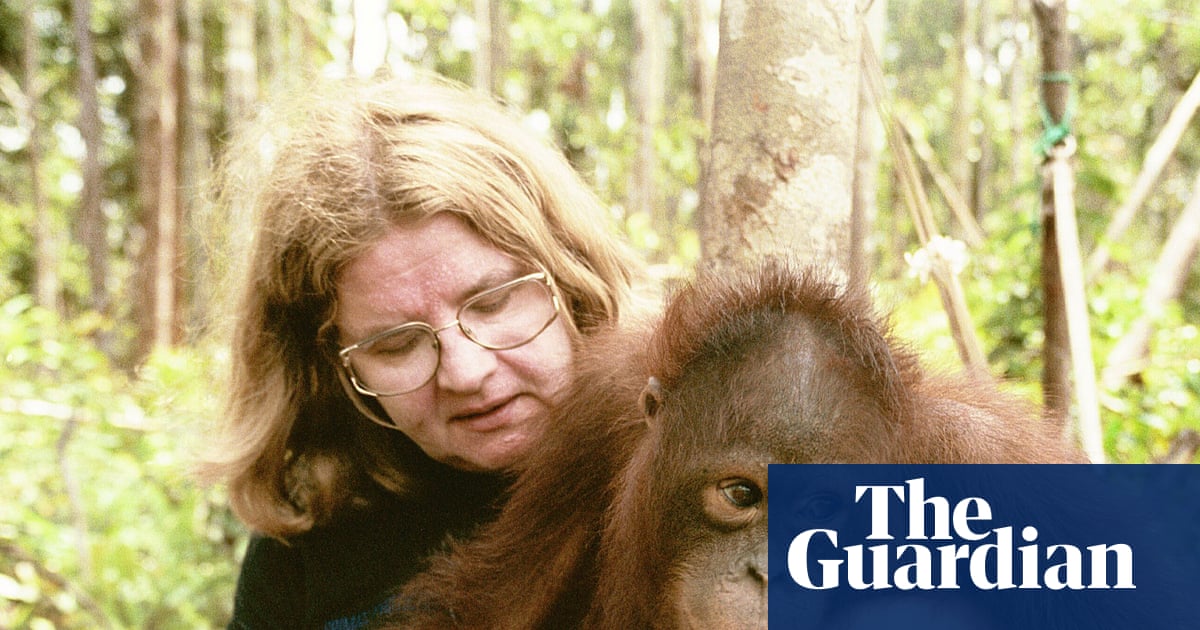
JAKARTA – Biruté Mary Galdikas, the pioneering primatologist who spent more than half a century decoding the social structures and ecological importance of the orangutan, has died at the age of 79.
A central figure in the 20th century’s shift toward behavioral ecology, Galdikas transformed the scientific understanding of Asia’s only great ape. Her work in the jungles of Borneo moved the orangutan from a flat, biological curiosity to a complex, sentient being with a distinct culture and a critical role in the survival of the rainforest.
Her passing marks the end of an era for primatology, specifically for the circle of researchers who challenged the anthropocentric views of human evolution. As the last surviving member of the “Trimates”-the trio of women who redefined the study of great apes-Galdikas bridged the gap between raw field observation and global conservation policy during a period of unprecedented habitat loss in Southeast Asia.
Redefining the ‘People of the Forest’
When Galdikas arrived in Borneo in 1971, scientific consensus viewed orangutans-whose name translates from Malay as “people of the forest”-as largely solitary and simplistic. Through decades of immersive observation at what would become Camp Leakey, Galdikas dismantled these assumptions.
She discovered that orangutans possess the longest birth interval of any land mammal, with females typically producing a single infant every seven or eight years. This biological pacing necessitates an intensive investment in rearing, creating a deep, multi-year bond between mother and offspring and leaving populations acutely vulnerable to habitat loss and hunting.
Galdikas also identified the species’ role as the “gardeners of the forest.” As the only animals large enough to distribute the seeds of the jungle’s largest plants through digestion, orangutans are essential to the forest’s regeneration. By breaking canopy branches, they create gaps that allow sunlight to reach the forest floor, stimulating new growth and shaping the composition of tropical ecosystems that underpin regional climate and water cycles.
Her research further revealed a social complexity previously ignored by male primatologists. While males remained largely solitary, Galdikas found that females lived in loose matrilineal groups, a social pattern mirrored in other great apes and increasingly used by policymakers as a model for understanding how the loss of key individuals can destabilize entire populations.
“Those women worked in an age of discovery,” said Gillian Forrester, a researcher of ape cognition at the University of Sussex. “Now we’re moving into an age of responsibility.”
The Legacy of ‘Leakey’s Angels’
Galdikas’s career was launched under the mentorship of the renowned palaeoanthropologist Louis Leakey at the University of California, Los Angeles. Leakey recruited Galdikas, along with Jane Goodall and Dian Fossey, to study chimpanzees, gorillas, and orangutans, respectively.
Affectionately known as “Leakey’s Angels,” the three women introduced a female perspective to primatology. They focused on questions that had been overlooked, such as the role of female choice in social hierarchies and the depth of emotional bonds between individuals-lines of inquiry that later fed into international welfare guidelines for great apes in captivity and in the wild.
Following Galdikas’s lead, subsequent fieldworkers documented the use of tools among orangutans-a behavior once thought to be exclusively human. The discovery that tool choice and usage varied across different populations provided the first tangible evidence of “culture” within the species, bolstering arguments for recognizing great apes as beings with complex cognition in environmental and wildlife-protection debates.
However, this proximity to the animals brought scrutiny. Galdikas faced criticism for her role as a surrogate mother to orphaned orangutans, with some scientists arguing that her emotional closeness compromised her objectivity and increased the risk of interspecies disease transmission. Forrester and other defenders have argued that such interventions were often the only viable option for orphans who would otherwise perish without seven years of maternal care, and that they prefigured later standards for rescue-and-release programs now referenced in national and international conservation policies.
Conservation and the Palm Oil Conflict
The scientific discoveries made by Galdikas provided the evidentiary basis for the urgent need to protect the Bornean rainforest. This transition from researcher to activist placed her in direct conflict with the economic drivers of deforestation in Indonesia and Malaysia.
The expansion of logging and the aggressive growth of the palm oil industry-a multi-billion dollar global commodity regulated today under frameworks such as the European Union’s deforestation-free products regulation-led to a catastrophic decline in orangutan populations. Galdikas’s efforts to protect habitat and rehabilitate captive apes made her a target for those profiting from the land, even as her data began informing government land-use plans and international NGO campaigns.
“I was struggling against an industry that was making billions of dollars,” Galdikas said in an interview last year. “It did sometimes come to physical violence.” Her history of activism included surviving death threats and a kidnapping, episodes that highlighted the personal risks borne by scientists who challenge entrenched economic interests.
To institutionalize her conservation efforts, she founded the Orangutan Foundation International (OFI) in 1986. Over the following decades, OFI became an influential partner for officials implementing protected-area designations and enforcement on the ground. The organization’s impact includes:
- The successful rehabilitation and release of more than 1,000 captive orangutans into the wild.
- The rescue and relocation of 200 wild orangutans from threatened areas, often ahead of plantation expansion or infrastructure projects.
- The establishment of Camp Leakey in Central Kalimantan as a hub for research, conservation training, and field collaboration with Indonesian authorities.
Her work intersected increasingly with national and international policy debates. Indonesia’s obligations under the Convention on Biological Diversity and subsequent national biodiversity strategies drew repeatedly on field data generated by Galdikas and her peers, embedding orangutan conservation into broader decisions on forest governance, rural livelihoods, and climate commitments.
Life and Final Years
Born in Wiesbaden, Germany, to Lithuanian parents, Galdikas grew up in Toronto, Canada, where she developed an early fascination with human evolution and the deep time scales of hominid change. Her commitment to the forest was absolute; she spent years living in swamps infested with leeches and enduring waist-deep waters to establish her first research site at a time when Borneo’s interior was still largely unmapped by modern science.
“The swamps, swollen by rain, were waist deep and impassable,” she told National Geographic in 1975. “Leeches were everywhere. Bloated with our blood, they fell out of our socks, dropped off our necks, and even squirmed out of our underwear.”
This lifelong immersion in the Bornean environment eventually took a physical toll. Galdikas was diagnosed with lung cancer and pulmonary fibrosis, conditions those close to her believe were exacerbated by her efforts to combat the devastating wildfires that frequently ravage the Indonesian landscape and send toxic haze across Southeast Asia.
Even as her health declined, she continued to advise on management plans for orangutan habitats and to press governments and corporations to integrate long-term ecological data into concession licensing, fire prevention, and peatland restoration.
Galdikas is survived by her children, Binti, Frederick, and Jane, seven grandchildren, and her sister, Aldona. Her second husband, Pak Bohap, a native Bornean, died in 2022.
The Orangutan Foundation International continues to operate under the leadership of an Indonesian team headed by her son, Frederick, a generational handover that will test whether the institutions she built can sustain orangutan protection and forest stewardship in a region where economic and political pressures on land remain intense.
