
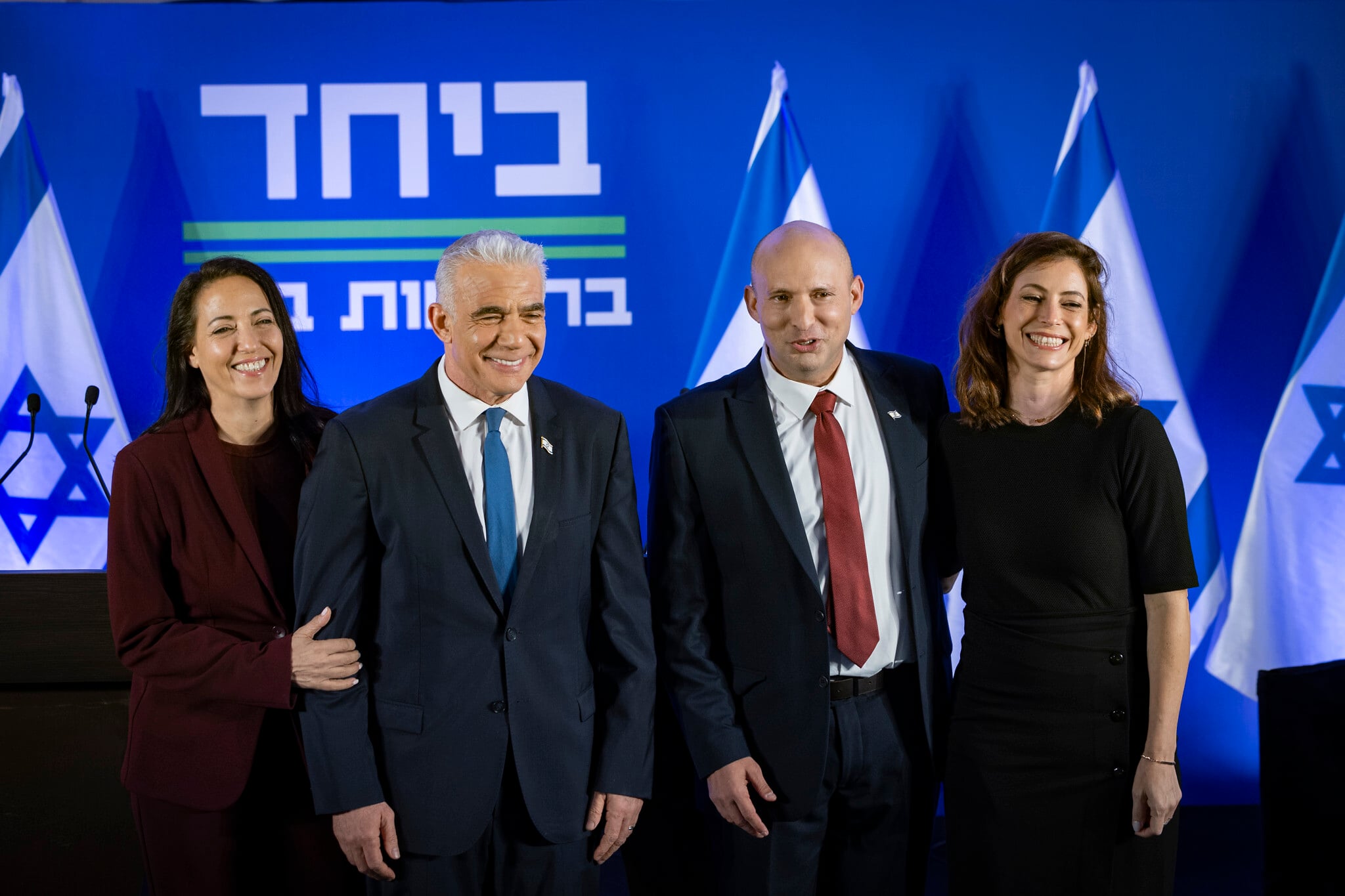
JERUSALEM – Naftali Bennett and Yair Lapid have formed a pre-election alliance called “Together,” a strategic merger designed to remove Prime Minister Benjamin Netanyahu from power in the general elections scheduled for October.
The alliance combines Bennett’s newly established “Bennett 2026” party with Lapid’s Yesh Atid. This move represents a shift in strategy from their previous 2021 partnership, which was formed as a post-election coalition. The current merger is a pre-election agreement, intended to present a unified front to the Israeli electorate before ballots are cast.
The partnership centers on several high-priority policy goals aimed at addressing the security and social crises following the October 7, 2023, Hamas-led invasion and massacre.
Core Policy Objectives
The “Together” alliance has committed to the following legislative and investigative actions, signaling how a change in government could reshape Israel’s policy agenda and institutional oversight:
- State Commission of Inquiry: Bennett has pledged to establish a powerhouse independent probe into the systemic failures that allowed the October 7 attacks. This type of commission is the highest level of official investigation in Israel, operating under the authority of the Basic Laws that define state institutions; such a move is supported by 60 percent or more of the public but has been rejected by the current administration.
- Universal Military Conscription: Both leaders vowed to pass legislation requiring military service for all citizens, specifically targeting the drafting of Haredim (ultra-Orthodox young men). This would seek to overhaul long-standing exemption arrangements and is intended to alleviate the operational burden on Israel’s reservist forces while redistributing the costs of national security more evenly across society.
- Domestic Reform: Lapid outlined a platform to reduce the cost of living, reform the national education system, and combat soaring crime rates. Advisers say these priorities are designed to reorient the budget away from coalition-specific benefits and toward broad-based services, particularly for working- and middle-class households.
Alliance Structure and Leadership
The merger places Bennett as the leader of “Together,” positioning him as the primary head of the anti-Netanyahu bloc and the alliance’s presumptive candidate for prime minister. The arrangement involves significant concessions from Lapid, who has abandoned the previous model of rotating the prime ministership between the two leaders that underpinned their short-lived government in 2021-2022.
Lapid indicated that he may not even hold the second position on the joint party slate, noting that fellow opposition figure and former military chief Gadi Eisenkot could potentially take that spot. Lapid stated that he is willing to do “whatever it takes” to ensure an election victory, framing his personal downgrade on the list as a price for presenting voters with a clear, disciplined leadership hierarchy.
Political analysts note that the merger provides critical stability for Yesh Atid, which has seen a decline in recent polling and faced the risk of falling below the electoral threshold-the minimum percentage of votes required to secure seats in the 120-member Knesset. Under Israel’s system of nationwide proportional representation, falling below that threshold would erase a party’s votes entirely and could decisively tilt coalition arithmetic back toward Netanyahu.
Ideological Framing
Despite their shared goal of ousting Netanyahu, Bennett and Lapid acknowledged a significant gap in their political leanings. Bennett described himself as a “right-wing, liberal Zionist,” while Lapid continues to represent the centrist, largely secular, middle-class constituency that has long anchored his party.
Lapid argued that for the anti-Netanyahu bloc to succeed, “the entire center must unite behind Bennett.” Both leaders asserted that the Israeli public, still reeling from October 7 and a protracted war, is prioritizing national unity and functional governance over ideological purity following years of internal political division and institutional strain.
The Netanyahu Counter-Strategy
The alliance faces a formidable opponent in Benjamin Netanyahu, who remains the leader of a coalition consisting of right-wing, far-right, and ultra-Orthodox parties. Netanyahu has previously demonstrated an ability to dismantle such alliances; in 2021, he successfully persuaded several members of Bennett’s original party to defect, leading to the collapse of the Bennett-Lapid government within 18 months and underscoring the fragility of anti-Netanyahu coalitions once in office.
Current projections regarding the electoral outcome vary significantly between sources, reflecting both ideological bias in polling and uncertainty over how the new alliance will perform once campaigns formally begin:
| Source/Claimant | Netanyahu Bloc Projection | “Together” Alliance Projection | Notes |
|---|---|---|---|
| Channel 14 (Right-wing) | 64 seats (Likud: 34) | 20 seats | Projects a stable Knesset majority for Netanyahu’s current bloc. |
| Naftali Bennett | 35 Zionist seats | Not specified | Argues Netanyahu lacks a majority of what he calls “Zionist” parties, implying future coalition constraints. |
Behind these competing numbers lies a broader contest over narrative: Netanyahu’s camp is working to portray the alliance as fragmented and untested, while Bennett and Lapid insist that the race will be decided by voters seeking accountability for October 7 and a reset in civil-military relations and economic management.
Bennett dismissed concerns regarding the precision of seat counts, stating, “The people of Israel are thinking big,” and that they seek a “big change.” Lapid described the upcoming contest not as a fateful election, but as an “existential” one, arguing that the vote will determine the character of Israel’s democracy and its capacity to reform its own institutions. Both leaders contend that the “Together” slate offers the public a sense of “hope” grounded in concrete policy commitments rather than personality politics.
The alliance now moves toward finalizing its candidate slate and negotiating list placements with smaller potential partners, as the country prepares for the October general elections under the existing proportional-representation framework administered by Israel’s Central Elections Committee.
Related reading
