
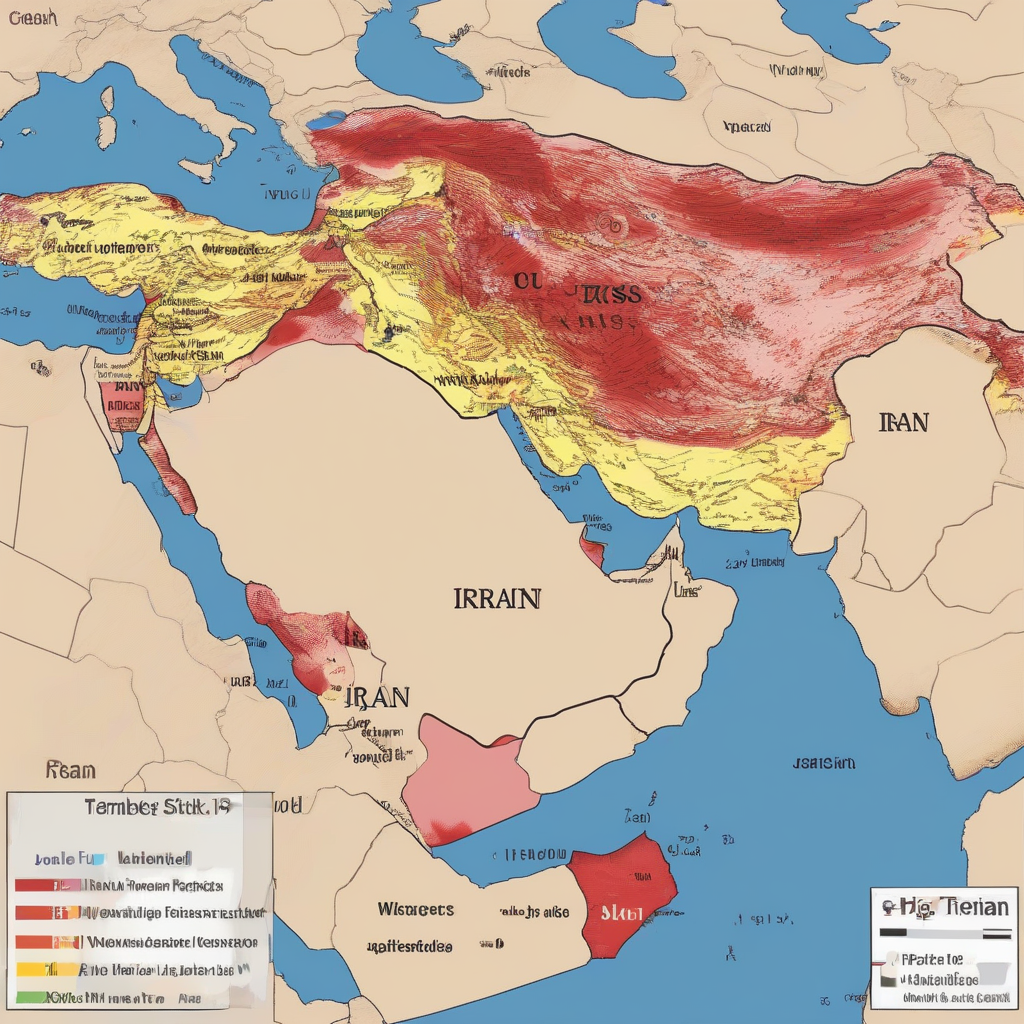
WASHINGTON – The United States and Iran have engaged in a series of heavy missile and drone assaults across the Persian Gulf, with Tehran announcing the closure of the Strait of Hormuz following a wave of American strikes on Iranian coastal bases.
The escalation marks a significant breakdown in regional stability and the apparent collapse of an interim agreement signed last month intended to end hostilities. The conflict has expanded beyond the two primary combatants, with missile and drone activity reported in Jordan, Bahrain, Qatar, the UAE, Oman, and Kuwait. Western officials and regional diplomats warn the confrontation is now testing long-standing security guarantees that underpin US partnerships and basing agreements across the Gulf.
Regional Aerial Assaults
The Islamic Revolutionary Guard Corps (IRGC) confirmed it targeted the Prince Hassan airbase in Jordan, stating it had set ammunition depots and fuel tanks on fire using a combination of missiles and drones. The IRGC described this strike as the “first phase of response” to US attacks and indicated that retaliatory operations are ongoing, framing the campaign as a direct challenge to American military infrastructure in the region.
In Bahrain, which hosts the US Navy’s Fifth Fleet, the interior ministry issued urgent orders for residents to seek cover as sirens sounded across the island nation, underscoring the vulnerability of key US and allied installations.
“The siren has been sounded… citizens and residents are urged to remain calm and head to the nearest safe place,” the ministry posted on X.
The conflict has also impacted other Gulf neighbors, many of which serve as logistical hubs for US and coalition forces or as energy lifelines for global markets:
- Qatar: Three people, including a child, were injured by falling shrapnel. Qatari officials stated Iran is “fully legally responsible” for the attack and previously indicated it would cease its role as a mediator while under fire, depriving Washington and Tehran of one of the few remaining channels for indirect talks.
- Kuwait: Army reports confirmed damage to three land border posts in the north and a hostile drone strike on an offshore oil drilling platform, which left one worker injured. Authorities said critical energy infrastructure remains on heightened alert.
- Oman: Drone attacks were reported in two regions, leading the government to summon Iran’s ambassador. The US embassy in Oman advised its nationals in Duqm and Musandam to shelter in place, as Omani officials sought to balance their traditional role as a neutral facilitator with growing domestic security concerns.
- United Arab Emirates: Air defenses engaged Iranian missiles and drones detected outside the country’s borders, in what Emirati officials described as precautionary measures coordinated with allied air defense networks.
US Strikes on Iranian Infrastructure
US Central Command (CENTCOM) launched a series of strikes beginning at 2100 GMT Sunday, following an earlier wave of approximately 140 strikes the previous night. CENTCOM stated the operations are designed “to continue degrading their ability to attack civilian mariners and commercial ships freely transiting the strait of Hormuz,” invoking long-standing US commitments under international law to protect freedom of navigation through key waterways.
In a phone interview with Reuters on Sunday afternoon, President Donald Trump described the military action, stating, “We’re beating them up.” Administration officials later emphasized that the strikes were being conducted under existing US statutory authorizations and in coordination with defense partners in the region.
Iranian state media reported several casualties and infrastructure hits resulting from the US campaign:
- Mahshahr: One person was killed and four wounded in a strike on a water pumping station. Khuzestan province’s deputy governor for security and law enforcement, Valiollah Hayati, described the victim as “martyred” via the official news agency IRNA, accusing Washington of targeting civilian infrastructure.
- Farur Island: A telecommunications worker was killed and two others wounded, according to local officials, raising concerns about damage to communications links along Iran’s southern coastline.
- Qeshm Island: State media reported at least 10 “enemy projectiles” hitting the island, without providing detailed information on military or civilian damage.
Conflict Over the Strait of Hormuz
The current hostilities followed an Iranian attack early Sunday on a commercial vessel in the Strait of Hormuz. The ship caught fire, forcing the crew to abandon the vessel. Tehran also claimed to have targeted a second ship in the waterway, in what it framed as retaliation for earlier US actions.
Following the incident, the IRGC declared that “the Strait of Hormuz will be closed until further notice and until the end of American interventions in this region,” according to IRNA. An adviser to Iran’s supreme leader described control of the waterway as more critical than “dozens of atomic bombs,” signaling Tehran’s view of the strait as a strategic pressure point against Western powers.
CENTCOM disputed the closure, stating on X that the strait remains “open to all vessels seeking to lawfully transit.” The command added that US forces are positioned to ensure freedom of navigation, asserting, “Iran does not control the strait. Traffic is flowing.” The United States and its allies routinely reference the principle of innocent passage and broader protections for commercial shipping under the UN Convention on the Law of the Sea, even though Washington has not formally ratified it.
Global Energy Markets
The threat to the Strait of Hormuz-the world’s most critical oil transit chokepoint, through which a significant share of globally traded crude and liquefied natural gas passes-triggered an immediate spike in global energy prices. Traders responded not only to the risk of direct supply disruption but also to the prospect of higher insurance premiums and re-routed shipping lanes.
| Benchmark | Sunday Price (GMT 2210) | Increase |
|---|---|---|
| Brent Crude (September) | $78.86 | 3.75% |
| West Texas Intermediate (August) | $74.02 | 3.65% |
Energy officials in importing nations said they were monitoring inventories and could draw on strategic reserves should shipping delays worsen. Market analysts noted that any sustained closure or serious restriction of tanker traffic through the strait would likely trigger emergency consultations among members of the International Energy Agency and major producers.
Diplomatic Collapse
The renewed fighting effectively terminates a 60-day negotiation window established by a preliminary agreement signed last month. Iran’s foreign ministry stated on Monday that the latest US attacks had “rendered futile” all diplomatic efforts from recent months, accusing Washington of negotiating “under the shadow of missiles.”
The ministry further claimed that talks held Saturday in Muscat, Oman, failed because of “overt and covert” US pressure on the Omani government. Omani officials have not publicly responded to that characterization, but diplomats say Muscat’s traditional mediating role has been severely constrained by the rapidly deteriorating security environment.
Iran’s top negotiator, Mohammad Baqer Qalibaf, signaled a definitive end to previous diplomatic frameworks in a post on X:
“The era of one-sided deals is OVER. We told you: keep your word or pay the price. Reality is knocking.”
President Trump has stated he considers the ceasefire over, though he noted the door remains open for future talks. US officials say any return to the table would require verifiable steps by Tehran to halt attacks on commercial shipping and regional bases, while European envoys are pressing both sides to re-engage with nuclear and maritime commitments laid out in the Joint Comprehensive Plan of Action and related security understandings. For now, however, the trajectory on the ground is being set by missiles, not diplomats.
- Urban Infrastructure Resilience: How European and Asian Megacities Are Adapting to Extreme Climate Oscillations in 2026
- UN General Assembly 2026 Framework on Autonomous Systems: International Diplomacy Faces Algorithmic Governance
- Riyadh airport missile strike kills 12 and wounds over 300 people (globallypulse.com)
