
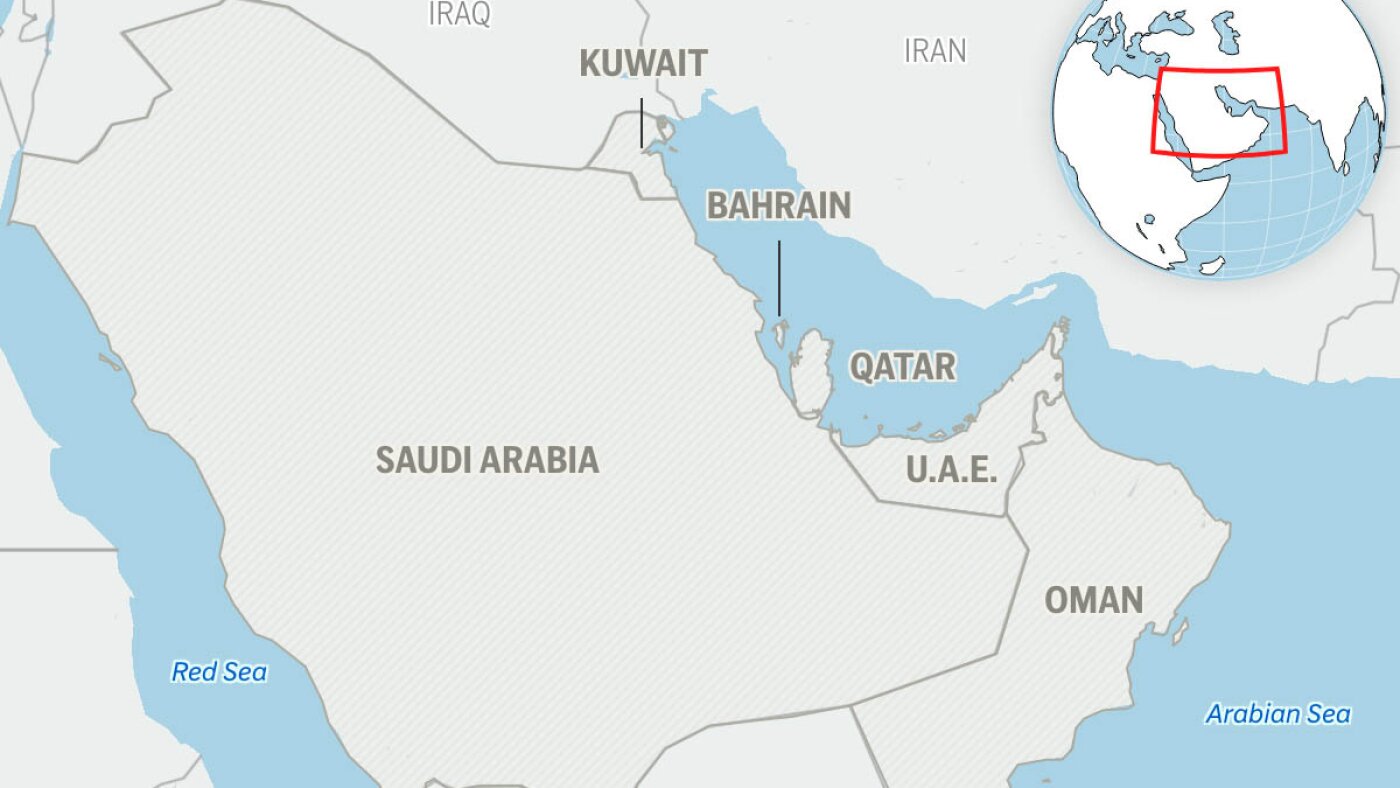
DUBAI – The United States military launched targeted airstrikes against Iranian radar and drone control infrastructure over the weekend, signaling a volatile escalation in tensions following the downing of an American surveillance aircraft.
The strikes, conducted by U.S. Central Command (CENTCOM), targeted sites near the city of Geruk and on Qeshm Island. The operation follows the shootdown of a U.S. MQ-1 Predator drone by Tehran, an incident the U.S. military characterizes as a violation of international waters.
The exchange occurs against a backdrop of extreme regional instability, threatening a precarious ceasefire and exacerbating a blockade of the Strait of Hormuz. As one of the world’s most critical maritime chokepoints, the strait is the primary artery for a fifth of the global supply of oil and natural gas, making any military friction in the Persian Gulf a matter of immediate global economic concern.
Precision Strikes and Iranian Retaliation
CENTCOM officials confirmed that the U.S. response was designed to degrade Iran’s ability to threaten regional maritime security. The strikes specifically targeted air defense systems and command-and-control nodes, part of the wider area of responsibility that CENTCOM commands from its headquarters in Tampa, Florida.
“The measured and deliberate strikes occurred … in response to aggressive Iranian actions that included the shootdown of a U.S. MQ-1 drone that was operating over international waters,” Central Command said.
The military further detailed the scope of the operation: “U.S. fighter aircraft swiftly responded by eliminating Iranian air defenses, a ground control station, and two one-way attack drones that posed clear threats to ships transiting regional waters.”
While the MQ-1 Predator has largely been superseded by the MQ-9 Reaper in U.S. Air Force operations, the platform remains a staple of U.S. Army reconnaissance. The Pentagon confirmed that no American personnel were injured during the mission, describing the strikes as calibrated to avoid civilian casualties and wider escalation.
The fallout from the strikes quickly extended beyond Iranian borders. On Monday, Kuwait reported that its air defense systems intercepted incoming drone and missile fire. This development highlights the vulnerability of U.S. assets in the region, as Kuwait serves as the primary headquarters for U.S. Army Central (ARCENT), the land component of CENTCOM’s theater posture.
Iran’s Islamic Revolutionary Guard Corps (IRGC), via the state-run IRNA news agency, claimed the U.S. had targeted a telecommunications tower and asserted that Tehran had launched a retaliatory response. Iranian state television later broadcast footage of a ballistic missile launch. The missile featured a sticker depicting a bruised U.S. President Donald Trump overlaid on a “closed” Strait of Hormuz, accompanied by the caption: “Until the last American soldier leaves the region.”
Economic Warfare in the Persian Gulf
Parallel to the kinetic strikes, the conflict has shifted toward economic attrition. Iran continues to maintain a restrictive chokehold on the Strait of Hormuz, disrupting the flow of energy and essential commodities that move under long-term commercial contracts and are protected, in theory, by international freedom-of-navigation norms embedded in the United Nations Convention on the Law of the Sea.
The strategic significance of the strait extends beyond hydrocarbons. The Gulf region is responsible for approximately 30% of the world’s traded chemical fertilizers. The continued disruption of these shipments has triggered warnings of imminent global food shortages as agricultural supply chains falter, raising the prospect of higher input costs and potential food inflation in import-dependent countries.
The U.S. has responded with its own maritime enforcement. Over the weekend, U.S. forces fired a missile into the engine room of a cargo ship flying the flag of Gambia, which was attempting to breach the blockade of Iranian ports. U.S. officials framed the action as part of a broader effort to uphold existing sanctions regimes and deter what they describe as sanctions evasion and unsafe navigation practices in contested waters.
The Lebanese Front and the Litani River
The escalation between Washington and Tehran is occurring simultaneously with a widening conflict in the Levant. Israeli forces have expanded their military occupation of southern Lebanon, pushing operations beyond the Litani River and drawing in regional actors whose fortunes are already tied to the standoff in the Gulf.
The Litani River has long been viewed by the international community as a strategic boundary for Lebanese sovereignty and a benchmark for the withdrawal of militant forces, codified in successive United Nations Security Council resolutions governing the buffer zone between Israel and Lebanon. However, Israel’s current offensive indicates a deeper penetration into Lebanese territory, while Hezbollah continues to respond with frequent drone incursions into northern Israel, underscoring the risk that a local front could harden into a prolonged multi-border conflict.
Diplomatic Deadlock and Ceasefire Talks
Despite the exchange of missiles and drones, both the U.S. and Iran maintain that diplomatic channels remain open. Negotiations are reportedly focused on the extension of a weekslong ceasefire and the status of Iran’s stockpile of highly enriched uranium, issues that sit at the intersection of regional security and global nonproliferation policy.
President Donald Trump has remained optimistic about the prospects of a diplomatic resolution, despite the ongoing crossfire. In a post on Truth Social on Monday, he dismissed critics of his approach.
“Iran really wants to make a deal, and it will be a good one for the U.S.A. and those that are with us,” Trump wrote. “Just sit back and relax, it will all work out well in the end – It always does!”
Iranian officials have countered this optimism, stating that no final agreement has been reached. The resolution of the crisis remains contingent on the reopening of the Strait of Hormuz and the cessation of hostilities across multiple regional fronts, including southern Lebanon and the Gulf’s congested shipping lanes.
The U.S. military maintains a high state of alert across the Middle East while diplomatic representatives continue to negotiate the terms of a potential ceasefire extension. For policymakers in Washington, Tehran, and key European capitals, the coming days will test whether tightly choreographed military signaling can be contained within existing legal and diplomatic frameworks-or whether miscalculation at sea or along the Litani River will push the region into a broader war.
Worth a look
- Global Food Security Alliances: How Climate-Resilient Agricultural Corridors Are Stabilizing Wheat and Rice Supplies
- Cross-Border Renewable Energy Grids: North Sea and Mediterranean Subsea Cable Networks Enter Phase Two
- Two Iranian nationals charged with terror plot targeting Manchester Jewish community (globallypulse.com)
