
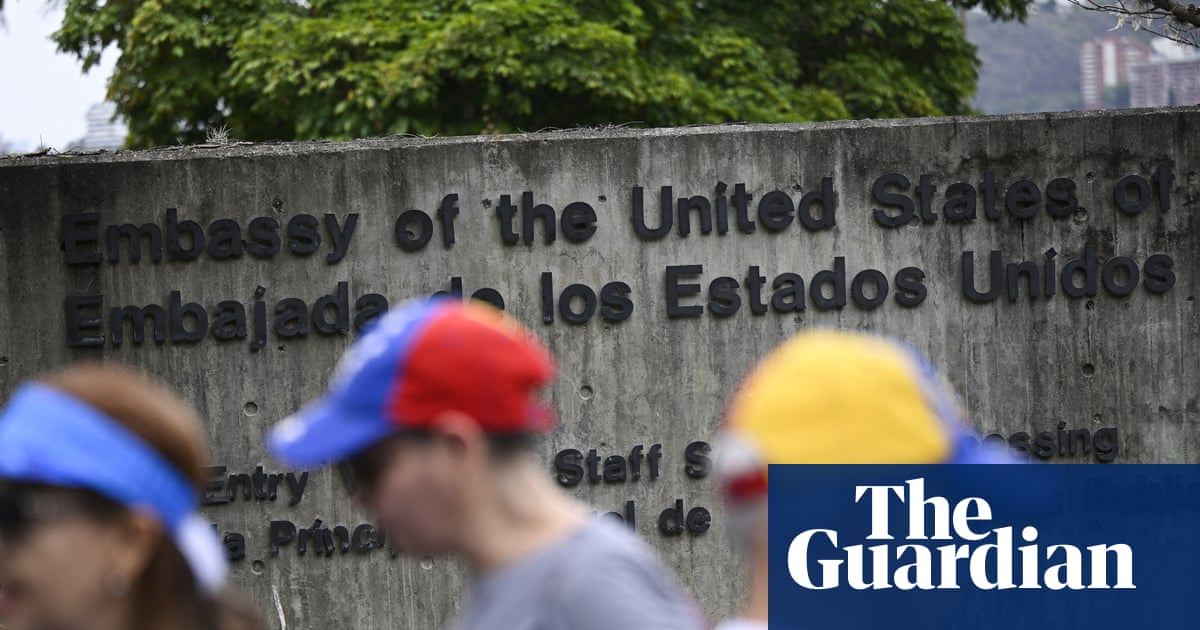
WASHINGTON – The United States Department of State has issued new guidance requiring applicants for temporary visas to affirm that they have not experienced harm in their home countries and do not fear returning to them, a move that creates a stringent new screening layer designed to identify and block potential asylum seekers before they reach U.S. soil.
The directive, delivered via a diplomatic cable to every U.S. embassy and consulate worldwide, mandates that consular officers ask two specific questions as a prerequisite for continuing the visa interview process: “Have you experienced harm or mistreatment in your country of nationality or last habitual residence?” and “Do you fear harm or mistreatment in returning to your country of nationality?”
The policy represents a significant shift in the administrative approach to non-immigrant visas, which in fiscal year 2024 totaled nearly 11 million issuances. This broad category encompasses a diverse range of travelers, including university students on F-1 visas, H-1B high-skilled workers, business executives, and seasonal laborers.
The Strategy of Consular Filtering
The State Department justifies the new requirements as a measure to combat “misrepresentation” during the application process and to reinforce front-end vetting in the visa pipeline. By forcing a binary declaration of safety at the consular level, the U.S. government aims to filter out individuals who might use a temporary visa as a gateway to claim asylum upon arrival, before they can reach an airport or land border and trigger protections in U.S. immigration law.
“The high number of aliens claiming asylum in the United States indicates that many aliens misrepresent this intention to consular officers in the visa application process and at US ports of entry,” the directive reads, “and that information collected from visa applicants under current guidance is inadequate to identify those applicants who fear harm or mistreatment in returning to their home country.”
Under the new guidance, if an applicant answers “yes” to either question or declines to respond, their likelihood of visa denial increases dramatically. This creates a precarious legal paradox for the applicant. While an admission of fear may lead to an immediate visa denial, a false “no” could be categorized as a material misrepresentation to a federal officer-a crime that typically results in a permanent bar from entering the United States.
Immigration lawyers note that the change effectively extends the reach of inadmissibility rules, long applied at ports of entry and in formal asylum proceedings, back into the consular interview itself-an arena where applicants have no right to counsel and limited avenues to challenge a denial.
Legal Conflicts and International Frameworks
The directive arrives amid a volatile legal landscape regarding U.S. border policy. It follows a federal appeals court ruling that invalidated the Trump administration’s invocation of an “invasion” at the southern border to curtail asylum access, a decision that effectively reopened legal pathways for migrants fleeing persecution.
However, the new consular screening targets a different stage of the journey. By shifting the barrier from the border to the embassy, the administration is attempting to preempt the asylum process entirely by preventing potential claimants from boarding a plane or securing lawful temporary entry in the first place.
This approach sits in tension with the 1951 Refugee Convention and established U.S. law, which maintain that the right to seek asylum is not conditional upon the method of entry or the statements made to a visa officer. The Convention establishes the principle of non-refoulement, prohibiting states from returning refugees to territories where their lives or freedom would be threatened, a norm incorporated into U.S. statute through the Refugee Act of 1980 and codified in the Immigration and Nationality Act.
The current policy effectively targets several high-risk groups before they can present a claim, including:
- Journalists and dissidents facing political persecution.
- Survivors of domestic or gender-based violence.
- Members of persecuted religious or ethnic minorities.
- Political activists under state surveillance.
For these groups, temporary visas have often served as a lawful, regulated pathway to reach U.S. territory and then seek protection under asylum provisions such as those in 8 U.S.C. § 1158. The new questions, embedded in a high-stakes interview where answers are permanent and recorded, may force them to choose between personal safety and long-term access to the United States.
A Pattern of Enhanced Vetting
The current directive is part of a broader architecture of restrictive entry policies initiated under Executive Order 14161, signed in January 2025. That order mandated federal agencies to intensify screening to prevent the entry of individuals deemed potential security threats and directed the State Department and Department of Homeland Security to “harmonize” visa vetting with terrorism and criminal watchlists.
This framework has already manifested in several high-profile restrictions:
- June 2025 Proclamation: A White House order that suspended entry for nationals of 12 countries and imposed partial restrictions on seven others, citing intelligence and information-sharing gaps.
- March 2024/2025 Directive: An order expanding the screening of student visa applicants, specifically incorporating social media vetting to identify those the government deems engaged in “terrorist activity” or supportive of designated organizations.
The full operational scope of the latest cable remains partially obscured, as the document cross-references classified guidance held on internal State Department systems and points consular officers to secure cables that are not publicly available. Consular posts have been instructed to update local standard operating procedures and training materials to reflect the new questions, according to officials familiar with the rollout.
When asked for comment, a State Department spokesperson defended the measure, stating that consular officers “are the first line of defense for US national security.”
“Under President Trump, the Department of State is using all available tools and resources to determine whether each visa applicant qualifies under US law,” the spokesperson added, emphasizing that the directive is “consistent with the Administration’s broader efforts to strengthen visa integrity and ensure that humanitarian protections are not exploited for unlawful entry.”
Advocates for refugees and migrants say the impact will be felt far from Washington, in closed-door interviews at consulates around the world, where applicants now face a sharpened choice: disclose fear and almost certainly lose the chance to travel, or stay silent and risk being locked out of the U.S. asylum system for life. For governments in key sending countries, the move is likely to surface in diplomatic conversations about mobility, human rights, and the balance between border security and protection obligations, adding a new point of friction to an already contested area of U.S. foreign policy.
Worth a look
- Global Food Security Alliances: How Climate-Resilient Agricultural Corridors Are Stabilizing Wheat and Rice Supplies
- Cross-Border Renewable Energy Grids: North Sea and Mediterranean Subsea Cable Networks Enter Phase Two
- Hunter kills wild boar over 117kg with a bow in the Rhône department (archysport.com)
