
Transboundary Haze Crisis Engulfs Mekong Region as Seasonal Fires Surge in Thailand, Laos and Myanmar
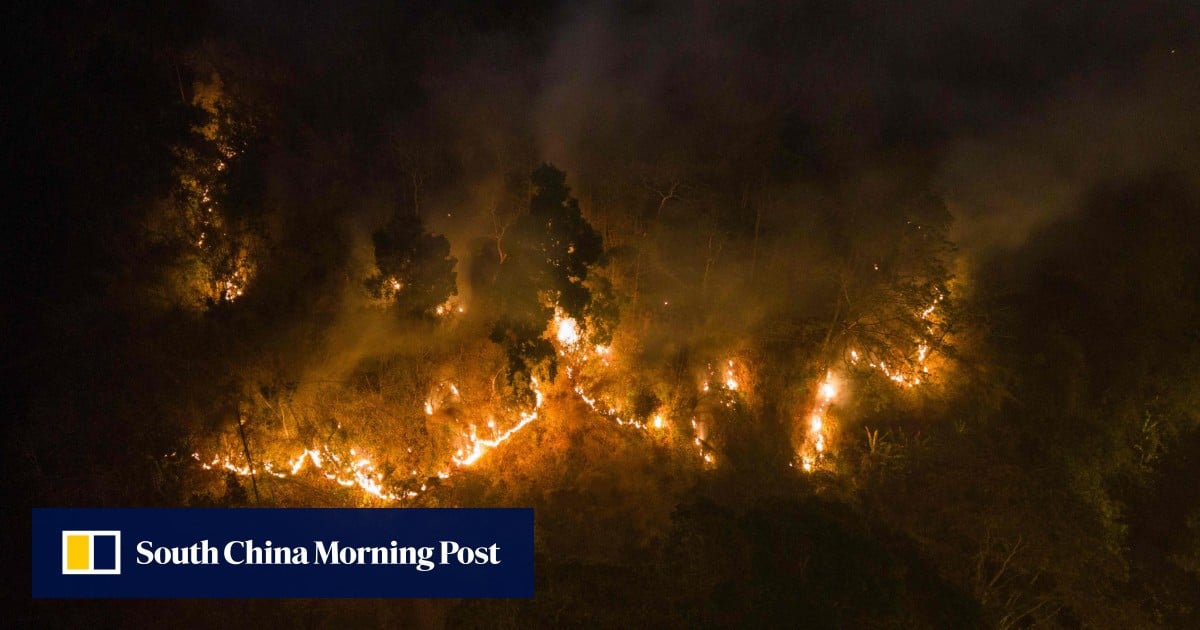
CHIANG MAI – Forest fires raging across Laos, Myanmar, and Thailand have smothered vast swathes of Southeast Asia in a blanket of toxic smoke, triggering a public health emergency and leaving overstretched firefighting crews struggling to contain the blazes.
The seasonal crisis has escalated into a regional atmospheric emergency, with smog-choked communities in the Mekong sub-region increasingly dependent on erratic rainfall and government intervention to mitigate a scourge that intensifies with each passing year.
This annual phenomenon reflects a deeper systemic failure in transboundary environmental governance. While the fires are a symptom of dry season weather patterns, the persistence of the haze underscores the tension between commercial agricultural expansion and public health across borders that are often porous to pollution but rigid in diplomatic cooperation.
The Respiratory Emergency in Northern Thailand
The crisis is most acute in Thailand’s northernmost provinces, including Chiang Rai, Chiang Mai, and Mae Hong Son. These areas have been blanketed by thick clouds of particulate matter drifting across the borders from Myanmar and Laos, periodically pushing air quality indices into hazardous territory for weeks at a time.
On Sunday, Thai authorities recorded more than 600 active fire hotspots, primarily concentrated in the north with significant clusters snaking down the western border with Myanmar. Local officials warn that these satellite-detected hotspots are likely an undercount, given limited monitoring capacity in conflict-affected and mountainous terrain.
The environmental fallout has manifested as a medical crisis. Hospitals across the country report a surge in admissions for respiratory distress linked to high concentrations of PM2.5-ultrafine particles capable of penetrating deep into the lungs and entering the bloodstream. Schools in several northern districts have shortened hours or shifted classes online, while local administrations distribute masks and issue advisories urging residents to remain indoors.
“The air we breathe is a fundamental right that every person deserves,” Maneerat Khemawong, a senator from Chiang Rai province, told reporters on Monday. “The air quality situation in the northern region has been at a critical red-to-dark purple level for over two months … a trend of worsening conditions every year.”
Senator Khemawong was joined by fellow northern legislators in a formal push for the government to implement more aggressive measures to curb the pollution, including stricter limits on agricultural burning, expanded health screening in affected communities, and clearer accountability for cross-border emissions.
Agricultural Drivers and Enforcement Gaps
While natural drought conditions provide the tinderbox environment, the scale of the fires is driven largely by human activity. In Laos and Myanmar, “slash-and-burn” agriculture remains the primary method for clearing land ahead of the planting season, especially in upland areas where mechanized farming is limited.
This practice is the quickest and least labor-intensive way for farmers to prepare soil, particularly for the cultivation of maize, which is often grown for the regional animal feed industry and linked to tightly integrated cross-border supply chains. Brokers and feed companies buy crops that originate on burned land, creating economic incentives that stretch well beyond the individual farmer.
Despite official bans on the practice, enforcement remains patchy and often seasonal. Local authorities face chronic budget and staffing constraints, and penalties for illegal burning are inconsistently applied. In Myanmar, the ability of the central government to regulate land use in border regions has been severely compromised by ongoing internal conflict and political instability, creating “blind spots” where agricultural burning continues unchecked or is used to clear land for competing armed actors and business interests.
The result is a transboundary atmospheric flow that pays little heed to national borders:
- Source Points: Agricultural clearing and forest-edge fires in eastern Myanmar and northern Laos, compounded by smaller but persistent burns inside northern Thailand.
- Transport: Seasonal wind currents carrying PM2.5 and other pollutants across international boundaries and funnelling smoke into mountain basins where it can linger for days.
- Impact Zones: Densely populated northern Thai provinces and Laotian urban centers, where health systems, tourism revenues and local economies are increasingly strained each dry season.
Officials and analysts say that without changes to underlying land-use and commodity policies-such as crop subsidies, concession approvals and procurement standards-crackdowns on local farmers alone are unlikely to deliver lasting reductions in haze.
Diplomatic Friction and the ASEAN Framework
The crisis tests the limits of the ASEAN Agreement on Transboundary Haze Pollution, a regional pact designed to prevent and monitor land and forest fires and to promote cooperation in firefighting. Although all member states in mainland Southeast Asia are party to the agreement, it relies heavily on voluntary measures, information-sharing and peer pressure rather than binding enforcement.
In practice, the agreement often struggles with the bloc’s core principle of non-interference, leaving member states reluctant to press neighbors on internal agricultural policies or to publicly attribute haze to activities on foreign soil. Joint working groups and technical meetings produce action plans and early-warning systems, but these rarely translate into on-the-ground restrictions on burning at the pace or scale demanded by worsening air quality.
The economic pressure to produce corn and other commodities often outweighs environmental mandates, leaving national and provincial governments in a deadlock between economic survival for rural farmers and the health of the general population. Cross-border value chains further complicate accountability: maize grown on burned hillsides in Laos and Myanmar can be processed in Thai factories and sold across the region, dispersing responsibility as widely as the smoke itself.
As the dry season persists, the reliance on “looking to the skies for rain” highlights the lack of a coordinated, multi-national firefighting and prevention strategy capable of addressing the scale of the blazes. Firefighting crews in each country remain largely confined by borders, with only limited joint patrols or shared equipment, and there is no standing regional mechanism to rapidly deploy resources to hotspots as they emerge.
Air quality monitors in the affected region continue to show levels of PM2.5 far exceeding the World Health Organization’s recommended safety guidelines. Public-health experts warn that unless governments move beyond seasonal emergency responses to long-term, cross-border reforms in land management, crop pricing and enforcement, the Mekong’s transboundary haze is likely to grow more frequent, more intense and more politically contentious in the years ahead.
Related reading
