

Henry Nicholls on New Zealand’s Squad Depth and a Decade in Test Cricket
New Zealand’s approach to squad rotation and the development of emerging talent was on display during the first ODI against Bangladesh in Mirpur on April 17, 2026. Henry Nicholls, contributing 68 runs in the opener’s role, highlighted the necessity of composure and partnership building on a surface characterized as slow and inconsistent.
The match served as a critical test for the Black Caps, who are currently navigating a depleted roster. Several key players are absent due to commitments in franchise T20 leagues, a scheduling conflict that frequently tests the depth of international sides within the global cricket calendar and continues to challenge how boards manage player workloads under the International Cricket Council’s scheduling and governance framework.
Missing frontline players for the Bangladesh tour:
- Devon Conway
- Daryl Mitchell
- Kyle Jamieson
- Glenn Phillips
- Michael Bracewell
Squad Evolution and Depth
The absence of established stars has provided a platform for domestic players to transition into the international arena, turning this series into a live audit of New Zealand’s talent pipeline. Nicholls noted that the current environment is designed to empower new players, citing the performance of Dean Foxcroft, who appeared confident and tactically aware in only his second ODI.
This transition mirrors Nicholls’ own career trajectory. Having debuted in 2015 alongside figures such as Brendon McCullum, Kane Williamson, and Ross Taylor, Nicholls has moved from a junior member of the dressing room to a senior leader. This shift is vital for the team’s continuity, ensuring that the tactical knowledge and cultural standards set by previous generations are passed down to debutants and that selection decisions made by New Zealand Cricket’s high-performance structure are reinforced in the dressing room rather than second-guessed on the field.
For administrators and selectors, performances like Mirpur underline whether central contracts, domestic competition structures, and rest-and-rotation policies are producing players who can adapt quickly to subcontinental conditions and international intensity. For Nicholls, it is about turning that policy architecture into runs and results.
Ten Years of Test Cricket
In February 2026, Nicholls marked ten years since his Test debut against Australia at the Basin Reserve in Wellington, a match where he recorded a second-innings half-century. His career since then has been defined by an ability to score substantial runs in the red-ball format, a skill set often referred to in cricket circles as producing “daddy hundreds” – turning starts into match-shaping scores.
Nicholls attributes this success to maintaining a relaxed mental state and a consistent tempo, avoiding the trap of placing too much emphasis on specific milestones. That method is increasingly valued by national selectors who prioritise temperament alongside technique when identifying long-format batters.
His statistical record in Test cricket reflects this consistency:
| Category | Stat/Detail |
|---|---|
| Total Test Centuries | 10 |
| Unbeaten Centuries | 5 |
| First Test Century | 2017 vs South Africa (Wellington) |
| Highest Score Highlight | Double-century vs Sri Lanka (Wellington, 2023) |
While his Test record is robust, his ODI statistics show a different pattern, with 17 half-centuries but only one century. Nicholls suggests this is a result of his versatility in the batting order, moving between the top order and the number six position, where impact and role-specific execution – finishing an innings, absorbing a wobble, or accelerating at the death – are often valued over individual milestones.
Defining Career Moments
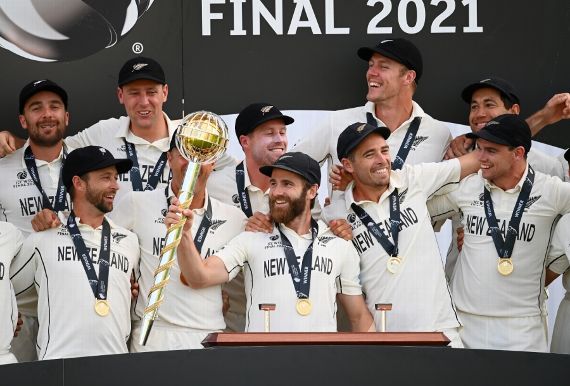
Nicholls has been a fixture in New Zealand’s most significant modern achievements. He was the top scorer for the side during the 2019 World Cup final and was a key part of the squad that won the inaugural World Test Championship (WTC) in 2021, an event governed by the International Cricket Council and underpinned by its formal playing conditions and competition regulations.
Reflecting on the 2021 WTC title, Nicholls emphasized the unique nature of the tournament, which tests squad depth over a two-year cycle across varying conditions and across different bilateral series administered by national boards. For New Zealand, the victory was particularly distinct because their domestic structure lacks a traditional first-class final, making the six-day final a foreign but rewarding experience and offering rare exposure to a neutral-venue Test with a world title formally on the line.
As New Zealand continues its three-match series in Bangladesh, the ability of senior players like Nicholls to anchor the innings while integrating new talent will be central to their competitive standing in the ODI format. It will also offer selectors, planners, and the governing board a live case study in whether New Zealand’s current balance between global T20 commitments and national duty can sustain depth across formats in an increasingly crowded international calendar.
Keep reading
