BANGKOK – Thailand’s Ministry of Culture has moved to quell domestic concerns that Cambodia’s recent election to a key UNESCO committee will jeopardize Thailand’s efforts to secure international recognition for its traditional national costume and Muay Thai.
The reassurance comes amid a long-standing and often volatile cultural rivalry between the two Southeast Asian neighbors, where the designation of “intangible cultural heritage” is frequently viewed not merely as an academic exercise in preservation, but as a critical assertion of national identity and historical primacy.
The tension was sparked following the announcement that Cambodia was elected to the Intergovernmental Committee for the Safeguarding of the Intangible Cultural Heritage under the 2003 Convention for the 2026-2030 term. In Thailand, where public sentiment regarding cultural appropriation is high, the development raised fears that Cambodia could leverage its committee seat to obstruct Thai applications.
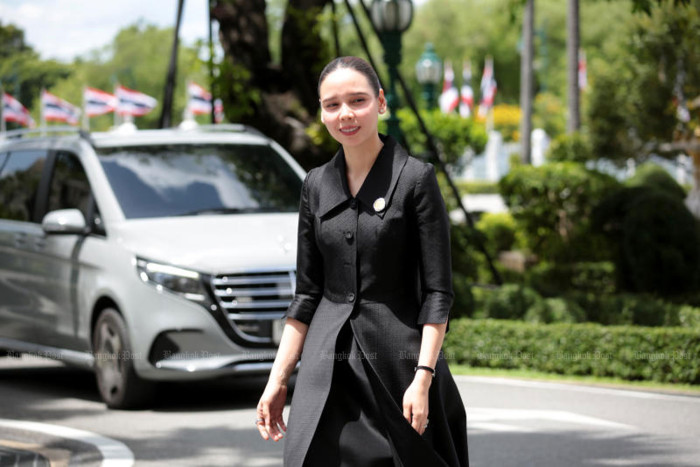
Culture Minister Sabeeda Thaised addressed these concerns on Friday, emphasizing that the UNESCO listing process is governed by multilateral protocols rather than the whims of individual member states.
“No single country can independently object to or challenge another nation’s cultural heritage,” said Ms. Sabeeda. “Decisions are taken collectively and based on technical criteria, not on bilateral disputes.”
The Mechanics of UNESCO Recognition
The Intergovernmental Committee is tasked with examining nominations for the Representative List of the Intangible Cultural Heritage of Humanity. Operating under rules approved by UNESCO’s General Conference, the body functions more like a technical panel than a political arena, reviewing detailed dossiers submitted by the proposing state and assessments prepared by expert bodies.
To safeguard the integrity of these listings, UNESCO employs a structured evaluation framework that ministries must navigate much like an international regulatory process:
- Academic Evidence: Proposals must be supported by historical records, ethnographic work, and other scholarly research that establish the practice’s continuity and distinctiveness.
- Community Consent: Submissions must show that the communities, groups, or individuals who practice the tradition have been consulted and support the nomination.
- Safeguarding Measures: The proposing state must outline concrete policies and programs to protect, transmit, and promote the heritage for future generations, including education and funding plans.
- Multilateral Review: Decisions are made through a collective process of review and consensus-building among committee members, limiting the ability of a single nation to block or fast-track an application.
Thai officials have sought to frame the issue as one of governance rather than rivalry, stressing that the committee’s mandate is to ensure compliance with the convention’s criteria, not to adjudicate ownership disputes.
Minister Sabeeda noted that Thailand is well-positioned within the organization’s hierarchy, having served on UNESCO’s executive board since 2025, a tenure that continues until 2029. While the executive board does not rule on individual heritage files, this presence provides Thailand with a strategic voice in the broader administration of the agency’s cultural mandates and in setting future procedural norms.
A History of Cultural Competition
The anxiety surrounding the Cambodian election reflects a deeper geopolitical struggle over the origins of Southeast Asian arts and martial arts. For decades, Thailand and Cambodia have clashed over the ownership of shared cultural markers, ranging from temple architecture to traditional dance, often using international forums to buttress their claims.
The current friction is most visible in the dispute over “Kun Khmer” and “Muay Thai.” While both nations practice a form of elbow-and-knee striking, Cambodia has aggressively promoted Kun Khmer as the ancestral precursor to the Thai art. This “cultural cold war” has frequently spilled over into sporting events, social media campaigns and diplomatic spats, making the stakes of a UNESCO designation significantly higher than a mere title.
For Bangkok, securing recognition of Muay Thai and the royal-style national costume is seen domestically as a test of the state’s capacity to protect national heritage in multilateral arenas. Previous regional controversies over temple sites and classical dance styles have sensitized Thai policymakers and the public to perceived challenges from neighboring countries.
The Thai Ministry of Culture stated that its bids for the royal-style national costume and Muay Thai are supported by comprehensive documentation, including design knowledge, training curricula and photographic evidence demonstrating their continuous and integrated use in Thai society. Officials say the dossiers also detail state-backed safeguarding efforts, from curriculum inclusion to support for traditional ateliers and boxing gyms.
Cambodia’s Ministry of Information confirmed that its election to the committee took place during a diplomatic meeting in Paris on June 17-18, positioning Phnom Penh to play a visible role in reviewing heritage files from around the world, including from fellow ASEAN members.
The applications for the royal-style Thai national costume and Muay Thai remain under review by the UNESCO secretariat, which will compile technical evaluations before forwarding recommendations to the committee. A final decision is not expected until the committee’s future sessions, underscoring that, for now, the contest over cultural primacy is playing out through procedure rather than protest.