
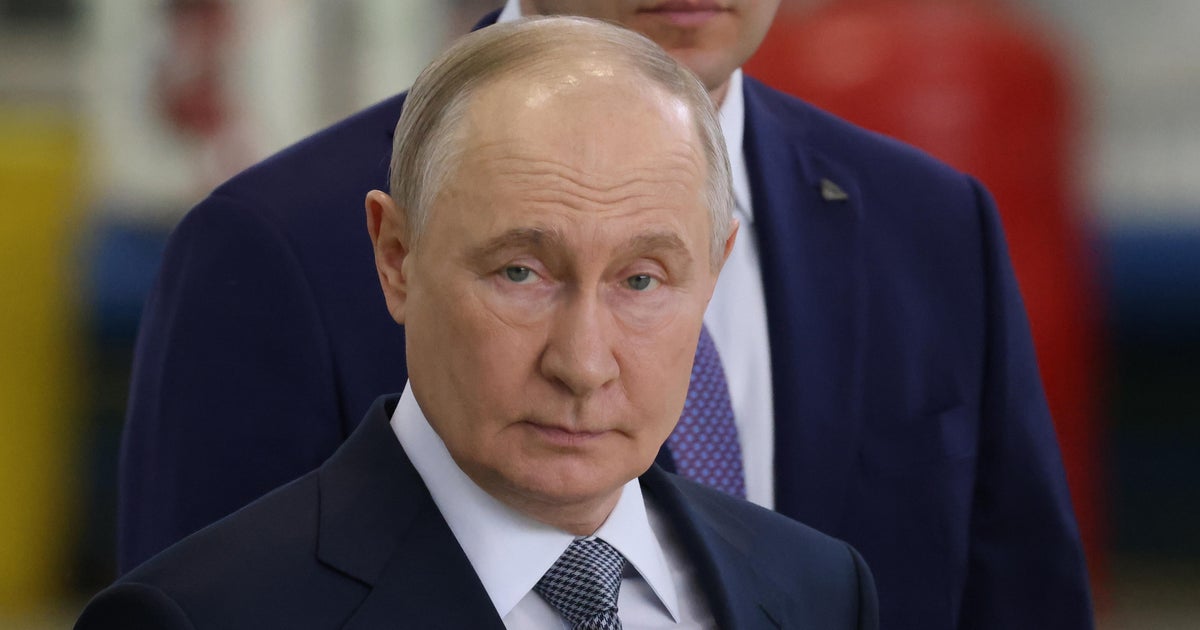
MOSCOW – Russian President Vladimir Putin has acknowledged that Ukrainian strikes targeting critical energy and logistics infrastructure are creating “problems” for the Russian state, marking a rare admission of vulnerability regarding the security of the Russian interior.
The admission comes as Kyiv accelerates a strategic campaign to degrade Russia’s industrial capacity and erode its domestic stability by bringing the costs of the war directly to the Russian population. While the Kremlin maintains that these disruptions are not yet “critical,” the acknowledgment signals a shifting dynamic in a conflict that had previously been fought primarily on Ukrainian soil.
“As for strikes against critical infrastructure in general, and energy infrastructure in particular, of course these attacks on our infrastructure facilities create problems, that’s obvious,” Putin said in an interview with Russian journalist Pavel Zarubin. “Right now we’re observing a certain shortage, but it’s not critical.”
His comments follow days of Ukrainian drone and missile attacks on oil refineries, fuel depots and transport hubs across Russia – facilities that underpin Moscow’s ability to sustain its full‑scale invasion launched in violation of the United Nations Charter prohibition on the use of force.
Strategic Attrition and the Siege of Crimea
Ukraine has significantly intensified its long-range capabilities, launching some of its heaviest drone assaults since the 2022 invasion. Recent operations have targeted 12 separate Russian regions, extending the reach of the conflict deep into Russian territory and into the occupied Crimean Peninsula.
The offensive is part of a broader effort by the Ukrainian Ministry of Defense to isolate Crimea, which serves as the primary logistics hub for Russian forces in southern Ukraine. Ukraine’s Defense Minister Mikhailo Fedorov has stated his objective is to turn Crimea into “an island,” effectively severing the land bridge and maritime links that sustain the occupation.
The impact of this strategy became evident on Friday when Russian authorities in Crimea declared a state of emergency. The measure followed a total halt of fuel sales to civilians, a direct consequence of Ukrainian strikes on regional energy infrastructure earlier in the week. Local officials framed the move as temporary, but the decision underscored how a campaign initially aimed at military targets is now reshaping daily life and governance on the peninsula.
By forcing Moscow to divert air defenses and emergency resources to Crimea and deep inside Russia, Ukrainian planners are also attempting to complicate Russian military logistics along the southern front, where fuel supply, troop rotations and ammunition flows are tightly linked to a small number of rail and road corridors.
The Air Defense Deficit
Central to the increasing success of Ukrainian strikes is the systematic degradation of Russia’s integrated air defense systems (IADS). Moscow has traditionally relied on the S-300, a sophisticated Soviet-era surface-to-air missile system, to protect its strategic assets from cruise and ballistic missiles and to shield key industrial centers around the capital.
However, reports indicate that Moscow is now facing a critical shortage of S-300 interceptors, leaving the capital and other key industrial centers more exposed to aerial incursions. Western defense officials have warned that Russia’s need to prioritize protection of political and energy hubs is forcing trade-offs elsewhere along the 1,000‑kilometer front line.
“The first task is to quickly and significantly ramp up production of those air defense systems that are most needed,” Putin said during the interview Sunday.
According to data from Ukraine’s Ministry of Defense, Kyiv has destroyed 1,454 air defense systems since the start of the invasion in 2022. This attrition includes seven systems neutralized between Friday and Monday alone. Those figures could not be independently verified, but they align with separate assessments that Russia has been forced to reposition strategic air defense assets closer to Moscow and major refineries in recent months.
Russia’s own emergency measures – including efforts to harden refinery infrastructure and reroute fuel supplies domestically – highlight how a long-range strike campaign can rapidly become a domestic policy challenge, testing the capacity of regional authorities and federal ministries to maintain basic services under sustained attack.
Domestic Pressure and Political Resolve
The degradation of infrastructure and the escalating threat of aerial attacks appear to be influencing Russian public sentiment. A nationwide survey released Monday by the Institute for Conflict Studies and Analysis of Russia, a Ukrainian think tank, suggests a growing desire among the Russian population to exit the conflict.
The survey, which polled 1,600 respondents via telephone, found that 81% of Russians supported ending the war immediately-the highest level of support for a ceasefire recorded since the invasion began. While the poll’s methodology and affiliation have prompted caution among independent analysts, the figures mirror anecdotal reports of war fatigue and anxiety over economic disruption and mobilization.
For the Kremlin, the challenge is increasingly twofold: containing the physical impact of strikes on refineries, fuel depots and supply chains, while managing the political optics of admitting to shortages in a system built on projecting control. The Russian government has already used emergency powers and wartime decrees to direct industry and regional governors, and officials have signaled that further adjustments to economic and security policy are likely if attacks continue to bite.
Despite these figures, Putin has shown no inclination to alter his strategic objectives. He recently dismissed a Ukrainian proposal for a mutual ceasefire regarding long-range strikes, arguing that Russia holds the tactical advantage in deep-strike operations.
“It is clear why this proposal is being made, because our counter-strikes deep into Ukrainian territory are much stronger, have greater impact and are, frankly, more destructive,” Putin said. “Given their catastrophic shortage of personnel, the Ukrainian Armed Forces apparently believe this could be their salvation. But saving the Kyiv regime is not part of our plans.”
The Kremlin continues to prioritize the restoration of fuel supplies and the urgent replenishment of air defense stocks to mitigate the impact of Ukraine’s expanded strike radius. Russian officials have also hinted at additional protective measures for critical energy facilities, including tighter security regulations and new investment mandates for operators, moves that would further entrench the war’s influence over domestic economic governance.
For Kyiv, Putin’s public acknowledgment of “problems” offers a measure of confirmation that its long-range campaign is beginning to register in Moscow’s internal risk calculations – even as both sides show little sign of stepping back from a contest increasingly defined by who can absorb and manage strikes far from the front line.
Related reading
- Global Food Security Alliances: How Climate-Resilient Agricultural Corridors Are Stabilizing Wheat and Rice Supplies
- Cross-Border Renewable Energy Grids: North Sea and Mediterranean Subsea Cable Networks Enter Phase Two
- NVIDIA infrastructure accelerates AI apps targeting breast cancer care gaps (archyde.com)
- Why Your Tire Pressure Light Comes On on Cold Mornings (daybreakwire.com)
