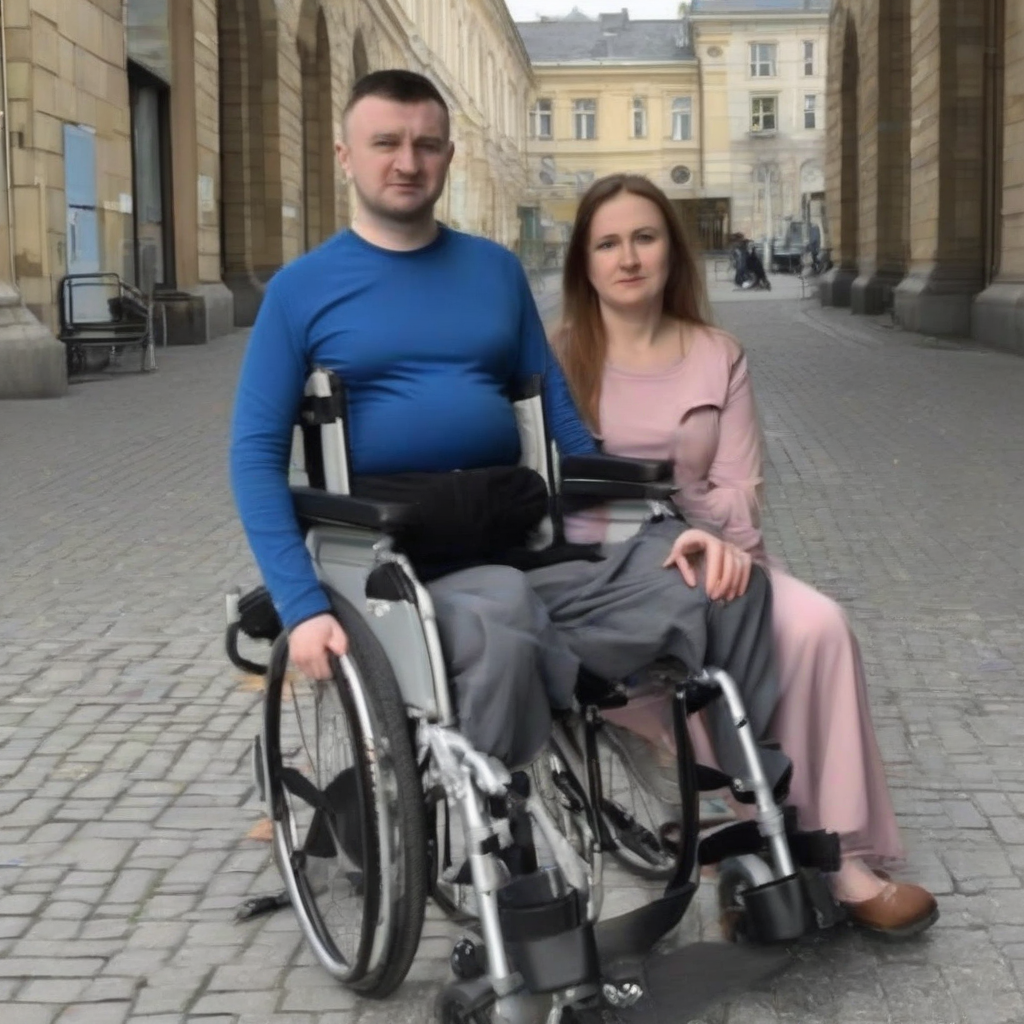
DUBLIN – The Supreme Court has heard a legal challenge against a 2024 law that disqualifies displaced Ukrainians living in designated accommodation centres from receiving social welfare benefits, a move legal counsel warns could force a disabled woman and her husband into a housing crisis.
The case centers on whether the State’s distinction between recipients of temporary protection and international protection candidates is constitutionally valid. A seven-judge panel, presided over by Chief Justice Donal O’Donnell, has reserved judgment on the appeal.
The couple, who remain anonymous for legal reasons, fled the Russian invasion of Ukraine in 2022 and have since resided on a full-board basis in a Dublin hotel. The woman has been a wheelchair user for approximately 10 years.
### Financial Impacts of the 2024 Law
Under the amending legislation introduced in 2024, individuals granted temporary protection are disqualified from most forms of social welfare assistance while residing in a designated accommodation centre, with the exception of the supplementary welfare allowance.
The change stems from Part 4 of the Social Welfare and Civil Law (Miscellaneous Provisions) Act 2024, which disqualifies beneficiaries of temporary protection who are resident in a designated accommodation centre from receiving social assistance payments such as disability and carer’s allowances, while retaining access to a basic safety-net payment.[Social Welfare and Civil Law (Miscellaneous Provisions) Act 2024]
The couple lost their means-tested payments after their hotel was officially classified as a designated accommodation centre in September 2024, under powers linked to section 60 of the International Protection Act. The lost weekly benefits include:
- Disability Allowance: €208 per week (received by the woman)
- Carer’s Allowance: €224 per week (received by the husband)
Senior counsel Feichín McDonagh, instructed by solicitor Eileen McCabe, argued that the law is “irrational”, “unfair”, and “capricious.” He stated that the legislation effectively creates a scenario where the couple is “pushed out” of their current housing.
McDonagh contended that finding alternative, accessible accommodation for a wheelchair user is “very difficult” given the current housing crisis and the pressure on emergency and social housing stock. He further argued that the loss of the carer’s allowance would force the husband to seek employment, leaving the woman without the 24-hour care she requires and exposing both to the risk of homelessness.
### High Court Ruling and Constitutional Challenge
The appeal follows a rejection of the case by the High Court. Judge Alexander Owens ruled that the couple failed to demonstrate that the State’s existing assistance, including full-board accommodation, was insufficient to meet their basic needs.
Judge Owens found that the law was “disadvantageous” rather than “inherently discriminatory.” He noted that if recipients of temporary protection were eligible for both full state-funded accommodation and board and social welfare assistance, they would be at a “comparatively greater advantage than Irish citizens” who rely on standard social welfare supports while paying for their own housing and utilities.
The couple secured a direct appeal to the Supreme Court on the grounds that the case raises a “serious issue” with broad implications for how the State may differentiate between groups when allocating scarce welfare resources. The core legal question is whether the legislative distinction between temporary protection recipients and those seeking international protection is constitutionally permissible, particularly in light of equality provisions and protections for vulnerable persons under the Irish Constitution.
Constitutional lawyers are watching the case closely, as a decision against the State could force a recalibration of how emergency migration measures interact with the wider social protection system and with Ireland’s obligations under EU law on non-discrimination.
### State Defense and EU Directives
Counsel for the State, including the Attorney General and the Minister for Social Protection, argued that the current provisions are “fully compliant” with the EU temporary protection regime, which allows member states discretion in structuring income supports as long as minimum reception standards are met. They maintained that the contested measures are a policy response to sustained pressure on accommodation and welfare systems rather than an attempt to penalise a particular group.
Senior counsel Eoin Carolan stated that the Oireachtas is entitled to “draw lines” between different categories of people when designing social protection schemes, provided those distinctions are rational and proportionate. He argued there is no constitutional or EU law right to the specific allowances in question and that the State remains free to meet its obligations through accommodation, basic income supports or a combination of both.
The State’s defense highlighted several distinctions regarding protection statuses:
- Temporary Protection: An “emergency response” under the EU’s Temporary Protection Directive, activated for mass displacement and not based on individual risk assessments. Income supports and housing arrangements are calibrated to manage a large, sudden influx.
- International Protection: Beneficiaries can work and apply for social welfare on broadly similar terms to Irish residents but have no legal right to ongoing accommodation once protection is granted, and must then compete for housing in the general market.
Carolan added that the system has become “overburdened” due to the scale of displacement from Ukraine and rising numbers in the wider asylum system, necessitating what he described as difficult but lawful choices by the legislature on how support is structured.
The Supreme Court has reserved its judgment to a later date, with any ruling expected to have significant consequences for Ireland’s approach to housing and income supports for people fleeing conflict.