
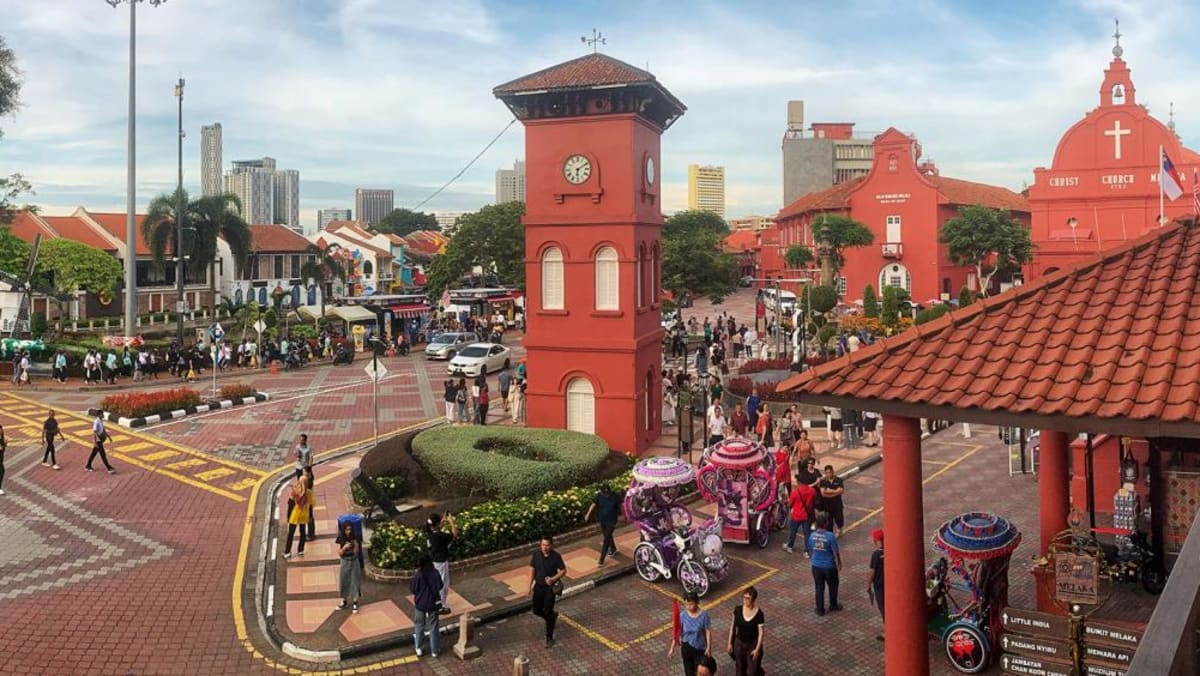
MELAKA –
A 3km walk along the Melaka River-around 45 minutes at an easy pace-has quietly become the most reliable way to take in this World Heritage city’s historic core, linking a half‑dozen pedestrian bridges, riverfront murals and shophouse facades without the stop‑start of weekend crowds.
The route sits just behind Jonker Walk, the Chinatown corridor that roars to life as a night market on weekends. It is best experienced on foot: ride‑hailing and taxis should set passengers down at the fringes so the final approach can be walked, not driven.
Melaka’s riverside now anchors how visitors move through one of Southeast Asia’s most studied heritage districts. The river corridor was re‑engineered in the mid‑2000s with a tidal barrage, continuous embankments and wide public walkways-part flood‑mitigation, part heritage tourism-after Melaka and George Town were inscribed together on the UNESCO World Heritage List in 2008 for their “multi‑cultural heritage” born of five centuries of maritime trade.
Riverfront, rebuilt for walking
Where cargo once moved upriver, a continuous promenade now threads past restored shophouses, pocket gardens and jetties. The rehabilitation introduced interceptor sewers to keep waste out of Sungai Melaka and standardized riverbank walls to stabilize edges and make room for boardwalks; new footbridges were added to knit both banks into a single walkable loop. The works, begun in 2004 and completed in initial phases by 2006-2007, won national design recognition and established a model later referenced by other Malaysian cities as they balanced flood control with heritage‑district tourism.
Cruise boats still ply the river, offering a 45‑minute, 9km round trip for those who prefer to sit through the heat. For everyone else, the first hours after sunset are the most forgiving time to walk, when cafes and bars along the water open their shutters and the bridges light up.
Jonker Walk, on the doorstep
One block inland, Jonker Walk (Jalan Hang Jebat) concentrates Melaka’s Chinatown heritage and the city’s weekend commerce. The corridor is pedestrianized every Friday, Saturday and Sunday evening (about 6 p.m. to midnight), when cartons of trinkets, textiles and street snacks crowd the five‑foot‑ways and roadway alike under temporary market permits issued by the local council. If the thoroughfare is “packed to the gills,” the calmer river path provides an immediate pressure valve and a different vantage of the same historic fabric.
Behind the stalls sit some of the most visited addresses in town: the Stadthuys and Dutch Square across the bridge and, along Jalan Tun Tan Cheng Lock, a string of clan houses and museums that together illustrate the succession of Portuguese, Dutch and British rule that shaped Melaka’s streetscape.
Peranakan heritage, in situ
Melaka’s layered urbanism is inseparable from the Peranakan-or Baba‑Nyonya-community, descendants of early Chinese settlers who intermarried locally and shaped a hybrid material culture visible in townhouse plans, furniture and textiles. The privately run Baba & Nyonya Heritage Museum, housed in three conjoined terrace lots acquired by the Chan family in 1861, sits one street from Jonker Walk and functions as an in‑place primer on the community’s domestic life. Its location inside the World Heritage core underscores a basic truth of the district: the most instructive experiences are indoors and on foot, not glimpsed from a car window.
Eating the archive
Melaka’s culinary map is crowded with well‑reviewed bakeries, third‑wave cafes and heritage kitchens, but one genre is obligatory: Peranakan food, which evolved in the same shophouses now protected for their architectural value. Among the standouts is Peranakan Mansion, a dining room in a historic property on Jalan Tun Tan Cheng Lock that draws consistently strong user ratings for classics like ayam pongteh and itik tim. The restaurant keeps a tight split‑shift schedule-midday and evening seatings, Wednesday closed-and reservations are prudent; walk‑ins can be seated in five minutes or wait upward of an hour depending on the evening crush.
How the river corridor fits the bigger picture
For city officials, the riverwalk isn’t just urban décor; it is a tool to diffuse weekend footfall across the UNESCO buffer zone and to keep visitors spending time-and money-beyond Jonker’s main spine. The Historic City Council in late 2023 expanded repainting works along riverside frontages ahead of the “Visit Melaka Year 2024” push, citing both maintenance and visitor experience on the busy Melaka River Cruise route. In practice, that means shopfront color schemes, signage and walkway upgrades are vetted against heritage‑area guidelines, as state and municipal authorities try to keep tourism revenue rising without eroding the very character that earned Melaka its protected status.
If you go
- Distance and time: The scenic stretch commonly walked is about 3km and takes roughly 45 minutes at a leisurely pace, with multiple pedestrian bridges allowing easy loops.
- Night market: Jonker Walk is pedestrian‑only on Fridays, Saturdays and Sundays from around 6 p.m. to midnight; plan arrivals and exits on the fringes to avoid vehicle gridlock and to respect traffic diversions around the heritage core.
- Peranakan Mansion: 108, Jalan Tun Tan Cheng Lock. Lunch and dinner seatings; closed Wednesdays. Book ahead.
- Respect the heritage setting: Many streets are narrow and residential behind shopfronts. Keep noise down at night and avoid blocking five‑foot‑ways, which serve as public pedestrian space and emergency access routes.
Melaka and George Town remain jointly inscribed on UNESCO’s World Heritage List (since 2008); as of January 10, 2026, Jonker Walk’s weekend pedestrianization continues and Peranakan Mansion maintains midday and evening service with Wednesday closure, under local bylaws that treat the historic core as a managed living city rather than a static museum.
Keep reading
