
SAUÐÁRKRÓKUR, Iceland —
In the far north of Iceland, where January daylight is rationed to a few dusky hours and winds sweep unimpeded across treeless valleys, a teenage exchange student lay awake hearing what sounded like a woman screaming in the dark. It was the wind. She reached for a pen. In this small fishing town on Skagafjörður, ringed by sea and the 989‑metre massif of Mount Tindastóll, the harshness and beauty of the landscape began to insist on a story — and on a life spent writing it. (sunrise-and-sunset.com)
The student was Hannah Kent, who would later become an award‑winning Australian novelist. In Sauðárkrókur she struggled with a language she did not yet speak and with the social invisibility familiar to outsiders. One morning in Icelandic class, as the late sunrise blushed Tindastóll pink, her teacher noticed verses blooming in the margin of her workbook. “What is so important that it stops you from working?” he asked, and, peering down: “Poetry?” “Fyrirgefðu,” she replied — Sorry. The next day he handed her an anthology and an inscription: “To Hannah, From one poet to another, Geirlaugur.” He told her, “Keep going, and you will be published one day.” “I hope so,” she said. He shook his head: “You will be. Just keep going. Áfram.” (en.wikipedia.org)
A classroom nudge that became a vocation
The exchange between student and teacher, remembered in precise, ordinary words, captures something fundamental about Iceland’s civic relationship with literature and the way a public education system can act as a quiet cultural ministry. It was a local teacher’s confidence — free of condescension — that re‑anchored a teenager to a place and to a practice. In Sauðárkrókur, where the secondary school Fjölbrautaskóli Norðurlands vestra serves the wider northwest, that encouragement had institutional roots as well as personal ones, reflecting a national curriculum that treats literature and Icelandic language preservation as core public responsibilities rather than elective refinements.
“You will be. Just keep going. Áfram.”
Kent hurled herself into reading. She met Iceland on the page through the sagas and through Halldór Laxness’s Independent People, the 20th‑century epic by the country’s sole Nobel laureate in literature (1955), whose peasant‑poet heroes fused labor and language. That lineage — poets as public figures; poetry as work — is anchored in medieval traditions where skalds were integral to power and memory, a continuity embodied in figures like Egill Skallagrímsson, the warrior‑poet of Egil’s Saga.
A country where writers are civic heroes
Iceland’s compact language community has long treated authorship as a public good and as an informal pillar of cultural policy. Reykjavík joined UNESCO’s Creative Cities Network as a City of Literature in 2011, an acknowledgment not only of literary heritage but of a living ecosystem that backs new voices and connects local writing to international circuits. In practical terms, small print runs loom large: a thousand copies of a novel in Iceland scales roughly like a million in the United States. For a government tasked with safeguarding a language spoken by only about 400,000 people, supporting such print runs is less a lifestyle subsidy than a form of cultural infrastructure.
The ecosystem crests each autumn with the Jólabókaflóð — the “Christmas Book Flood” — when publishers release most new titles before the holidays, the national book catalogue Bókatíðindi is delivered to every household, and books dominate gift‑giving. It is a retail calendar and a reading ritual at once, a habit formed during World War II import rationing that endures in a country where literary talk remains seasonal small talk. The tradition dovetails with Iceland’s broader cultural‑policy framework, in which the state and municipalities fund libraries, translation grants and writers’ residencies as part of a wider effort, articulated in national cultural policy and underpinned by the Icelandic Constitution’s protections for language and expression, to keep a small linguistic community creatively self‑reliant.
Even the oft‑repeated boast that “one in 10 Icelanders will publish a book” speaks to a social expectation around authorship. While the figure is best read as a headline metric rather than a demographic certainty, Iceland has consistently ranked at or near the top globally for titles published per capita. In a political climate where many countries are cutting arts budgets, Iceland’s choice to keep investing in this ecosystem has become a soft‑power calling card, exporting crime fiction, nature writing and experimental poetry alongside geothermal know‑how and tourism campaigns.
Landscape, language, and a writer’s return
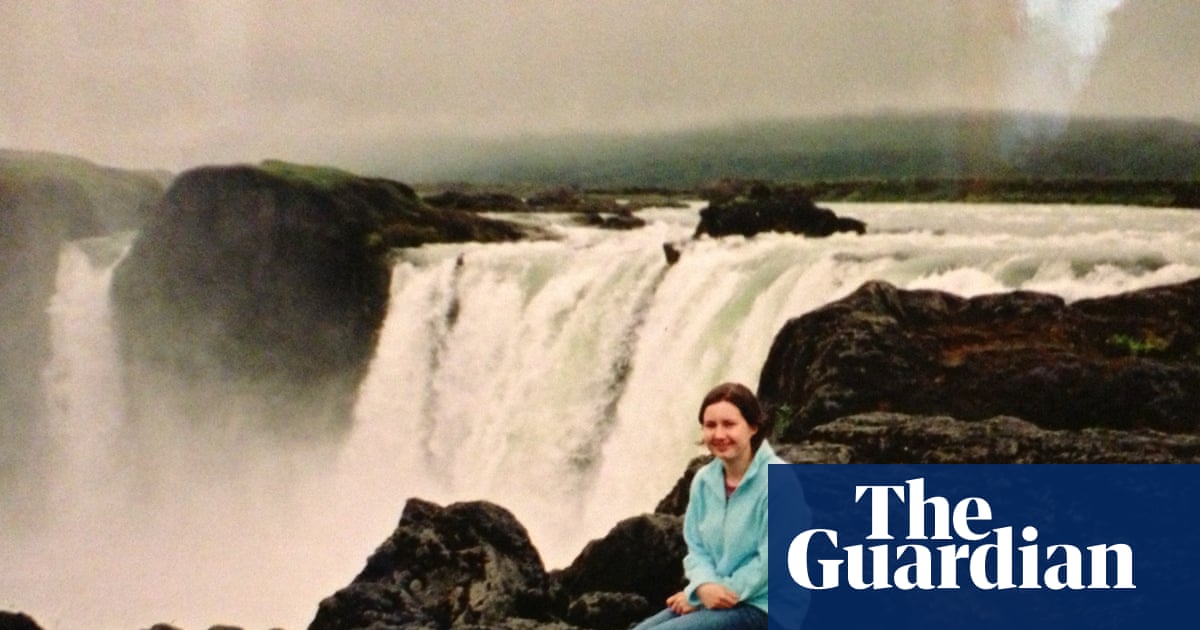
The setting that first disoriented Kent also instructed her. In January, Akureyri — the regional hub a short drive east — sees the sun rise near 11 a.m. and set around mid‑afternoon, with long blue twilights to bookend the day. Winter winds in North Iceland can gust hard enough to tilt travel plans, and, beyond the fjord, the Goðafoss waterfall thunders where the Skjálfandafljót river drops 12 metres over a 30‑metre span, a site bound to the thousand‑year‑old national decision to adopt Christianity. Such details recur in the notebooks of anyone who learns this place by walking in it, and they feed a literary tradition in which weather, topography and law — from medieval assemblies at Þingvellir to contemporary debates over land use and tourism — are woven into the same narrative fabric.
The material culture of everyday labor is monumentalized here, too. On the coast west of Sauðárkrókur, in Blönduós, Kent stood beside Ásmundur Sveinsson’s sculpture Kona að strókka (Woman churning butter) — one of many public tributes by Iceland’s pioneering modernist to the work of rural women, whose strength carved households out of wind. Such public art, often commissioned or maintained by municipalities, is part of the same governance mindset that places literature at the heart of civic identity: the work of ordinary citizens is not only remembered but rendered visible in stone and bronze.
From Sauðárkrókur to “Burial Rites”
Years later, Kent returned to the north to write her debut novel, Burial Rites, a meticulously researched reimagining of Agnes Magnúsdóttir, the last woman executed in Iceland, beheaded in 1830. The novel’s moral charge rests partly on the starkness of that judicial history, which unfolded long before modern human‑rights conventions but still haunts discussions of state power and gender. The book’s international success announced not only a new Australian voice but also a continuing conversation with Icelandic history that began in a Sauðárkrókur classroom, echoing contemporary Icelandic debates over how to remember those subjected to the hardest edges of law.
The town that made the muse
Sauðárkrókur today remains the largest town in Northwest Iceland — about 2,600 people — and the administrative seat of Skagafjörður. Its economy mixes fisheries and dairy with services that anchor the rural region. The valley’s open aspect to the Arctic wind is partly an accident of history: forests and woodlands now cover roughly two percent of Iceland, after centuries of deforestation and decades of deliberate reforestation campaigns. That policy turn — away from exploiting sparse woodland and toward restoration — has been shaped in part by national environmental legislation and long‑term land‑use strategies that weigh climate resilience against the needs of farming and tourism.
For Kent, the cultural infrastructure mattered as much as the physical one. A teacher’s gift of an anthology. Peerless medieval manuscripts conserved in Reykjavík and Copenhagen that UNESCO has recognized as documentary heritage of global value. A capital that treats literature as a civic asset. A winter publishing calendar that assumes ordinary households will spend a holiday night reading. Each encouraged a teenager to keep going — áfram — until she did. The same instinct to formalize protection runs through Iceland’s literary institutions, from university departments to the Árni Magnússon Institute, and through national cultural strategies that, like the UNESCO 2005 Convention on the Protection and Promotion of the Diversity of Cultural Expressions, frame books, languages and stories as matters not only of taste but of policy.
Reykjavík remains a UNESCO City of Literature (designated 2011), and the Bókatíðindi catalogue continues to be distributed annually to households nationwide ahead of the Jólabókaflóð. For a teenager in a windswept northern classroom, that meant a signal from the state as well as from a single teacher: in Iceland, writing is not a private eccentricity but part of the country’s shared business — something to keep going, áfram, as a public act.
Related reading
