
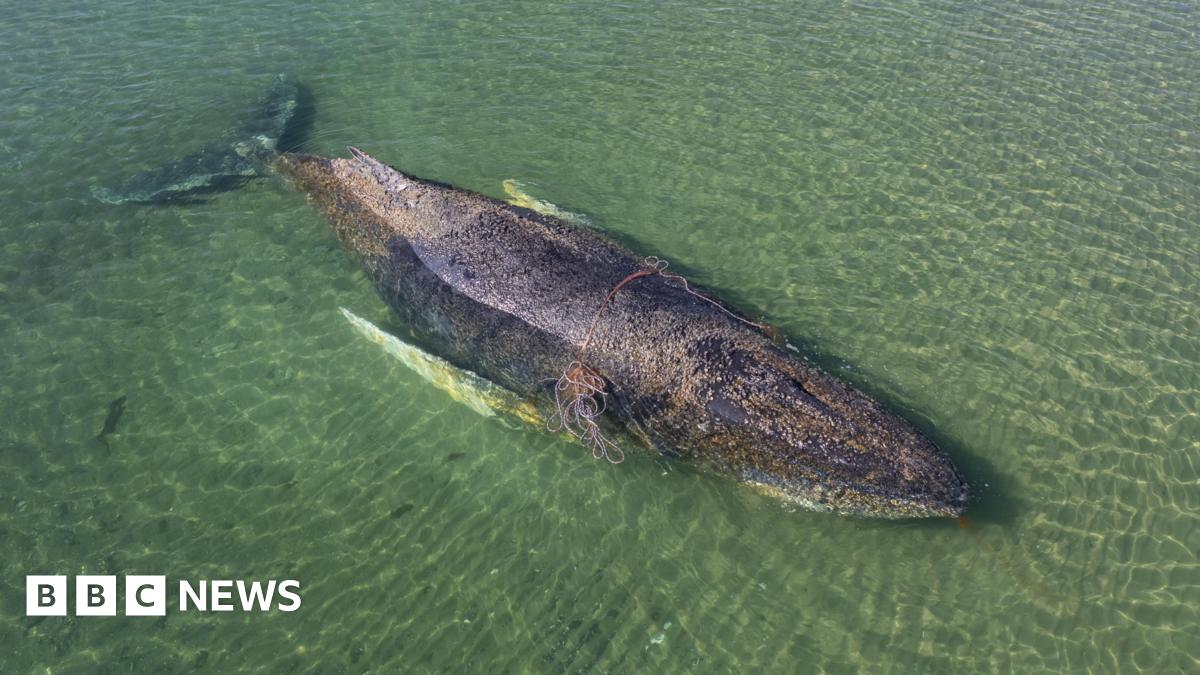
COPENHAGEN – Danish environmental authorities have confirmed the identity of a whale carcass discovered off the island of Anholt, retrieving a tracking device that provides critical data on the animal’s movements.
The recovery of the tracking device marks a significant point for marine researchers, as satellite tagging is a primary tool used by international conservationists to map migratory corridors and understand the impact of climate change on marine mammal distribution in the North and Baltic Seas.
The incident occurs in the Kattegat, the strategic strait separating Denmark and Sweden. This region serves as a vital ecological transition zone, though it is also one of Europe’s most heavily trafficked shipping lanes, increasing the risk of vessel strikes and other anthropogenic threats to cetaceans. The remote island of Anholt, situated roughly midway between the two mainlands, sits close to several key shipping routes and is surrounded by waters designated as sensitive marine habitat.
The carcass was reportedly spotted on Thursday off the coast of Anholt. While authorities were not immediately able to confirm the identity of the animal upon the initial report, the Danish Environmental Protection Agency (EPA) stated that conditions on Saturday allowed for verification and the successful retrieval of the tracking hardware. Officials said the tag will now be analyzed in cooperation with marine research partners to reconstruct the whale’s final route and behavior before its death.
Regarding the management of the remains, the agency provided a clear directive on the biological handling of the site.
“There are no concrete plans to remove the whale from the area or to perform a necropsy, and it is not currently considered to pose a problem in the area,” the agency told AFP.
Authorities noted that leaving large cetacean carcasses in place is consistent with standard practice in relatively open waters, where natural decomposition supports marine and coastal food webs, provided there is no immediate navigational or public health risk.
Public Health and Safety Protocols
Despite the decision not to move the carcass, the Danish EPA has issued strict warnings to the public and local maritime operators to maintain a safe distance from the animal. Recreational boaters, swimmers and residents have been advised not to approach the whale from land or sea, and not to attempt to climb onto or cut into the carcass.
The agency highlighted two primary risks associated with decaying marine mammals:
- Zoonotic transmission: Diseases that can be transmitted from marine mammals to humans through direct contact with tissue, fluids or aerosols, especially where open wounds or mucous membranes are exposed.
- Gas accumulation and rupture: The potential for a violent physical burst due to the buildup of large volumes of internal gases produced during the decomposition process.
The phenomenon of “exploding whales” is a documented biological occurrence. As anaerobic bacteria break down organic matter in the gut, gases such as methane and hydrogen sulfide accumulate. In large cetaceans, the thick layer of blubber acts as a pressure vessel, which can lead to a sudden rupture if the carcass is punctured or if internal pressure reaches a critical threshold. Authorities emphasized that the risk is heightened if individuals attempt to interfere with the remains using knives, hooks or machinery.
Local municipalities and police districts have been briefed on the EPA’s guidance so they can respond to any reports of interference with the carcass and enforce safety perimeters if necessary.
Marine Monitoring and Policy in the Kattegat
The retrieval of the tracking device is a priority for the EPA and affiliated research institutions. Satellite tags provide granular data on dive depth, swimming speed and geographic trajectory, allowing scientists to identify “hotspots” where whales are most vulnerable to industrial activity, including dense shipping corridors and areas of intensive fishing or energy development.
The Kattegat is subject to stringent environmental regulations under the European Union’s Marine Strategy Framework Directive, which aims to achieve “Good Environmental Status” for EU marine waters. Data from tagged animals can feed into national marine spatial planning and EU reporting obligations, informing where speed reductions, rerouted traffic separation schemes or seasonal exclusion zones might be warranted to reduce collision and noise risks.
Tracking deceased animals also allows authorities to determine if the death was a result of natural causes or environmental stressors, such as entanglement, pollution or noise interference from sonar and shipping. In recent years, Denmark has increased its investment in marine monitoring in the Kattegat as part of broader North Sea energy and biodiversity strategies, while balancing obligations to maintain safe navigation in one of Europe’s busiest maritime corridors.
The Danish Environmental Protection Agency continues to monitor the site to ensure the carcass does not drift into critical shipping channels or pose an evolving hazard to the local coastline. Should conditions change – for example, if strong winds push the remains toward bathing beaches or harbor entrances – the agency has indicated that it can reassess and coordinate with coastal authorities on possible removal or controlled dismantling operations.
Related reading
