
SINGAPORE –
Asia’s railways are entering 2026 with a pivot toward sightseeing as much as speed, unveiling restored mountain lines, glass‑roofed coaches and new luxury itineraries that frame forests, coasts and highlands as the main attraction rather than the backdrop. From India’s UNESCO‑listed hill railways to Taiwan’s Alishan switchbacks and Japan’s boutique cruise trains, operators are aligning timetables, rolling stock and ticketing rules to turn views into a core product for domestic and international travelers.
The shift matters well beyond tourism. Scenic rail is where heritage preservation, regional development and cross‑border connectivity meet. Governments from New Delhi to Taipei and Tokyo are modernizing access from major cities to rural gateways, while Southeast Asian corridors are knitting together mainland routes that could eventually allow continuous rail journeys from China through Laos and Thailand to the Malay Peninsula. As climate commitments and congestion concerns harden transport policy, ministries and regulators are also recasting these lines as lower‑carbon alternatives to short‑haul flights and highway expansion.
India’s hill railways add modern access to heritage views
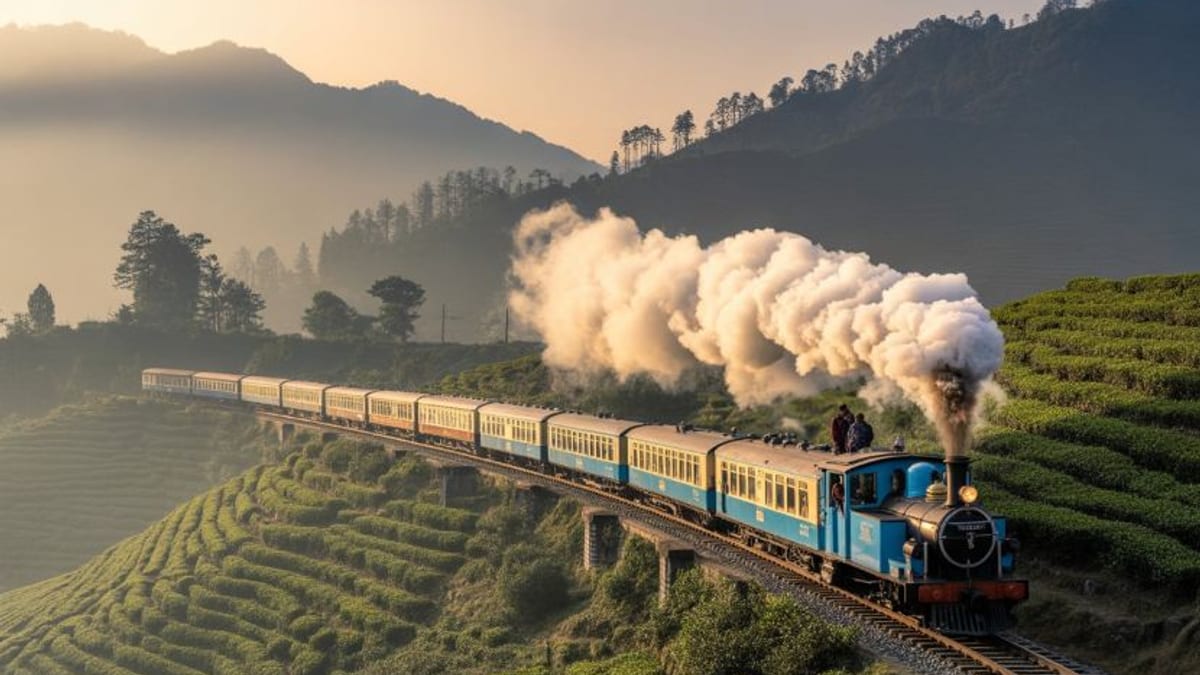
India’s mountain railways – including the Darjeeling Himalayan Railway, part of UNESCO’s Mountain Railways of India inscription – anchor the country’s rail‑based sightseeing map and remain active common‑carrier lines, a dual role that requires conservation alongside operations. The network sits within a highly centralized governance structure overseen by the Ministry of Railways and its statutory authority, Indian Railways, which must balance fare policy, safety standards and heritage obligations under national law and UNESCO conventions.
To showcase valleys and tea‑garden ridges, Indian Railways has expanded glass‑roof Vistadome coaches across multiple zones; official statistics recorded 111 Vistadome coaches in service as of September 30, 2024. On the Darjeeling line itself, specialized vista cars are among the tourist offerings on “joy ride” segments. These panoramic coaches, with large windows and rotatable seats, are being used nationwide to rebrand slower routes as view‑first journeys.
Crucially, 2026 brings faster access into the Himalayan foothills. The Howrah-New Jalpaiguri Vande Bharat Express, commercially launched on January 1, 2023, shortens Kolkata-Siliguri travel to around 7½ hours – a key gateway to Darjeeling. In January 2026, Indian Railways introduced the first Vande Bharat Sleeper on the Howrah-Kamakhya corridor, improving overnight links into the Northeast and facilitating onward connections to hill lines and scenic routes. The premium services reflect a broader policy push to use higher‑yield trains to cross‑subsidize loss‑making but socially important branch lines, including heritage corridors.
At the same time, new Northeast Frontier Railway projects are edging into dramatic terrain. In February 2026, statutory inspections and trial runs began on the first phase of the Murkongselek-Pasighat new line toward Arunachal Pradesh – a route being promoted as both a strategic connector and a future scenic ride along the Siang basin once full passenger services begin. The project advances New Delhi’s long‑running goal of improving connectivity to India’s border states, while raising familiar questions about land acquisition, environmental clearances and the resilience of mountain infrastructure.
Taiwan’s Alishan Forest Railway moves from restoration to reinvention
After 15 years of typhoon‑related disruptions, Taiwan’s century‑old Alishan Forest Railway fully reopened from Chiayi to the Alishan recreation area in July 2024, reinstating one of Asia’s most storied mountain ascents through cypress forests, tunnels and switchbacks. Authorities paired the reopening with new safety systems on challenging sections, reflecting tighter oversight of ageing rail assets after a series of high‑profile accidents elsewhere on the island.
In 2026, the line shifts from recovery to premium sightseeing. The Alishan Forest Railway and Cultural Heritage Office has unveiled “EVI,” a contemporary sightseeing trainset with upgraded interiors and cultural storytelling elements, scheduled to enter service on the Chiayi-Alishan main line after trials this year. Seasonal steam specials and blossom‑timed departures continue to sell out quickly, underscoring demand for rail‑based nature travel and giving local governments an incentive to integrate rail timetables with park management and crowd‑control plans.
Booking remains a planning essential. Standard Alishan services open for online reservations 14 days in advance (Friday/Saturday releases cover bookings through the following Sunday). From March 2, 2026, unpaid online reservations are automatically canceled to free seats for other travelers – a change aimed at improving utilization on trains with limited capacity and curbing speculative bookings that complicate demand forecasting for the state‑run operator.
Japan doubles down on boutique and luxury rail
Japan’s operators are refining the country’s mix of high‑speed access and slow‑travel rail, within a regulatory framework where private and JR Group companies operate under national safety and infrastructure laws while aligning with government tourism objectives. JR Kyushu’s Seven Stars in Kyushu will launch five renewed itineraries from March 2026, emphasizing coastal arcs, volcanic landscapes and on‑board cultural programming. Applications for these journeys opened on October 1, 2025, reflecting the luxury market’s long lead times and the need to coordinate with regional tourism offices and local governments along the route.
In western Japan, JR West continues to market the Twilight Express Mizukaze for 2026 departures; the company opened sales for March-June 2026 trips in its 28th booking round, keeping the train’s small‑capacity, multi‑day format focused on scenic capes and Sea of Japan cliffs. Patronage data from such ultra‑premium services feeds into national debates over how far rail operators should lean on high‑end tourism to offset demographic decline on conventional routes.
Sightseeing without sleepers is expanding too. JR Shikoku is introducing the 3600‑series hybrid DMU from 2026 to sustain rural lines threading Shikoku’s river valleys and terraced farmlands; the new trains pair large windows with lower‑emission propulsion for view‑first local services. The investment signals that even smaller operators see rolling‑stock renewal as essential to winning subsidies and regulatory support for lines that might otherwise face closure.
For travelers building 2026 itineraries, reservation rules shape availability. On the national network, reserved seats generally open at 10:00 a.m. (JST) exactly one month before departure; ultra‑limited luxury trains such as Shiki‑shima use separate application windows and lotteries months ahead of travel. These mechanisms also give operators more predictable revenue streams, a key concern as Japan’s transport regulators push for financial discipline alongside service quality.
Cross‑border corridors turn vistas into multi‑country routes
The China-Laos Railway has become the backbone for mainland Southeast Asia rail tourism planning. Since launching Kunming-Vientiane international passenger services on April 13, 2023, cross‑border ridership has steadily grown, with railway authorities adding a second pair of international trains in July 2025 to total four daily services. Tourism boards now market the route as a spine for itineraries into northern Laos’ mountains and river valleys, while customs and immigration agencies along the line refine joint‑inspection procedures to keep cross‑border processing times competitive with air travel.
Thailand’s section of the envisioned China-Laos-Thailand corridor – the Bangkok-Nong Khai high‑speed project – remains under construction and politically sensitive. A deadly January 2026 accident, when a launching gantry crane collapsed onto a moving passenger train near Nakhon Ratchasima, underscored the engineering and safety complexity of the line even as authorities maintain a medium‑term goal of through services. The incident is likely to amplify parliamentary scrutiny of procurement, contractor oversight and occupational‑safety enforcement across Thailand’s wider infrastructure pipeline.
To the south, Malaysia’s west‑coast network now allows uninterrupted ETS travel from the Thai border to Johor Bahru following the December 2025 commissioning of the Gemas-Johor Bahru electrified double‑tracking project – a step that makes rail‑based scenic journeys down the peninsula logistically simpler and shifts more of the north-south corridor onto electric traction. The separate, China‑backed East Coast Rail Link has passed the 85-90% construction mark and is scheduled to open in phases from 2027 to 2028, adding a new passenger and freight corridor across highland and coastal scenery and deepening the country’s long‑term commitments under its bilateral investment agreements.
How to stitch the views together in 2026
With timetables, booking windows and altitude in play, 2026 itineraries work best when modern access is paired with heritage branches and when travelers pay attention to the different regulatory regimes that govern ticketing, safety and border control along each leg:
- Use India’s Vande Bharat services to position into New Jalpaiguri/Siliguri for Darjeeling’s hill railway; align onward toy‑train rides with Vistadome segments where available, and watch for periodic operational advisories issued by Indian Railways during monsoon season.
- In Taiwan, secure Alishan seats 14 days out and note the new instant‑payment rule; pair the main‑line ascent with seasonal event trains or local shuttle lines at altitude, bearing in mind that park authorities may cap daily visitor numbers on peak weekends.
- In Japan, plan one month ahead for reserved seats on popular sightseeing trains; apply months in advance for Seven Stars, Mizukaze or Shiki‑shima, which use lottery‑style application systems rather than standard ticket counters.
- For mainland Southeast Asia, anchor a route on the China-Laos main line and monitor Thai construction and safety advisories if planning future through‑journeys toward Bangkok, as high‑speed operations will ultimately depend on national regulators certifying both civil works and rolling stock.
As of March 29, 2026, JR Kyushu confirms renewed Seven Stars itineraries begin from March 2026 with applications open; Taiwan’s Alishan Forest Railway is fully operational between Chiayi and Alishan and has announced its premium “EVI” sightseeing train for 2026; the China-Laos Railway continues daily cross‑border passenger services launched on April 13, 2023; and India’s Vande Bharat Sleeper on the Howrah-Kamakhya route is in service. Against that backdrop, transport ministries across the region are being pressed by both tourism lobbies and climate policymakers to ensure that forthcoming railmaster plans – from India’s national rail investment programs to cross‑border initiatives framed under the Association of Southeast Asian Nations’ connectivity agenda – keep scenic corridors firmly on the map rather than treating them as nostalgic luxuries.
Worth a look
