
The Architecture of Interstellar Messaging
The effort to communicate with potential extraterrestrial intelligences represents one of the most complex challenges in information design. Unlike terrestrial communication, which relies on shared protocols and evolving standards, interstellar messaging requires the creation of a “universal language” based on fundamental physics and mathematics.
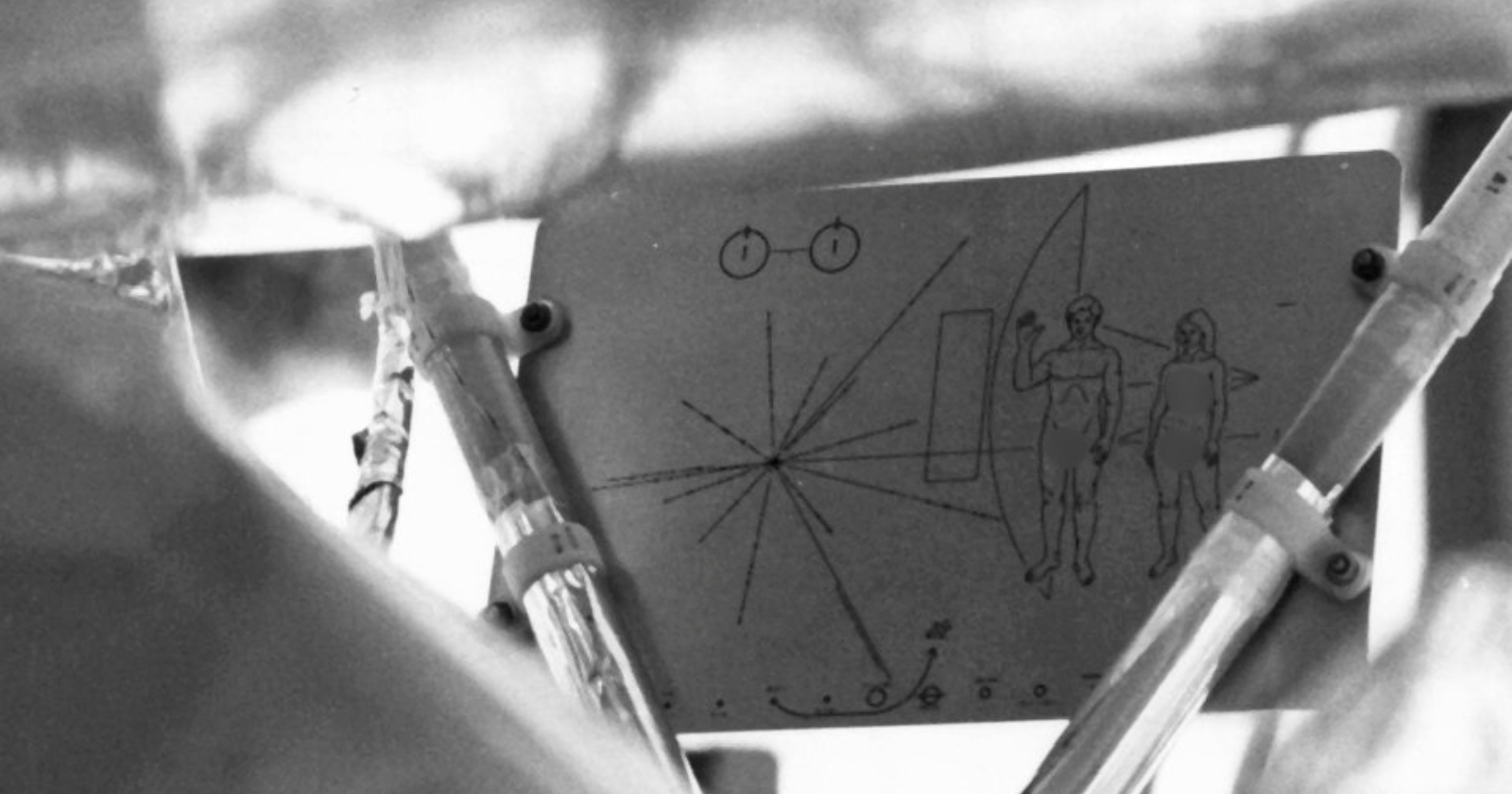
The Pioneer 10 and 11 missions initiated this protocol using gold-anodized aluminum plaques. These were not mere artistic expressions but technical beacons designed to provide a galactic coordinate system. By utilizing a pulsar map to locate the Sun and a diagram of the hydrogen atom-the most abundant element in the universe-NASA established a baseline of shared scientific knowledge. However, the human element of these messages introduced a variable that the engineers had not fully accounted for: terrestrial social governance.
As with any government-sponsored communication, these messages were ultimately subject to public accountability frameworks and the political risk calculations of a federal agency. NASA’s scientists were designing for distant intelligences that might never see the plaques; elected officials and regulators were focused on constituents and media who would see them immediately.
Engineering for Deep Space Longevity
To survive the harsh environment of the interstellar medium, the hardware used for these messages had to be impervious to vacuum degradation, extreme temperature fluctuations, and micrometeorite impacts. The shift from the Pioneer plaques to the Voyager Golden Records marked an evolution in data density and storage capacity, but it also marked a shift in institutional ambition: from a minimal “we are here” notice to a curated, quasi-official portrait of Earth.
| Feature | Pioneer Plaque | Voyager Golden Record |
|---|---|---|
| Material | Gold-anodized aluminum | Gold-plated copper with protective cover |
| Data Format | Engraved 2D line drawings | Analog phonograph record |
| Information Scope | Location and basic anatomy | Audio, 55 languages, 100+ images |
| Design Intent | Rapid identification | Comprehensive cultural archive |
These engineering decisions unfolded inside a U.S. federal agency that operates under the National Aeronautics and Space Act, the founding law that defines NASA’s mandate, its duty to disseminate information to the public, and its status as a civilian space agency rather than a military one. That framework quietly shaped what could be launched as an official representation of humanity and what would be deemed politically untenable for a taxpayer-funded mission.
The Friction Between Scientific Accuracy and Public Optics
While the technical specifications of the messages were rigorous, the depictions of humanity became a flashpoint for regulatory and social censorship. Carl Sagan, leading the effort, argued for anatomical accuracy, positing that an alien biologist would find a nude human more informative than one obscured by culturally specific clothing.
The resulting tension between scientific utility and public modesty created a unique form of data filtration. When images of the Pioneer plaque reached the public, American newspapers began airbrushing the figures, removing genitals and nipples. This reaction signaled to NASA that the agency’s role as a scientific body was inextricably linked to its role as a government entity subject to public scrutiny and to evolving norms around decency, representation, and the use of public funds.
Internally, that scrutiny translated into risk-averse decision-making. Although there was no specific statute governing “interstellar content,” NASA leadership interpreted their broader obligations-to maintain public trust, to avoid partisan controversy, and to operate within federal standards of appropriateness-as a constraint on how explicitly the human body could be depicted when it was, in effect, being canonized as the official human form aboard a flagship mission.
This conflict peaked during the assembly of the Voyager records. The committee attempted to include a photograph of a man and a pregnant woman to provide a realistic biological reference. This was vetoed by NASA leadership. An artist on the project, Jon Lomberg, later described the rejected image as “a man and a pregnant woman quite unerotically holding hands.”
To bypass the censorship while maintaining some level of biological data, the team implemented a technical compromise:
- The Silhouette Strategy: A pure black outline of the couple was used, removing skin and genitals to prevent newspaper censorship while retaining the visual evidence of internal gestation and sexual dimorphism.
- Contextual Exception: An anatomically correct man and woman were permitted in the Diagram of Vertebrate Evolution, as the scientific context of evolutionary biology provided a regulatory shield that photographic portraits did not.
What emerged was an early case study in space governance: a scientific team optimizing for intelligibility across light-years, constrained by domestic political optics across news cycles. The content that left the Solar System was, in effect, cleared through an informal but powerful approval process blending scientific review, legal risk assessment, and reputational management.
Encoding Humanity in Analog Formats
The decision to use an analog phonograph record for Voyager was a strategic choice in data integrity and interpretability. Digital formats rely on specific hardware and software versions that become obsolete within decades. Analog signals, conversely, are physical representations of sound and image waves that can be decoded by any civilization that understands the basic physics of rotation, vibration, and frequency.
The Voyager records contain a sophisticated array of data designed to survive for up to a billion years:
- Acoustic Archives: Sounds of Earth, music from Bach to Chuck Berry, and neurological data derived from human brain activity.
- Visual Encoding: More than 100 still images encoded as analog video signals, ranging from scientific diagrams to everyday scenes.
- Linguistic Maps: Greetings in 55 different languages to demonstrate terrestrial diversity and signal that no single culture speaks for the species.
Encoding choices doubled as policy choices. Which languages were included, which images represented “normal” life, and which scientific facts were elevated into this ultra-long-term archive were decisions made by a small committee but endorsed, implicitly, by a national space agency acting under its public-interest charter. In practice, that turned an engineering artifact into a soft-power instrument and an unspoken act of cultural diplomacy.
Currently, Voyager 1 has traveled approximately 26 billion kilometers from Earth, making it the most distant human-built object in existence. As it drifts through the interstellar void, the messages it carries serve as a permanent record of not only human biology and technology but also the social constraints, governance structures, and institutional trade-offs of the era in which they were created. Long after today’s policy debates have faded, those gold records will continue to broadcast a curated, negotiated answer to a deceptively simple question: who did our public institutions decide we were, when they had one chance to say so to the universe?
Worth a look
