
A skin-like patch aims to hear a quieter kick
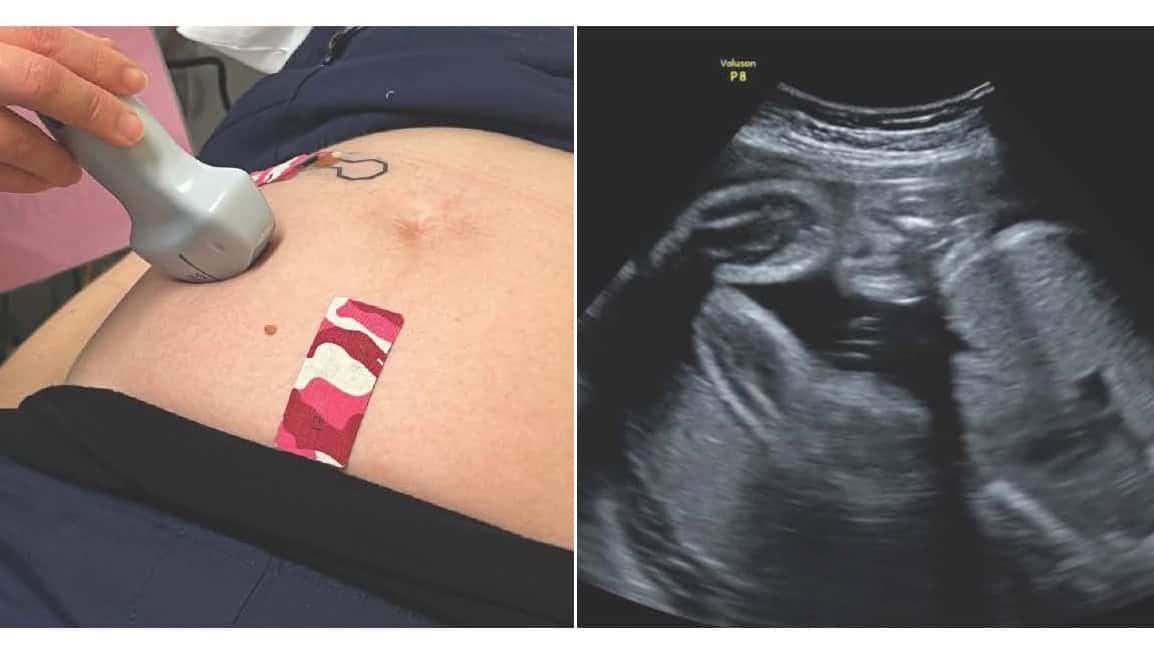
An adhesive, Band‑Aid‑style wearable that pairs a pressure sensor with a strain sensor is being developed to continuously track foetal movement on the maternal abdomen. The goal is simple and high‑stakes: detect periods of reduced foetal movement early enough that maternity teams can intervene before a problem escalates. The approach shifts assessment from sporadic “kick counts” toward continuous, passive monitoring that can run at home without clinic equipment.
From kick counts to continuous sensing
Foetal movement is a frontline indicator of well‑being, yet outside the clinic it is typically assessed by maternal perception. In hospital, clinicians can escalate to cardiotocography, ultrasound, or non‑stress tests, but these tools are episodic, appointment‑based, and rarely available around the clock. A comfortable adhesive patch that measures movement patterns over hours or days could fill that gap, offering trend data between visits and a clearer baseline for each pregnancy.
Researchers have long known that a sustained reduction in foetal movement can precede stillbirth or preterm labour, but detecting that change early enough is difficult when data depends on memory and paper charts. A patch that listens continuously could give clinicians an earlier signal that a pregnancy is drifting away from its usual pattern, particularly for patients with conditions such as gestational diabetes or pre‑eclampsia where closer surveillance is already recommended.
How an adhesive pressure-strain patch could work
The research describes a thin, flexible patch that adheres to the abdomen and senses micro‑deformations of the skin surface. Combining pressure and strain channels helps separate true foetal activity from confounders such as maternal breathing, posture changes, or coughing. While implementations vary, systems of this type typically integrate the following layers:
- Flexible substrate and skin‑safe adhesive designed for multi‑day wear.
- Co‑located pressure and strain sensing elements to capture complementary signals.
- Low‑power microcontroller for on‑patch filtering and feature extraction.
- Short‑range wireless (often Bluetooth Low Energy) to a companion phone or hub.
- Edge analytics on the phone, with optional encrypted upload for clinical review.
Unlike consumer wearables that prioritise step counts or sleep scores, these devices are being engineered first as medical sensors. That shifts the design emphasis from engagement features to signal fidelity, robustness during daily life and a data trail that can withstand clinical and legal scrutiny.
Signal processing and decision logic
- Pre‑processing: motion artifact rejection, band‑pass filtering to isolate movement signatures from respiration and maternal motion.
- Feature generation: time‑domain burst detection, frequency‑domain energy bands, cross‑channel correlation between pressure and strain.
- Event classification: thresholding or supervised models to label candidate foetal movements and aggregate them into minute‑by‑minute counts.
- Alerts: configurable thresholds for reduced movement over defined windows, with clinician‑approved guidance to avoid alarm fatigue.
- Human‑in‑the‑loop: clear pathways to escalate to teletriage or in‑person assessment when patterns deviate from baseline.
In practice, that logic has to be tuned not just for technical accuracy but for workflow reality. A hospital or insurer will want evidence that the alerting scheme reduces emergency visits and adverse outcomes, rather than simply generating a new stream of red flags that midwives and obstetricians must clear each morning.
Where it fits alongside existing tools
| Modality | What it measures | Typical setting | Strengths | Limitations |
|---|---|---|---|---|
| Maternal kick counts | Subjective perception of movement | Home | Zero hardware; well established | Recall bias; variable adherence; no continuous log |
| Cardiotocography (CTG) | Foetal heart rate + uterine activity | Clinic/labour ward | Clinical standard for intrapartum monitoring | Intermittent; equipment and staff required |
| Doppler ultrasound | Foetal heart rate; periodic checks | Clinic | Objective heart rate data | Point‑in‑time; operator dependent |
| Adhesive pressure-strain patch | Abdominal wall micro‑deformations from movement | Home/ambulatory | Continuous, passive, trendable data between visits | Needs robust artifact handling; placement and body habitus can affect signal |
For health systems already experimenting with remote cardiotocography or home blood‑pressure cuffs in pregnancy, a foetal‑movement patch would be one more node in an emerging hybrid model: a few in‑person visits augmented by continuous data streaming in from the living room sofa.
Equity and performance considerations
- Body habitus: performance should be characterized across BMI ranges and abdominal geometry.
- Placental position: anterior placenta can dampen perceived movement; algorithms must adapt to reduced amplitudes.
- Gestational age: movement patterns evolve across trimesters; models should be gestation‑aware.
- Daily activities: sitting, sleep positions, and exercise introduce confounding motion that needs reliable classification.
- Baseline personalization: thresholds calibrated to each pregnancy reduce false positives and missed events.
These equity questions are not academic. If early commercial deployments work best on lower‑BMI bodies, on patients who can keep a smartphone charged and connected, or on those who speak the language of the app, they risk widening gaps in stillbirth rates that already track along socioeconomic and racial lines in many countries.
Safety, privacy, and security fundamentals
- Biocompatibility: skin‑contact materials should meet the ISO 10993 biocompatibility standard for prolonged wear.
- Electrical and EMC safety: home‑use devices typically align with the IEC 60601 family, including home‑use and electromagnetic compatibility clauses.
- Cybersecurity: software bills of materials, authenticated updates, encryption in transit and at rest, and threat modeling consistent with current medical device cybersecurity expectations.
- Privacy: clear consent, transparent data retention, and de‑identification where possible; HIPAA in the US and GDPR in the EU set the baseline.
- Human factors: intuitive placement guides, adhesive removal aids, and fallbacks when connectivity or battery is low.
Pregnancy data is particularly sensitive, and any deployment at scale will be judged not only on its ability to pick up a quieter kick but on how it handles access control, law‑enforcement requests and commercial use of highly intimate signals over time.
Regulatory pathway and evidence expectations
- Classification and route: a non‑invasive foetal movement monitor intended for home use would typically seek Class II clearance; if no suitable predicate exists, a De Novo route may be required.
- Clinical validation: prospective studies comparing algorithmic movement counts against expert‑labeled events and clinical endpoints, with sensitivity/specificity and false‑alarm rates reported.
- Population breadth: stratified results across BMI, gestational age, placental location, and relevant comorbidities.
- Usability: summative human‑factors testing in realistic home scenarios, including misplacement and re‑adhesion flows.
- Reliability: durability of adhesion over multi‑day wear, charging cycles, and firmware update safety.
Regulators are also signalling that continuous‑monitoring tools will be judged over their entire lifecycle, not just at clearance. In the US, for example, the Food and Drug Administration’s evolving framework for software-based and AI-enabled medical devices emphasises post‑market surveillance, change management and real‑world performance monitoring as algorithms learn on new data.
Integration into maternity care pathways
- Remote programmes: incorporation into existing tele‑maternity care with clinician dashboards that surface deviation from each patient’s baseline.
- Triage protocols: predefined steps for reduced‑movement alerts that avoid over‑escalation while minimizing delay to in‑person assessment.
- Reimbursement: potential alignment with remote physiological monitoring frameworks where applicable, contingent on clinical utility and regulatory status.
- Equitable access: low‑data modes for areas with limited connectivity and multilingual instructions to reduce barriers to use.
Ultimately, adoption will depend less on the novelty of the sensor and more on whether overstretched maternity services can integrate yet another stream of information without burning out clinicians. That will require clear governance: who watches the dashboard, when they must act and how responsibility is shared between hospital, community midwives and technology providers.
The 2026 takeaway
A Band‑Aid‑like adhesive that fuses pressure and strain sensing offers a credible route to continuous foetal‑movement tracking between clinic visits. As prototypes move from lab studies into real pregnancies, the technology’s impact will hinge on artifact‑resilient algorithms, rigorous validation in diverse populations, and a safety, privacy and regulatory posture that earns trust from both clinicians and expectant families. If those hurdles are met, a skin‑like patch that quietly listens at home could become as routine in high‑risk pregnancies as the blood‑pressure cuff is today.
