
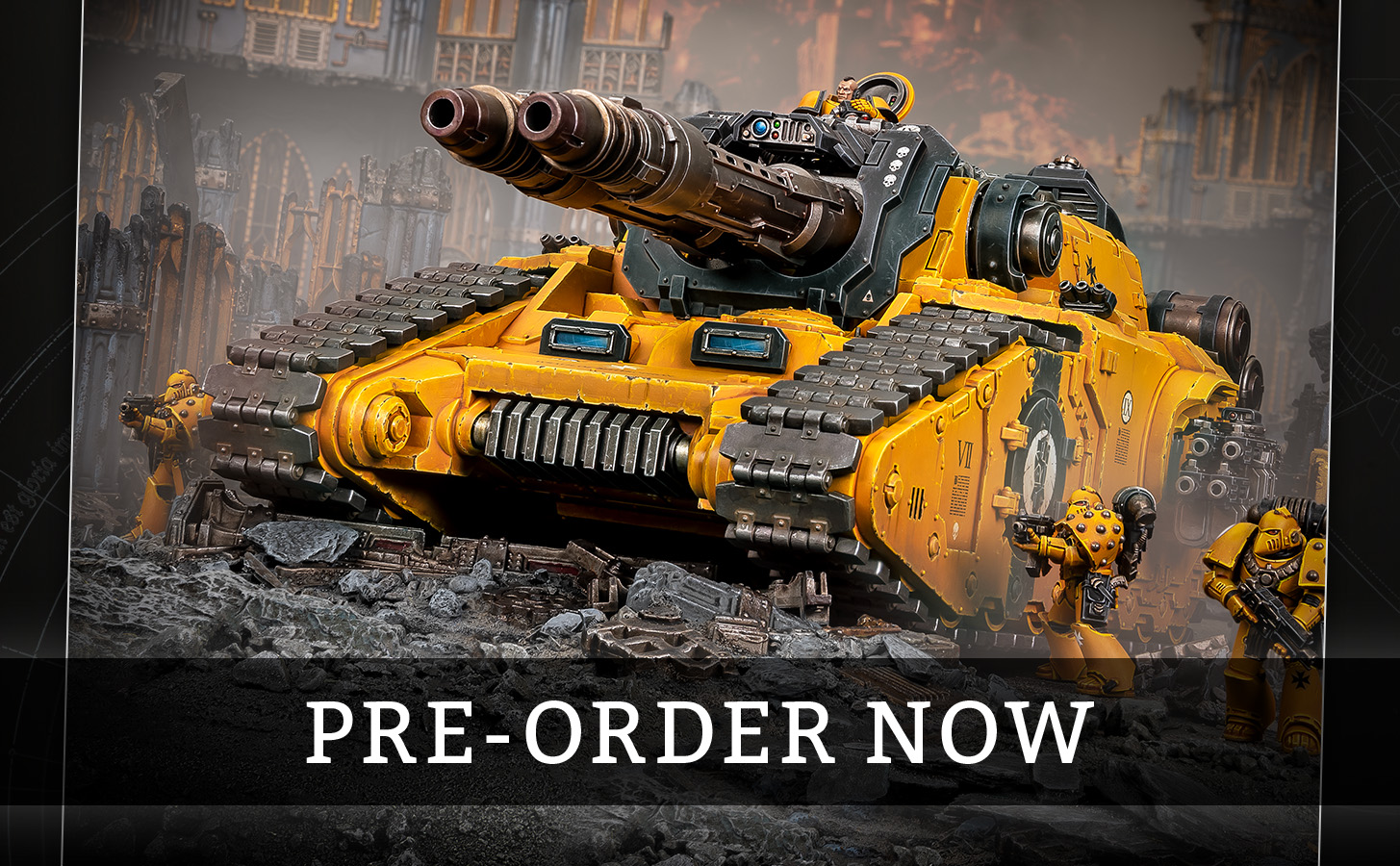
Precision Engineering in Miniature Scale
The release of the Falchion and Spartan Prometheus marks a significant iteration in the production of high-fidelity gaming miniatures, and underscores how far the tabletop sector has moved toward industrial-grade manufacturing disciplines. These assets represent the intersection of advanced Computer-Aided Design (CAD) and high-impact polystyrene (HIPS) injection molding, allowing for intricate geometric detail that remains durable during assembly and gameplay and repeatable at scale across global production runs.
The transition from traditional resin or metal castings to precision-engineered plastics has fundamentally altered the manufacturing overhead for large-scale miniature lines. By utilizing multi-part molds, developers can produce complex vehicle chassis with tighter tolerances, reducing the “gap” issues prevalent in older hobbyist kits and cutting rework, returns, and customer-service costs. The same discipline aligns manufacturers more closely with formal product-safety and materials standards regimes, a growing concern as miniatures move from niche hobby stores into mainstream retail channels.
| Unit Designation | Strategic Role | Production Context |
|---|---|---|
| Falchion | Heavy Tank / Breakthrough | Horus Heresy / Age of Darkness |
| Spartan Prometheus | Heavy Transport / Fire Support | Horus Heresy / Age of Darkness |
IP Cross-Pollination and Market Expansion
Integrating iconic tanks from the Horus Heresy into broader preview cycles suggests a strategic pivot in intellectual property management rather than a one-off fan-pleasing gesture. By bridging the gap between the Age of Darkness and the current 40k ecosystem, the publisher is maximizing the utility of its digital sculpts and mold assets while strengthening a single, coherent IP universe across multiple product lines, rule systems, and regions.
This approach minimizes the R&D costs associated with creating entirely new assets from scratch. Instead, the company leverages a “legacy asset” framework, updating existing designs to fit new rule-sets and aesthetic standards. In practice, that means concept art, CAD files, and lore developed for one era can be refreshed and redeployed into another without diluting continuity. For institutional investors tracking franchise durability, and for regulators scrutinizing the concentration of cultural IP portfolios, this kind of cross-era reuse signals a deliberate strategy to extend the commercial half-life of fictional technologies, characters, and vehicles.
It also ensures a consistent visual language across different eras of the lore while stimulating demand among both veteran collectors and new entrants. For game stores and organized-play organizers, that consistency simplifies merchandising and event programming: the same kits, painted in different schemes, can appear in multiple formats, reducing fragmentation in what is effectively a physical-media ecosystem.
The Logistics of High-Velocity Pre-Orders
The synchronization of Saturday and Sunday pre-order windows is a calculated logistical maneuver designed to manage server load and consumer psychology in a period when high-profile launches can resemble flash sales. By staggering the reveal and the purchase window, the company creates a high-pressure demand cycle that ensures rapid inventory turnover while still leaving regulators and consumer groups watching for the line between smart marketing and artificial scarcity.
The direct-to-consumer (DTC) model employed here bypasses traditional retail bottlenecks, allowing for real-time data collection on consumer preferences by region, time zone, and product mix. This telemetry informs future production volumes, reduces the risk of overstocking or under-producing specific unit types, and feeds into corporate disclosures about demand trends in fantasy and science-fiction gaming. It also concentrates responsibility for compliance with consumer-protection, product-safety, and online-sales rules squarely on the publisher, rather than dispersing it across thousands of independent retailers.
- Demand Shaping: Controlled release windows create scarcity and urgency, a tactic familiar from sneaker and electronics drops, but now increasingly visible in hobbyist plastic.
- Supply Chain Integration: Direct orders allow for leaner inventory management at the warehouse level and clearer audit trails for recalls or quality interventions, should they be required.
- Digital-to-Physical Pipeline: Rapid iteration from digital sculpt to physical pre-order optimizes time-to-market and enables localized variants, but also shortens the window for regulators or standards bodies to react to emerging risks.
The reliance on international quality standards for plastics and materials ensures that these complex models remain consistent across global shipping routes, regardless of temperature fluctuations or transit durations. In an industry increasingly monitored under harmonized consumer-product regimes-such as the European Union’s product-safety and chemicals framework-this standards-based infrastructure is critical for maintaining brand integrity in a market where precision is the primary value driver and non-compliance can trigger costly recalls or border detentions.
Systemic Design in Tabletop Infrastructure
The introduction of these “mighty war machines” requires a corresponding shift in the underlying game balance and infrastructure. The deployment of heavy armor assets alters the spatial dynamics of the battlefield, forcing a recalibration of algorithmic game balance-essentially the “meta” of the game-and, by extension, the organized-play environment that many retailers and clubs now treat as quasi-infrastructure for community engagement.
From a design perspective, the Spartan Prometheus and Falchion are not merely aesthetic additions; they are functional modules within a larger simulated combat system. The engineering of these models must account for the physical footprint on a gaming table, balancing visual presence with the practical requirements of movement and line-of-sight mechanics. That balance has downstream impacts: rule clarity affects tournament adjudication, while model stability and durability affect insurance and liability considerations for venues hosting large events.
The ongoing evolution of additive manufacturing continues to influence the prototyping phase of these miniatures, allowing designers to stress-test physical forms before committing to the expensive process of steel mold creation. Institutions like the U.S. National Institute of Standards and Technology are working on metrology and process-control frameworks for additive manufacturing that, while developed with aerospace and medical devices in mind, increasingly shape expectations for precision and repeatability even in entertainment-grade production. As tabletop gaming grows from niche pastime into a sizable creative industry, these once-technical considerations are becoming part of the governance vocabulary for how global hobby brands are built, managed, and regulated.
Keep reading
