
The Precision Challenge of Bio-Monitoring
The detection of invasive species often begins with the human eye, yet the scale of ecological threats in the UK-where more than 1,000 types of moss form the backbone of carbon-storing peatlands and rare temperate rainforests-demands a transition toward high-resolution data systems. In the Bannau Brycheiniog national park, the struggle against the heath-star moss illustrates the gap between manual observation and systemic monitoring, and the stakes for the UK’s legally mandated climate and biodiversity targets.
The process of identifying these threats is grueling and granular. For experts like Grieff of the Amgueddfa Cymru museum, the work involves scanning low banks for “patches of death”, tiny shifts in colour and texture across the ground layer. The difficulty lies in the subtle nature of the invasion; “The first time I saw it, I had no idea what it was. I threw it in the bin,” says Grieff.
This lack of immediate recognition highlights a critical vulnerability in the UK’s biosecurity infrastructure, which still leans heavily on expert fieldcraft and fragmented reporting. When native mosses are displaced, the ecological collapse is often invisible until it reaches a tipping point and peatlands switch from net carbon sinks to net emitters. As Grieff notes, “In heathlands like this one, native mosses have gone locally extinct or reduced significantly in their populations,” eroding the living fabric that underpins national climate resilience as well as local landscapes.
Computer Vision and Macro-Imaging in Field Research
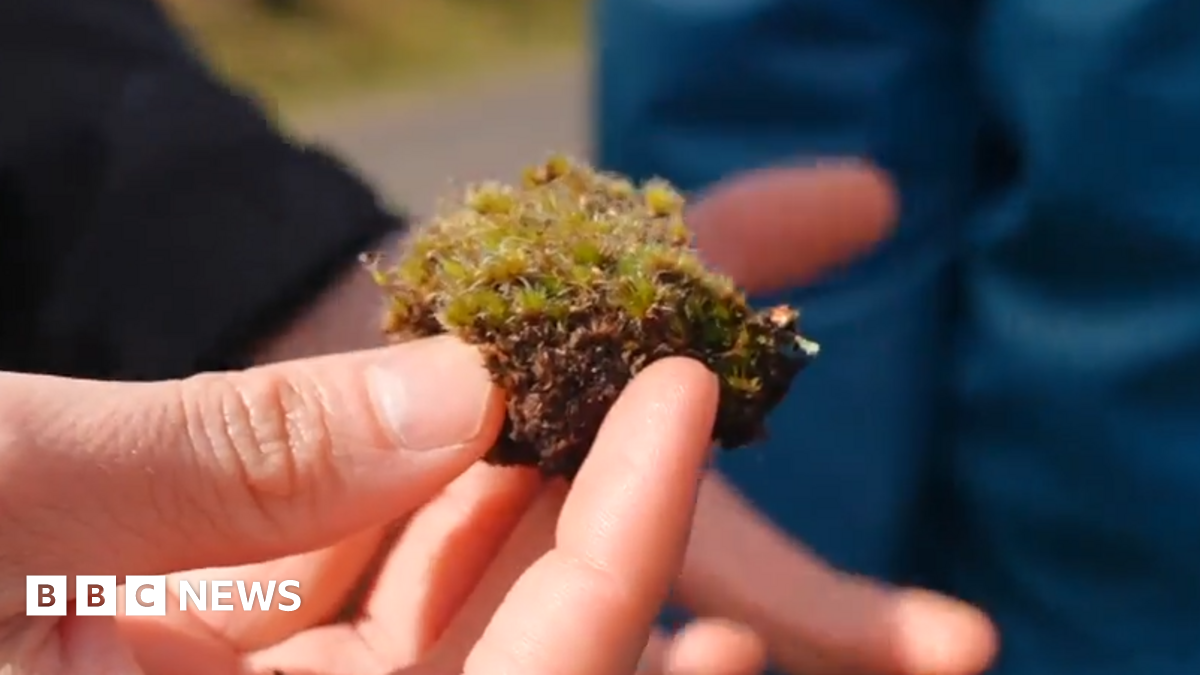
Bridging the gap between a casual glance and a scientific diagnosis requires a shift in imaging technology. While a human might see a simple brown ring, a macro lens reveals the underlying biological mechanism-in this case, white blobs of fungus suspended on moss tips, spreading outward in a slow-motion burn. “It’s as big as my hand,” Grieff observes, pointing to the damaged area that, without magnification, would read as nothing more than drought stress or trampling.
To scale this level of detail across thousands of hectares, environmental agencies are increasingly integrating Geographic Information Systems (GIS) and computer vision into routine surveying. By training machine learning models on macro-imagery, researchers can automate the detection of “patches of death” via drone-mounted multispectral cameras, reducing the reliance on manual ground surveys that arrive too late or too infrequently.
The integration of these technologies allows for the creation of real-time biodiversity maps, moving from reactive discovery to predictive modeling that can be plugged directly into policy dashboards and risk registers. As datasets from park rangers, academic teams and citizen scientists are layered together, the system begins to act less like a static map and more like an early-warning radar for land managers and regulators.
| Monitoring Layer | Technology Used | Primary Function | Risk Mitigation |
|---|---|---|---|
| Satellite / Aerial | Multispectral Imaging | Large-scale habitat mapping and change detection | Flags rapid habitat loss before it becomes irreversible |
| Ground-Level | Macro-Photography & AI | Species- and symptom-specific identification | Enables targeted, early intervention on invasive spores |
| Molecular | eDNA Sequencing | Genetic presence detection in soil and water | Identifies high-risk species before visible growth |
Taken together, these layers turn what was once a scattered series of field notes into an integrated evidence base that can inform funding decisions, enforcement priorities and the design of protected sites.
Systems for Biosecurity and Ecological Governance
The spread of the heath-star moss is not merely a biological failure but a challenge of regulatory oversight and infrastructure. The ability of an invader to send out spores far and wide-along transport corridors, tourist paths and supply chains-requires a coordinated, policy-aware response that treats biological threats with the same urgency as cybersecurity breaches. Under frameworks such as the UK’s implementation of the EU Regulation 1143/2014 on invasive alien species, failure to detect and act quickly can lock in long-term ecological and economic damage.
Effective biosecurity therefore requires a layered defense strategy to protect critical carbon sinks, upland heathlands and coastal woodlands from non-native encroachment-and to demonstrate compliance with statutory nature-recovery plans.
- Data Integration: Centralizing field observations, drone footage and lab results into a unified database so that agencies can track the velocity of invasive spread and share alerts with local authorities, landowners and ports of entry.
- Algorithmic Forecasting: Using climate data, terrain models and wind patterns to predict where spores will land next, allowing park managers to prioritize surveillance budgets rather than relying on anecdotal reports.
- Regulatory Enforcement: Implementing stricter phytosanitary standards at nurseries, ports and freight hubs to prevent the accidental transport of non-native flora via commercial trade and tourism, and backing those standards with inspection capacity and penalties.
- Rapid Response Protocols: Deploying trained eradication teams based on AI-triggered alerts from monitoring systems, with pre-agreed thresholds that unlock emergency funding and access to sensitive sites.
As biological invasions accelerate under a warming climate and denser trade networks, the intersection of botany and technology is becoming the primary line of defense for the UK’s most precious habitats-and a live test of whether its regulatory system can keep pace with the risks it has already identified on paper. The transition from manual bins to digital sensors is no longer optional; it is the only way to preserve the remaining native populations and to give policy-makers the timely, granular evidence they need to act before the next “patch of death” becomes another lost ecosystem.
Related reading
