
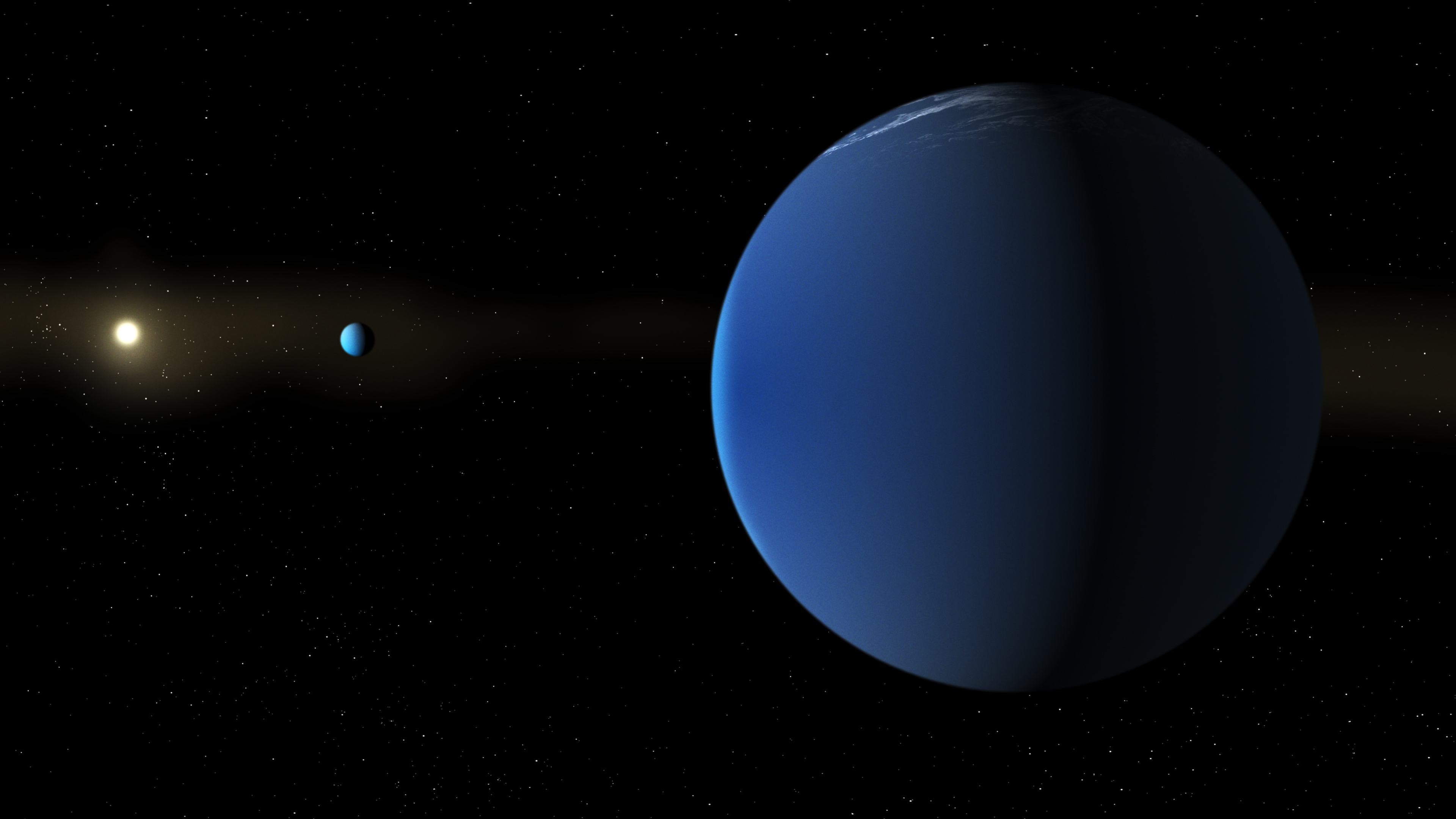
The Precision Engineering of Exoplanet Detection
The identification of TOI-791 b and TOI-791 c highlights the sophisticated data-gathering capabilities of the Transiting Exoplanet Survey Satellite (TESS). Unlike targeted missions, TESS utilizes a wide-field survey strategy, monitoring the brightness of stars across vast sectors of the sky. By detecting minute, periodic dips in stellar luminosity-a process known as transit photometry-the system can flag the presence of orbiting bodies and prioritize them for deeper investigation by ground- and space-based observatories.
Capturing these specific “super-puff” worlds required an immense longitudinal dataset. Because the planets possess unusually long orbital periods, they do not transit their host star frequently. This necessitated the collection of 1,122 days of telemetry over a seven-year window, demonstrating the necessity of persistent orbital infrastructure for capturing rare astronomical events and justifying continued public investment in long-duration space telescopes.
Behind TESS sits a formal governance and funding framework: the mission operates under the umbrella of U.S. civil space policy, including the authorization and oversight regime set out in the National Aeronautics and Space Act. That statute anchors how taxpayer-funded missions are selected, reviewed, and renewed, and it shapes the balance between pure discovery science-such as exoplanet detection-and more applied, commercially oriented activities in orbit.
Technical Specifications of the TOI-791 System
The newly discovered planets orbit a Sun-like star located approximately 1,113 light years from Earth, in a system cataloged by astronomers as TOI-791. Despite their massive physical dimensions, their mass-to-volume ratio is remarkably low, placing them in a rare class of celestial bodies whose atmospheres are so extended that they resemble loosely bound gas shells rather than compact planetary envelopes.
| Parameter | TOI-791 b | TOI-791 c |
|---|---|---|
| Physical Size | Comparable to Jupiter | Larger than Jupiter |
| Relative Mass | 3.0% of Jupiter’s mass | 5.9% of Jupiter’s mass |
| Orbital Period | 139 days | 232 days |
| Density Classification | Super-puff | Super-puff |
In practical terms, both planets have the radius of a gas giant but only a few percent of Jupiter’s mass, yielding densities closer to that of foam than rock or ice. For mission planners and funding agencies, worlds like these are prime candidates for follow-on atmospheric studies because their bloated envelopes provide a relatively large target for spectroscopy, maximizing scientific return on limited telescope time.
Algorithmic Analysis and Orbital Resonance
Determining the mass of these planets required more than simple light-curve analysis. Researchers leveraged Transit Timing Variations (TTVs), a method that analyzes the gravitational perturbations planets exert on one another. When two massive bodies orbit the same star, their mutual gravitational pull causes slight shifts in the timing of their transits, especially if they approach orbital resonance.
By processing these timing variations, scientists were able to mathematically derive the planets’ masses without needing radial velocity data from ground-based spectrographs. This computational approach confirmed that both worlds possess densities comparable to cotton candy, and it underscored the role of advanced algorithms-often developed in publicly funded university and national-lab collaborations-in turning raw photometric streams into policy-relevant knowledge about how planetary systems form.
“The main reason these planets are interesting to study is that we didn’t expect to see them at all,” said Jon Jenkins, the science lead for the Science Processing Operations Center at NASA’s Ames Research Center in California’s Silicon Valley, which provided the science-ready data from TESS analyzed in this study. “They represent a puzzle for us to solve about how giant planets like Jupiter and the super-puffs form.”
Implications for Planetary Architecture
The existence of two super-puffs within a single system challenges existing models of planetary accretion and atmospheric retention. Typically, planets with such low densities are expected to lose their voluminous atmospheres over time due to stellar radiation. Finding not one but two of these worlds orbiting the same star suggests that our current models of disk chemistry, planetary migration, and atmospheric escape may be incomplete.
“Only a handful of these super-puffy planets are known, and it is even rarer to find two in the same system,” said lead author George Dansfield of Oxford University’s Department of Physics in Oxford, England. “Their extremely low densities make them fascinating targets for understanding how planetary systems form and evolve.”
The research now shifts toward understanding the chemical composition of these atmospheres and the dynamical history of the system, work that will feed back into the models used by space agencies and science academies to prioritize future missions and instruments.
- Atmospheric Profiling: Analyzing the chemical makeup to determine whether the low density is driven primarily by hydrogen-helium envelopes, high-altitude hazes, or internal heating that puffs up the atmosphere.
- Rotational Dynamics: Investigating how planetary spin and possible tidal interactions with the host star affect the overall shape and stability of the “puff.”
- Migration Patterns: Determining if these planets formed in their current orbits or migrated inward from the outer edges of the planetary system, a distinction that carries weight for broader theories of how common solar-system-like architectures may be in the galaxy.
“Large planet formation is believed to drive the evolution of a planetary system, so further study of these Jupiter-size, but far less than Jupiter-mass, planets is of high value,” said Steve Howell, a NASA Ames research scientist who was involved in this study. For policymakers and institutional decision-makers, the TOI-791 system is a reminder that each new class of exoplanet discovered can reset assumptions about our place in the universe-and, in turn, influence how national space programs calibrate their long-term exploration strategies.
Worth a look
