
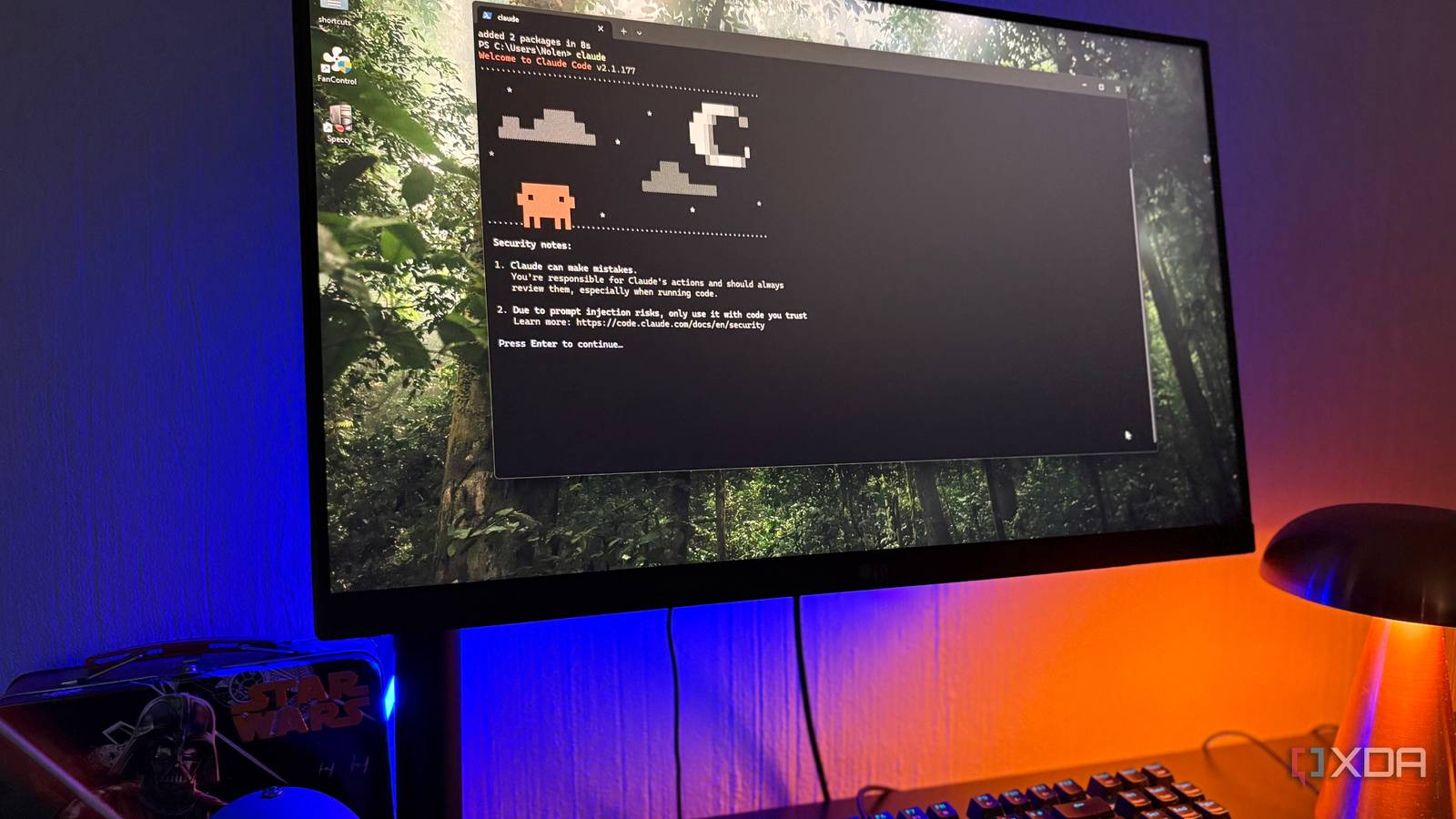
The democratization of software development has accelerated sharply with the rise of agentic coding tools. Platforms like Claude Code, Cursor, and Windsurf have effectively dismantled the traditional entry barriers, transforming the arduous process of studying documentation into a fluid, conversational experience. This shift allows non-technical users to move from a conceptual idea to a functional prototype in seconds, bypassing months of formal training and, in some cases, traditional organizational change-control processes.
However, this efficiency has introduced a new form of cognitive overhead for professional developers and the teams that rely on them. While AI handles the “grunt-work,” the role of the human has shifted from creator to supervisor and, increasingly, to risk manager. Many developers now find themselves acting as a “babysitter,” constantly monitoring the AI to ensure it doesn’t drift off-course, introduce subtle security regressions, or consume excessive tokens on an incorrect implementation path.
The Friction of Human-in-the-Loop Iteration
The current bottleneck in AI-assisted coding is the “human-in-the-loop” requirement. Developers often find themselves hovering over the terminal, intervening the moment a model veers off-track by typing “no, not like that” to force a correction. This manual oversight is not only mentally taxing but inefficient, as developers must wait for a pass to complete, run tests, and paste errors back into the prompt before the next attempt begins.
This iterative cycle is particularly costly given the strict usage limits of high-tier LLM plans and the budget controls many CIOs and procurement teams now impose on AI tooling. The constant back-and-forth between the developer and the agent can rapidly deplete session limits, even for those on professional-grade subscriptions. Despite efforts to front-load constraints or utilize self-verification extensions, the disconnect between how a model verifies its own work and how a human – or a regulated institution’s internal review process – verifies it often remains.
Transitioning to Agentic Autonomy via /goal
The introduction of the /goal command in Claude Code marks a pivotal shift from step-by-step prompting to goal-oriented autonomy. Rather than performing a single pass and returning control to the user, /goal allows a developer to define a specific success condition, including how success will be tested. The system then iterates autonomously until that condition is satisfied or a clear stopping rule is reached.
This functionality relies on a dual-model architecture. While the primary model executes the code changes, a separate, smaller evaluator model analyzes the session transcript after each iteration to determine if the goal has been met. This removes the human from the immediate feedback loop, automating the “keep going” or “correct this” prompts and making the process feel less like pair-programming and more like supervising a constrained software agent.
To implement this effectively, the success condition must be grounded in objective, measurable data that also maps cleanly onto organizational quality standards. The following table outlines the framework for setting an effective agentic goal:
| Component | Requirement | Example |
|---|---|---|
| Measurable End State | A binary, verifiable outcome. | All unit tests passing; build exit code 0; security scanner returns no high-severity findings. |
| Verification Method | A specific command or pipeline step to prove success. | npm test; invoke CI job ci:security-scan. |
| Invariant Constraints | Boundaries the AI must not cross, aligned with compliance requirements. | Do not modify existing .env files; do not change authentication logic; do not alter audit logging. |
System Risks and Operational Guardrails
While automating the iterative loop increases velocity, it introduces specific systemic risks. Autonomous agentic loops can lead to “token spirals” where a model repeatedly attempts a failing solution, rapidly consuming API credits without achieving the goal. Furthermore, without strict invariant constraints, an autonomous agent might solve a bug by inadvertently breaking a separate, unrelated module – or by bypassing checks that matter for regulatory compliance or internal audit.
For enterprises operating under the emerging AI governance expectations in the European Union’s Artificial Intelligence Act, and under sectoral rules in finance, health, and critical infrastructure, those failure modes are no longer just technical nuisances; they become issues of accountability, documentation, and explainability. Engineering leaders are therefore starting to treat goal-driven coding agents as systems that must sit inside existing risk and controls frameworks, not outside them.
To mitigate these risks, developers and their organizations should implement the following safeguards:
- Strict Exit Conditions: Ensure the goal is not vaguely defined (e.g., “make it faster”) but instead tied to a metric (e.g., “reduce response time below 200ms in production-like benchmarks”) and, where relevant, documented in change tickets.
- Scoped Permissions: Limit the agent’s file-system and repository access to only the modules relevant to the task, mirroring the principle of least privilege used in security policies.
- Manual Breakpoints: Periodically interrupt the /goal loop to review architectural drift, security implications, and whether the changes still align with product and compliance requirements.
The shift toward agentic workflows represents the next evolution of software engineering, moving the developer further away from the syntax and closer to system design, policy alignment, and quality assurance. In large organizations, that means tighter collaboration between engineering, legal, and risk teams on how autonomous coding agents are configured and monitored.
The Cost of Overlooking Incremental Features
In a market defined by rapid-fire feature releases from AI labs, it is common to dismiss new slash commands as minor updates. However, features like /goal fundamentally alter the developer’s relationship with the machine. By automating the verification loop, the developer – and, by extension, the human approval step inside a release train – is no longer the primary bottleneck in the production cycle.
The transition from manual supervision to goal-setting is a significant productivity multiplier, but it is also a governance shift: teams move from watching every keystroke to defining guardrails, success metrics, and audit trails up front. As the author notes, “I regret ignoring the /goal command for so long,” highlighting that the most impactful AI advancements are often those that remove the friction of human intervention and make institutional processes more programmable, rather than those that simply generate more code.
Keep reading
