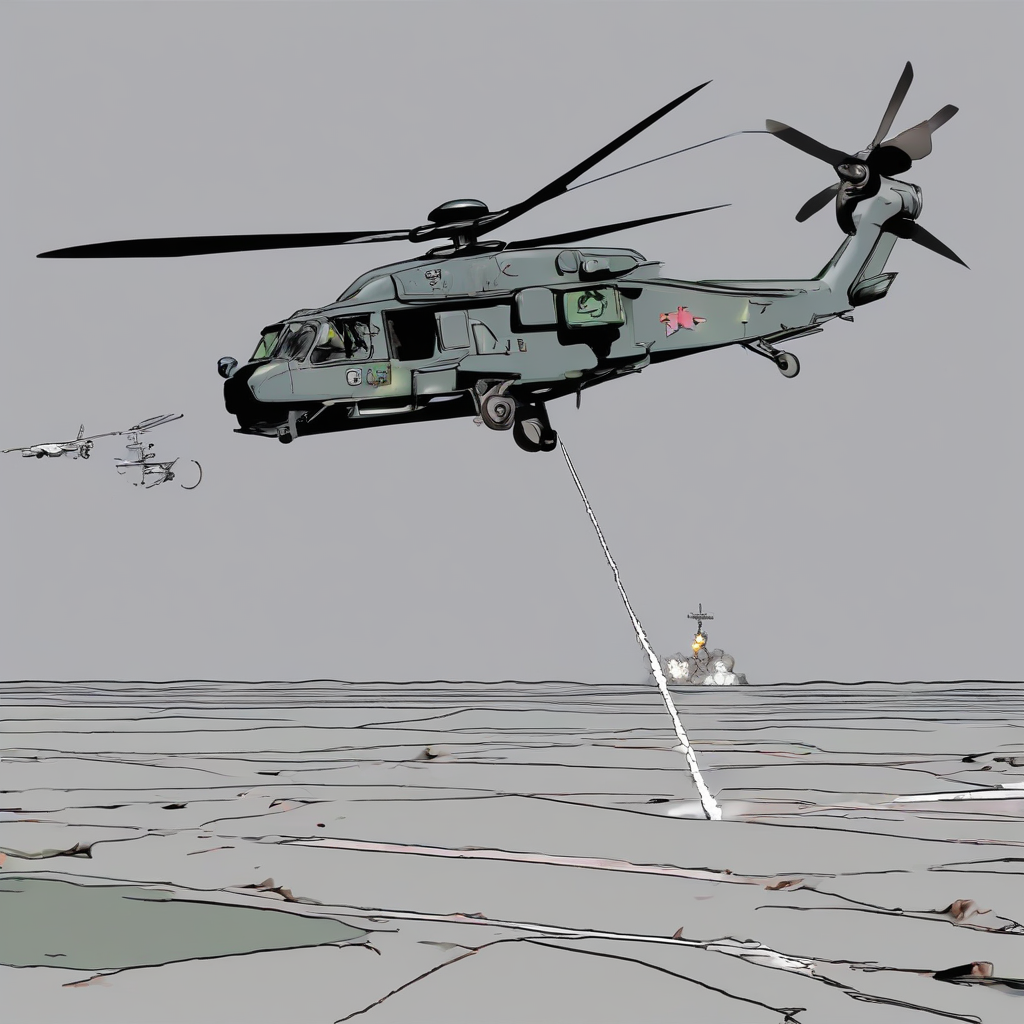
WASHINGTON – The United States launched “self-defense strikes” against Iran on Tuesday after President Donald Trump attributed the downing of a US Army Apache helicopter gunship near the Strait of Hormuz to Tehran.
The military action imperils a fragile ceasefire established between the two nations in April and follows a period of heightened volatility in the Middle East, raising fresh questions over US war powers and the durability of recently negotiated regional de-escalation efforts.
US Central Command (Centcom) confirmed that President Trump directed the strikes in response to the shoot-down of the Apache helicopter off the coast of Oman earlier that day. White House officials indicated that US forces targeted radar and air defense facilities positioned along the Strait of Hormuz, framing the operation as consistent with the president’s authority as commander-in-chief under the US Constitution and existing congressional authorizations for the use of military force.
Military Response and Personnel Recovery
President Trump announced the Iranian responsibility for the crash via his Truth Social platform, stating that Washington could not allow such an event to go unanswered and signaling that any attack on US forces would trigger a rapid military reply.
Despite the escalation, US officials stated they are not seeking a return to full-scale war and stressed that the strikes were designed to avoid hitting Iranian command centers or civilian infrastructure.
“The mission is a proportional response to unjustified Iranian aggression,” Centcom said.
The incident involved a high-risk recovery operation for the helicopter’s two crew members. The US military described the rescue as an unprecedented operation utilizing an unmanned drone boat, part of a growing Pentagon emphasis on remote and autonomous systems to limit risks to personnel. A US official clarified that the crew members first climbed into an unmanned surface vessel before being transferred to a medical facility.
In an interview with the Wall Street Journal, President Trump played down the severity of the event, stating the strike on the helicopter “wasn’t a big deal” and that the “pilot is fine”. The contrast between the administration’s public reassurance and the decision to order cross-border strikes underscores the political and strategic pressure on Washington to demonstrate deterrence without triggering a wider conflict.
Regional Conflict and Israeli Engagement
The US strikes occurred as the region remained unstable following direct exchanges of fire between Iran and Israel on Monday, adding a US-Iran flashpoint to an already crowded conflict map. Iranian state television reported Tuesday that Israeli attacks killed at least two members of Iran’s air defense units.
The timeline of recent hostilities includes:
- Sunday: Iran launched missiles in retaliation for Israeli strikes on a Hizbullah stronghold in the southern suburbs of Beirut.
- Response: Israel conducted a “large-scale strike” on strategic defense systems in Iran and bombed targets at a petrochemical plant in Mahshahr, southern Iran.
- Tuesday: Israel continued operations in southern Lebanon, including the bombing of the port city of Tyre, which the Lebanese health ministry reports killed at least eight people.
The helicopter incident took place hours after President Trump intervened to halt a cycle of tit-for-tat attacks between Israel and Iran. According to US and regional officials, Trump pressured Israeli Prime Minister Binyamin Netanyahu to end the strikes on Iran to prevent a full-blown regional war while simultaneously authorizing targeted US action he could present as narrowly defensive.
Diplomats say the overlapping crises – Israeli-Iranian confrontation, Hizbullah’s engagement in Lebanon, and now direct US-Iranian clashes – are straining already limited channels for back‑channel communication and crisis management, including the role of European intermediaries and regional Gulf states.
Energy Markets and the Strait of Hormuz
The security situation in the Strait of Hormuz – a waterway through which approximately one-fifth of the world’s oil and gas typically passes and which is governed in part by long‑standing international navigation rules under the UN Convention on the Law of the Sea – has created a severe global energy crisis.

Since the US and Israel launched their war against the Islamic Republic on February 28, Iran has restricted traffic through the strait to a trickle, challenging those international norms and testing how far major powers are prepared to go to keep shipping lanes open. This disruption has significantly increased petrol prices at US pumps ahead of the November midterm elections, turning a regional security crisis into a domestic political liability for the White House.
Market reactions on Tuesday included:
- Brent Crude: Price settled at $91.45 a barrel.
- Daily Movement: A 3 per cent loss for the day, though the decline was trimmed after Trump threatened a response to the helicopter attack.
- Trend: Prices rose from a seven-week low following the US military response, as traders weighed the risk of further disruption against the prospect of renewed diplomatic talks.
To counter Iranian influence in the waterway, the US Navy has imposed a blockade on Iranian ports, an action that carries significant implications under international maritime law and places additional pressure on allies that depend on Gulf energy supplies.
Diplomatic Status and Ceasefire Efforts
The current hostilities complicate ongoing efforts to solidify a diplomatic framework after months of shuttle diplomacy by US, European and regional mediators. President Trump has stated that Washington and Tehran are nearing a deal to:
- Extend the April 8th ceasefire.
- Reopen the Strait of Hormuz to normal traffic.
- Establish a framework for negotiations regarding Iran’s nuclear programme.

US officials say any new understanding would likely build on elements of earlier nuclear arrangements and inspection regimes, while also addressing regional proxy conflicts and the security of commercial shipping. For Washington, that would mean balancing domestic skepticism of long-term deals with Iran against pressure from allies for a predictable set of rules around sanctions relief and energy exports.
However, the conflict between Israel and Hizbullah remains a primary obstacle. Tehran has insisted that the Israeli-Hizbullah conflict be included as part of a broader ceasefire agreement, arguing that any deal confined to direct US-Iranian exchanges would be unstable. Hizbullah continues to battle Israeli troops inside Lebanon after triggering the latest conflict by firing across the border in February, creating a parallel front that complicates sequencing of any ceasefire or monitoring mechanism.
Tehran has not yet indicated if it intends to launch a retaliatory strike following the US actions on Tuesday. US officials say their immediate focus is on preventing miscalculation – keeping channels open to Iran through intermediaries while reassuring regional partners and domestic audiences that Washington retains control over an increasingly volatile confrontation.