
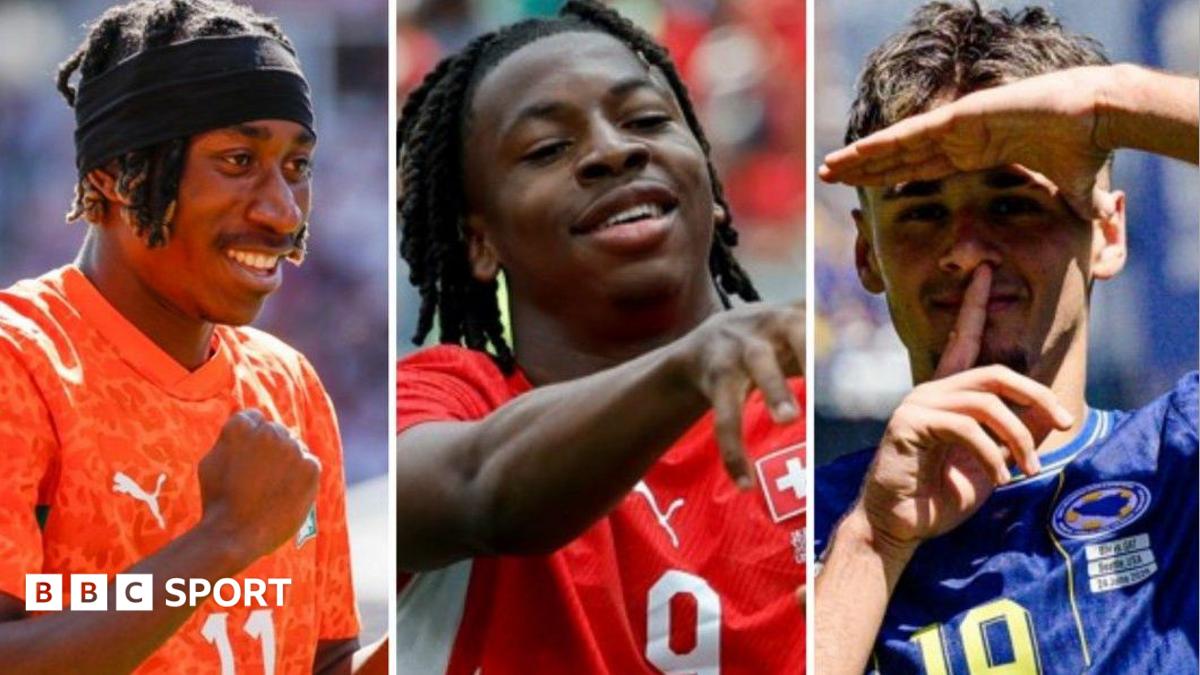
Youth Movement Shapes Early Stages of 2026 World Cup
While the 2026 tournament continues to feature the enduring influence of veterans such as Lionel Messi and Cristiano Ronaldo, a distinct generational shift is occurring across the United States, Mexico, and Canada. The integration of youth into starting lineups has moved beyond mere squad depth, with several players under the age of 22 actively influencing match outcomes and, in some cases, dictating the tempo of entire games.
A total of 85 players aged 21 or under were selected for the expanded tournament, which is being staged under the first 48‑team format fully governed by the revised FIFA Statutes. Within that larger structural shift, the impact of this cohort is evident in their willingness to take risks and execute high-pressure plays, challenging the tactical setups and in‑game management of more experienced opponents and coaches.
## Historic Breakthroughs in the Group Stage
Several young players have already etched their names into the record books during the opening phase of the competition, turning early group fixtures into auditions for the next decade of international football.
The tournament opened on 11 June with a match that highlighted the role of homegrown talent and the political weight of co‑hosting. Mexico’s Gilberto Mora, an attacking midfielder developed entirely within the country’s reformed academy system, became the youngest player to represent a home nation at a World Cup at 17 years and 240 days. Mora appeared as a substitute in Mexico’s 2-0 victory over South Africa in Mexico City. To provide historical perspective, Mora was not yet born during the 2006 World Cup, a tournament in which established stars like Messi, Ronaldo, and Luka Modric were already featuring – underscoring how long the current generation of icons has shaped the sport’s commercial and governance landscape.
Following the opening match, other youth records fell in rapid succession, often in front of government delegations and federation officials closely tracking the returns on public investment in stadiums and grassroots programs:
- Ibrahim Mbaye (Senegal): At 18 years and 143 days, Mbaye became the fourth youngest goalscorer in World Cup history. He scored a late goal in a 3-1 defeat against France in New Jersey on 16 June, a consolation strike that nonetheless energized Senegal’s sizable diaspora in the United States and strengthened the case for continued funding of youth development in West Africa.
- Lamine Yamal (Spain): Already a recognized talent, Yamal continued his ascent on 21 June in Atlanta, scoring Spain’s opening goal in a 4-0 win over Saudi Arabia at 18 years and 343 days. His performance reinforced Spain’s long-term bet on technically oriented youth academies, watched closely by officials from other federations exploring similar structural reforms.
## Tactical and Career Implications
The emergence of these players suggests a broader trend in international football where the gap between youth academies and senior national team requirements is narrowing. Federations are increasingly aligning their domestic development policies with senior tactical philosophies, turning national youth teams into direct pipelines rather than parallel structures.
For players like Mbaye and Mora, performing on this stage provides immediate global visibility, which typically accelerates their professional development and increases their valuation within the club market. Strong World Cup showings often translate into transfers to Europe’s top leagues, reshaping the bargaining power of smaller clubs and, by extension, the negotiating stance of their national associations in future calendar and compensation talks.
From a tactical standpoint, the “fearless” approach noted in these U21 players often disrupts the defensive rhythms of veteran-led teams. Teenage attackers operating without the psychological burden of historical expectations are more inclined to drive at defenders, attempt high‑risk passes between the lines, and press aggressively from the front. That unpredictability can break deadlocks in tight group-stage fixtures, forcing established powers to adjust mid‑tournament and compelling coaches to revisit long‑held assumptions about experience thresholds in major competitions.
## Strategic Decisions for Coaches and Federations
As the tournament progresses beyond the initial rounds, the ability of managers to balance the composure of veterans with the raw energy and unpredictability of these breakout stars will likely be a deciding factor in knockout-stage success. Selection meetings, once dominated by discussions of experience and club pedigree, are increasingly framed around data on sprint volume, pressing efficiency, and recovery capacity – metrics where younger players frequently excel.
The youth surge also carries implications beyond the touchline. National federations and co‑host governments, which have committed substantial public resources to infrastructure and legacy programs, will treat the performance of these young players as an early indicator of whether their long-term talent strategies are working. Strong showings from homegrown teenagers can bolster support for continued investment in community pitches, coaching education, and school‑based football initiatives, while disappointing returns may prompt policy reviews once the tournament closes.
In that sense, the 2026 World Cup is emerging as more than a showcase of the sport’s next generation. It is a live test of how global football’s governing framework, domestic regulatory choices, and on‑field tactical innovation intersect – with a cohort of under‑21 players unexpectedly at the center of decisions that will shape the game for years to come.
Related reading
