
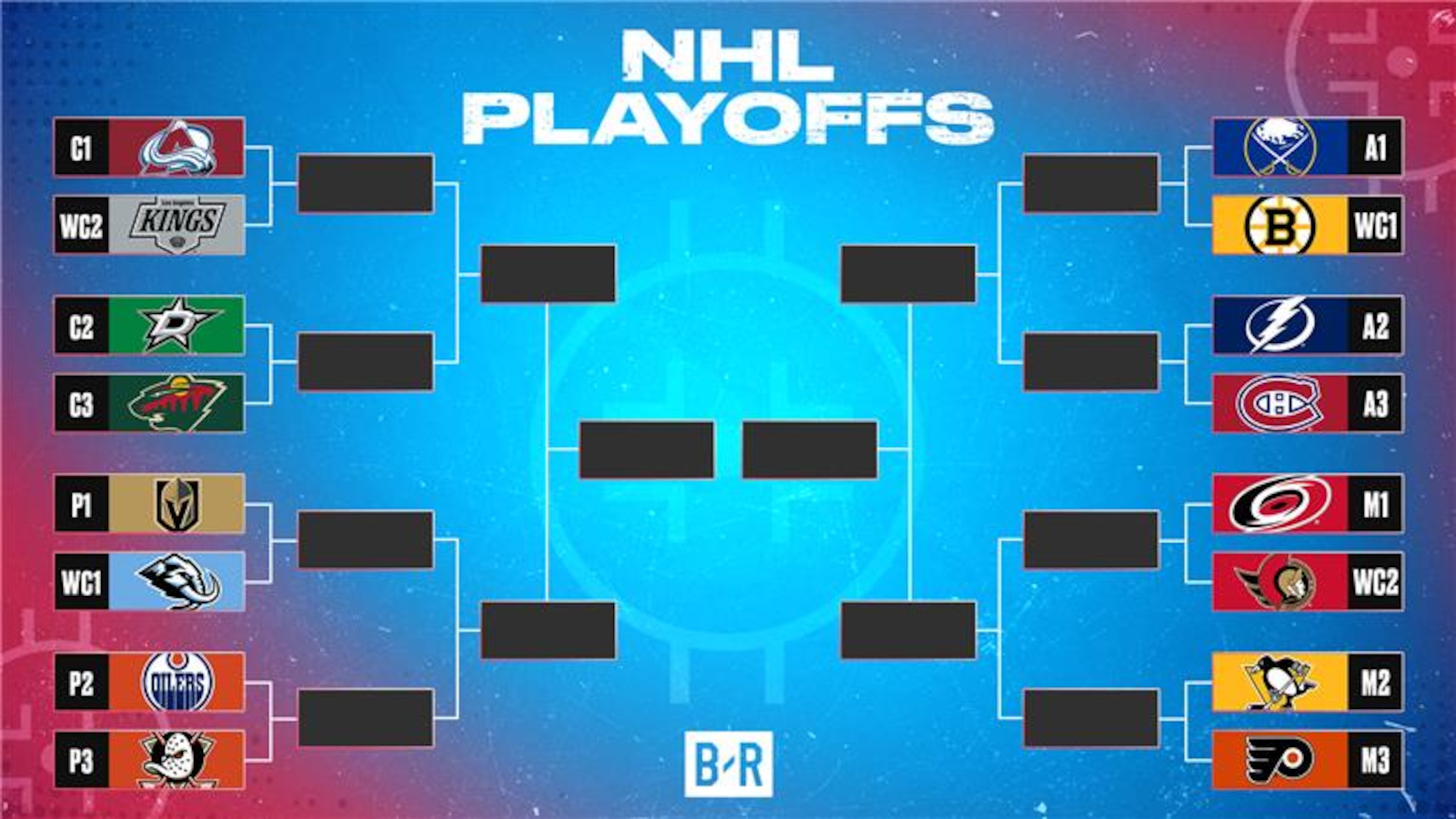
NHL Stanley Cup Playoffs: Full Bracket and Key Storylines Defined
The NHL regular season has concluded, confirming the 16 teams that will compete for the Stanley Cup under the league’s hard salary cap and collective bargaining framework, which is set out in the NHL-NHLPA Collective Bargaining Agreement. While most of the field was established early, the final day of action provided the necessary clarity for the Western Conference, specifically regarding the Pacific Division’s second and third seeds and the final wild card placement.
Edmonton has secured the No. 2 seed in the Pacific following a decisive victory over the Vancouver Canucks. They are set to face the Anaheim Ducks, who claimed the third seed after defeating the Nashville Predators. Meanwhile, the Los Angeles Kings have entered the bracket as the Western Conference’s No. 2 wild card, resulting in a challenging opening series against the league-leading Colorado Avalanche.
Conference Matchups and Brackets
The first round consists of best-of-seven series played in a 2-2-1-1-1 home-ice format, with higher seeds opening and, if necessary, closing each matchup at home. The winners of these series will advance to the Conference Semifinals, progressing through fixed divisional brackets rather than re-seeding, in line with the current postseason structure adopted by the league.
Eastern Conference
- Buffalo Sabres (No. 1 Atlantic) vs. Boston Bruins (No. 1 East Wild Card)
- Tampa Bay Lightning (No. 2 Atlantic) vs. Montreal Canadiens (No. 3 Atlantic)
- Carolina Hurricanes (No. 1 Metropolitan) vs. Ottawa Senators (No. 2 East Wild Card)
- Pittsburgh Penguins (No. 2 Metropolitan) vs. Philadelphia Flyers (No. 3 Metropolitan)
Semifinals: Sabres/Bruins winner vs. Lightning/Canadiens winner; Hurricanes/Senators winner vs. Penguins/Flyers winner.
Western Conference
- Colorado Avalanche (No. 1 Central) vs. Los Angeles Kings (No. 2 West Wild Card)
- Dallas Stars (No. 2 Central) vs. Minnesota Wild (No. 3 Central)
- Vegas Golden Knights (No. 1 Pacific) vs. Utah Mammoth (No. 1 West Wild Card)
- Edmonton Oilers (No. 2 Pacific) vs. Anaheim Ducks (No. 3 Pacific)
Semifinals: Avalanche/Kings winner vs. Stars/Wild winner; Golden Knights/Mammoth winner vs. Oilers/Ducks winner.
First Round Game 1 Schedule
The following schedule outlines the opening games of the first round, as coordinated by the NHL’s central scheduling office. All times are Eastern and subject to flexing for national broadcast windows.
| Time (ET) | Matchup | Broadcast |
|---|---|---|
| 3:00 p.m. | Ottawa Senators at Carolina Hurricanes | ESPN |
| 3:00 p.m. | Los Angeles Kings at Colorado Avalanche | TNT |
| 5:30 p.m. | Minnesota Wild at Dallas Stars | ESPN |
| 5:45 p.m. | Montreal Canadiens at Tampa Bay Lightning | TNT |
| 7:30 p.m. | Boston Bruins at Buffalo Sabres | ESPN |
| 8:00 p.m. | Philadelphia Flyers at Pittsburgh Penguins | ESPN |
| 10:00 p.m. | Utah Mammoth at Vegas Golden Knights | ESPN |
| TBD | Anaheim Ducks at Edmonton Oilers | TBD |
Analytical Preview: Key Contenders and Storylines
Colorado’s Quest for a Second Title
The Avalanche enter the postseason as the definitive team to beat, having secured the Presidents’ Trophy as the league’s top regular-season club. Their dominance is reflected in the underlying numbers, ranking first in both goals scored and goals against, and losing only two of their first 40 regulation games-an early-season surge that effectively guaranteed home ice throughout the playoffs.
The roster boasts significant depth, with six players recording 20 or more goals. Nathan MacKinnon drives the attack with 53 goals and a league-leading +57 plus-minus, anchoring a first line that can tilt the ice at five-on-five. The addition of Martin Nečas has also paid dividends, as he reached the 100-point milestone for the first time in his career and gives Colorado a second elite play-driving option. Defensively, Scott Wedgewood has provided stability in 43 starts, posting a 2.06 GAA and a league-best .921 save percentage behind a blue line that limits both shot volume and quality.
While they are clear favorites on paper, a potential second-round matchup against either the Dallas Stars (112 points) or the Minnesota Wild (104 points) represents a significant hurdle. Both Central Division challengers are built with heavy, playoff-style forechecks that could test Colorado’s defensive depth and Wedgewood’s workload over a long series in their pursuit of a second Stanley Cup within five years.
Buffalo’s Historic Return
The Buffalo Sabres enter the playoffs in the midst of a franchise transformation. After a 14-year playoff drought and their first division title since 2007, the Sabres are pursuing their first-ever Stanley Cup in a market that has long been central to the league’s small- and mid-market economics.
Buffalo’s season was defined by extreme volatility. After a dismal 5-8-4 start that included three straight regulation losses (by a combined 10-2 score), the team pivoted to an elite level of form, recording 10 straight wins and taking 12 of 13 games between February 25 and March 21. That surge not only secured home ice but also eased pressure on a young core that has been under intense scrutiny. Tage Thompson leads a deep offensive unit-where 13 players scored 11 or more goals-with 40 goals and 41 assists, and the Sabres’ depth scoring has insulated them from short-term injuries and line shuffling.
Edmonton’s Defensive Concerns
The Edmonton Oilers are seeking redemption after losing the Stanley Cup Final in each of the last two years to the Florida Panthers. While they secured second in the Pacific, the 2025-26 campaign saw a regression to 93 points, raising questions about roster construction and whether this competitive window is being maximized under the current cap constraints.
The Oilers possess the league’s most potent offensive weapon in Connor McDavid, who led the NHL with 138 points and 90 assists. However, this firepower is offset by severe defensive struggles; Edmonton finished 26th in goals allowed per game, with a collective goaltending save percentage of .883 and a 3.23 GAA. The blue line has often forced McDavid and the top six into track-meet games that are difficult to sustain over four rounds. The team’s ceiling may depend on the health of Leon Draisaitl, currently listed as day-to-day with a lower-body injury, and on whether the coaching staff can coax league-average play from a goaltending tandem that has been inconsistent since October.
The Veteran Core in Pittsburgh
After missing the postseason for three consecutive years, the Pittsburgh Penguins have returned to the playoffs under first-year head coach Dan Muse, a shift that followed organizational debate over whether to rebuild around future assets or extend the Sidney Crosby era as a competitive project.
The team’s success continues to hinge on the performance of Crosby (38) and Evgeni Malkin (39). Crosby led the team with 74 points, while Malkin contributed 19 goals and 42 assists, and both remain focal points on a power play that can still punish undisciplined opponents. While Pittsburgh’s offense is elite-finishing third in the league with 290 goals-their defense has been a liability, ranking 24th in goals allowed and conceding an average of 4.26 goals per game over their final 15 regular-season contests. That late-season trend, combined with a physically demanding first-round series against the rival Philadelphia Flyers, leaves little margin for error in net or on the penalty kill.
Vegas and the Tortorella Effect
The Vegas Golden Knights enter the playoffs with significant momentum following a mid-season coaching change. After replacing Bruce Cassidy with John Tortorella, Vegas surged to a 7-0-1 record to win the Pacific Division, outscoring opponents by 17 goals over that eight-game stretch and tightening their structure in the neutral zone.
The return of goaltender Carter Hart from a three-month lower-body injury has been pivotal; Hart is 6-0-0 with a 1.66 GAA and a .930 save percentage since rejoining the lineup, giving Tortorella the reliable last line of defense his high-pressure systems demand. Combined with Jack Eichel’s 90 points and a balanced attack featuring six skaters with at least 23 goals and 58 points, Vegas represents a high-threat opponent for the Utah Mammoth in the opening round. For a franchise that has already reshaped expectations around expansion teams and market viability in the U.S. Sun Belt, another deep run would reinforce Vegas as one of the league’s most influential modern success stories-on the ice and in the boardroom.
Keep reading
