
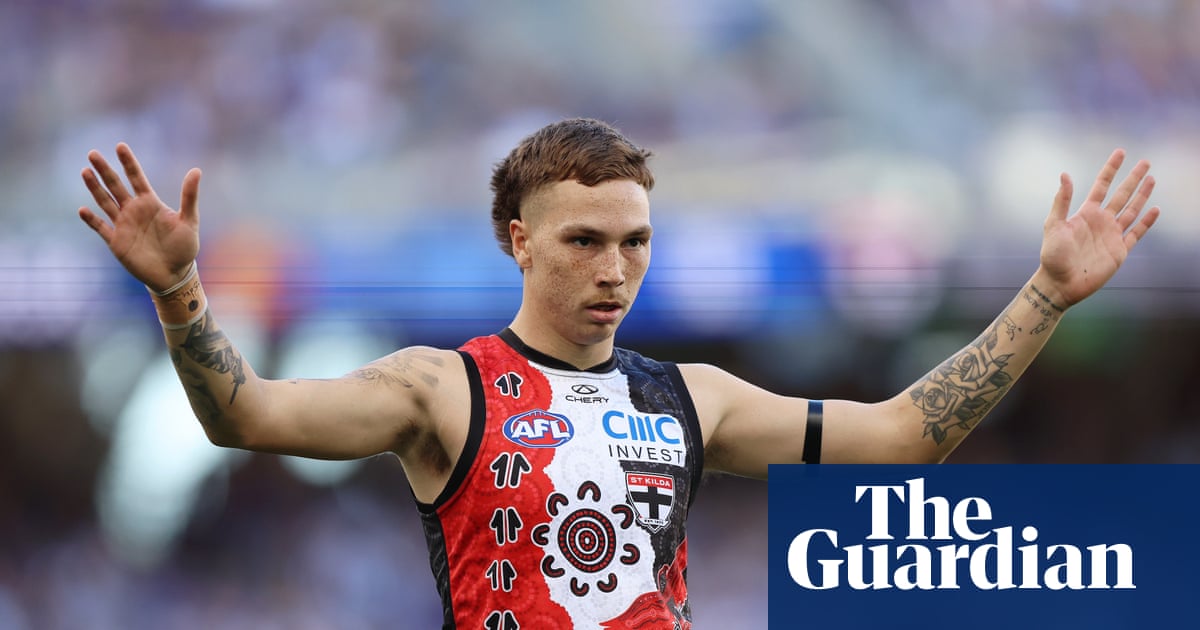
AFL Internal Rift Deepens Over Reduced Suspension for Lance Collard
A significant divide has emerged within the leadership of the Australian Football League (AFL) following an appeals board decision to drastically reduce the suspension of St Kilda forward Lance Collard. The dispute centers on the use of a homophobic slur and the tension between the league’s stated zero-tolerance policy on vilification and the judicial board’s assessment of a player’s career viability.
AFL Chief Executive Andrew Dillon has issued a sharp critique of the appeals board-comprising King’s Counsels William Houghton and Georgina Coghlan, and former player Stephen Jurica-stating that “stronger action was not only warranted, it was necessary.” His intervention is highly unusual and places direct pressure on the independence of a tribunal system that is supposed to sit at arm’s length from AFL management.
The conflict was sparked by the board’s written reasoning, which suggested that racist, sexist, or homophobic language is “commonplace” among players on the field from time to time. Dillon explicitly rejected this premise, asserting that such language has no place in the sport under any circumstances and must not be used as a factor to mitigate sanctions, particularly given the AFL’s formal anti-vilification and respect policies that bind clubs and players.
Disciplinary Outcome and Sanctions
Collard was initially found guilty of conduct unbecoming after calling a VFL opponent a “fucking faggot” last month during a second-tier state league match that sits directly under the national competition. While the appeals board upheld the guilty verdict, it ruled that the initial penalty was “manifestly excessive” when weighed against comparable AFL tribunal outcomes.
The final disciplinary standing is as follows:
- Initial penalty: Seven-week ban, with a further two weeks suspended.
- Revised penalty: Two-week ban, with a further two weeks suspended until the end of next season (matching the expiry of his current contract).
- Additional sanction: A two-match ban for striking in the same VFL fixture, to be served cumulatively with the conduct unbecoming suspension.
The board justified the reduction by arguing that a seven-week ban would have a “crippling” effect on the 21-year-old fringe player’s professional career and prospects of securing a long-term AFL list spot. In reaching this conclusion, the board cited Collard’s age, Indigenous heritage, and difficult background as factors in favour of rehabilitation, while also noting that Frankston player Darby Hipwell was not personally offended by the slur and did not wish to pursue the matter further.
That reasoning has been challenged by equality advocates and some within the league, who argue that impact on a player’s career should not outweigh the broader harm caused to LGBTQIA+ supporters, participants and staff who rely on clear, consistently enforced standards.
Governance and Regulatory Clash
The rift extends beyond the CEO’s office. James Gallagher, chief executive of the AFL Players Association, argued that the process has caused harm to the LGBTQIA+ and First Nations communities. Gallagher emphasized that the competitive nature of the game provides no excuse for language that vilifies entire communities, particularly in a league that has publicly committed to inclusion benchmarks and education programs.
This case highlights a fundamental struggle within the AFL’s governance structure and its quasi-judicial tribunal system. On one side, the executive leadership seeks to normalize a culture of inclusion and strict accountability to protect the league’s brand, commercial partners and social standing. On the other, the appeals board-appointed by general counsel Stephen Meade and operating with a high degree of independence-is balancing those standards against the individual professional survival of “fringe” players and traditional legal notions of proportionality in punishment.
St Kilda has welcomed the reduction in the sanction but expressed disappointment in how the matter was assessed, calling for greater consistency and clarity within the tribunal process. The club has indicated it will continue internal education and welfare work with Collard, underscoring the growing role of clubs as both employers and cultural stewards under the AFL’s competition rules.
The episode is already prompting internal debate over whether the AFL Commission or its integrity department should more explicitly frame expectations for future cases, to avoid a repeat of competing interpretations of the same policy framework by league executives and independent decision-makers.
Pattern of Offending
This incident marks the second time in three seasons that Collard has been found guilty of using homophobic language during a VFL match. In 2024, he received a six-game ban after admitting to using the same slur on-field, a sanction that at the time was held up by the league as evidence of its tougher stance on vilification.
Regarding the current incident, Collard denied the allegation, maintaining that he told Hipwell, “Come here, maggot,” rather than the slur. However, the tribunal sided with the testimony of Hipwell and teammate Bailey Lambert, who provided evidence during the initial hearing on April 9, concluding on the balance of probabilities that the homophobic term had been used.
While the appeals board acknowledged that the 2024 offense was “probably far more serious” because Collard admitted the language and received a heavier sanction, the decision to reduce the current penalty suggests a judicial leaning toward rehabilitation and career preservation over deterrent-based sentencing. That shift sits uneasily alongside the AFL’s public messaging that repeat vilification offences will attract escalating consequences, and leaves the league confronting renewed questions over whether its disciplinary architecture is aligned with its social and governance commitments.
Related reading
