
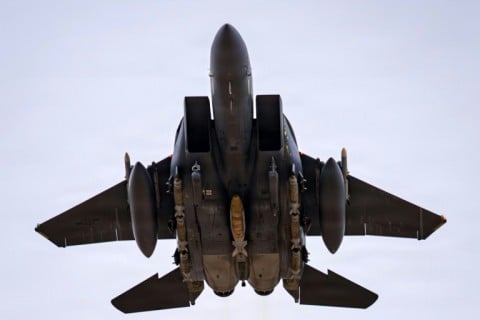
TEHRAN – President Donald Trump said on Sunday, April 5, 2026, that U.S. forces had safely recovered a second airman downed in Iran, calling it “one of the most daring Search and Rescue Operations in U.S. History.” The announcement came as Iran launched missiles and drones at Israel and Kuwait early the same day, and a day after Trump warned that Tehran had 48 hours to cut a deal or face “all Hell.”
The statement raises the stakes in a fast-moving confrontation that has spread conflict across multiple fronts and rattled energy markets. Iran’s forces maintain a tight grip on the Strait of Hormuz, a critical shipping lane for oil and gas governed in part by the U.N. Convention on the Law of the Sea, available at [[UNCLOS]], while economic targets in Gulf neighbors and inside Iran have come under attack.
Rescue claim posted as tensions spike
Trump described the rescued service member as “this brave Warrior,” saying the airman had been “behind enemy lines in the treacherous mountains of Iran, being hunted down by our enemies.” He added: “He sustained injuries, but he will be just fine.”
Trump also said the operation followed another successful recovery the previous day: “This miraculous Search and Rescue Operation comes in addition to a successful rescue of another brave Pilot, yesterday, which we did not confirm, because we did not want to jeopardize our second rescue operation.” The posts did not include further identifying details about the personnel involved or the specific locations, and U.S. defense officials had not immediately released corroborating information about the missions or the aircraft involved.
The White House framed the rescues as evidence of U.S. military reach inside Iran at a moment when both countries are trading threats over control of key waterways and regional proxy attacks.
Ultimatum reference and Tehran’s rejection
In a separate message on Saturday, April 4, Trump referred to an ultimatum he said he issued on March 26, writing: “Remember when I gave Iran ten days to MAKE A DEAL or OPEN UP THE HORMUZ STRAIT.” He continued:
“Time is running out — 48 hours before all Hell will reign (sic) down on them.”
The ultimatum appeared to tie Iran’s behavior in the Strait of Hormuz to broader negotiations, without clarifying what “deal” Washington was seeking or what specific measures would follow if Tehran refused to comply. The waterway is already subject to long‑standing freedom‑of‑navigation commitments under international maritime law, and U.S. administrations have for decades treated disruptions there as a matter of national and allied security.
Iran’s central military command publicly rejected the threat. According to the statement carried in Iranian messaging, General Ali Abdollahi Aliabadi called Trump’s warning a “helpless, nervous, unbalanced and stupid action,” and said Iranian forces would continue to defend what Tehran regards as its territorial waters and regional partners.
Cross-border strikes and economic risk
Amid the exchange, Iran launched missiles and drones at Israel and Kuwait early on April 5 in what Iranian media cast as retaliation for earlier strikes on its territory. A day earlier, an Israeli or U.S. strike on a petrochemical hub in southwest Iran killed five people, according to the deputy governor of Khuzestan province.
The attacks underscored how the confrontation has spilled across borders, drawing in U.S. treaty allies and security partners and testing existing de‑confliction channels. They also raised fresh concerns in European and Asian capitals over potential disruptions to energy supplies.
The security crisis has direct implications for maritime traffic through the Strait of Hormuz, which links the Persian Gulf with the Gulf of Oman and the Arabian Sea. Roughly a fifth of the world’s traded oil flows through the narrow passage in normal times, and disruptions there have historically triggered price volatility and supply concerns for global energy markets. In past crises, including the “Tanker War” of the 1980s, U.S. and allied navies have mounted escort operations and emergency convoys to keep commercial shipping moving; diplomats are now weighing whether similar steps could again be required, according to officials familiar with preliminary discussions.
What we know so far
– March 26, 2026: Trump says he issued a 10‑day ultimatum to Iran related to “MAKE A DEAL or OPEN UP THE HORMUZ STRAIT.”
– Saturday, April 4, 2026: Trump posts that “Time is running out — 48 hours before all Hell will reign (sic) down on them,” without specifying what U.S. response is planned.
– Saturday, April 4, 2026: An Israeli or U.S. strike on a petrochemical hub in southwest Iran killed five people, according to the deputy governor of Khuzestan province.
– Early Sunday, April 5, 2026: Iran launched missiles and drones at Israel and Kuwait, signaling it would not bow to the ultimatum.
– Sunday, April 5, 2026: Trump says U.S. forces recovered a second downed airman in Iran and that the service member “will be just fine,” and credits U.S. special operations forces with carrying out what he calls a historic mission.
At the time of his announcements, Trump’s posts were the only details provided about the rescues, and Iran’s central military command had formally rejected his ultimatum. Senior U.S. lawmakers on key national security committees said they expected briefings in the coming days on the scope of recent operations, how they align with existing authorizations for the use of military force, and whether any additional congressional action will be sought if the confrontation widens, underlining the stakes for governance and war‑powers oversight as the crisis deepens.
Related reading
- Urban Infrastructure Resilience: How European and Asian Megacities Are Adapting to Extreme Climate Oscillations in 2026
- UN General Assembly 2026 Framework on Autonomous Systems: International Diplomacy Faces Algorithmic Governance
- Jay Clayton named White House AI czar by Trump to lead task force (globallypulse.com)
