
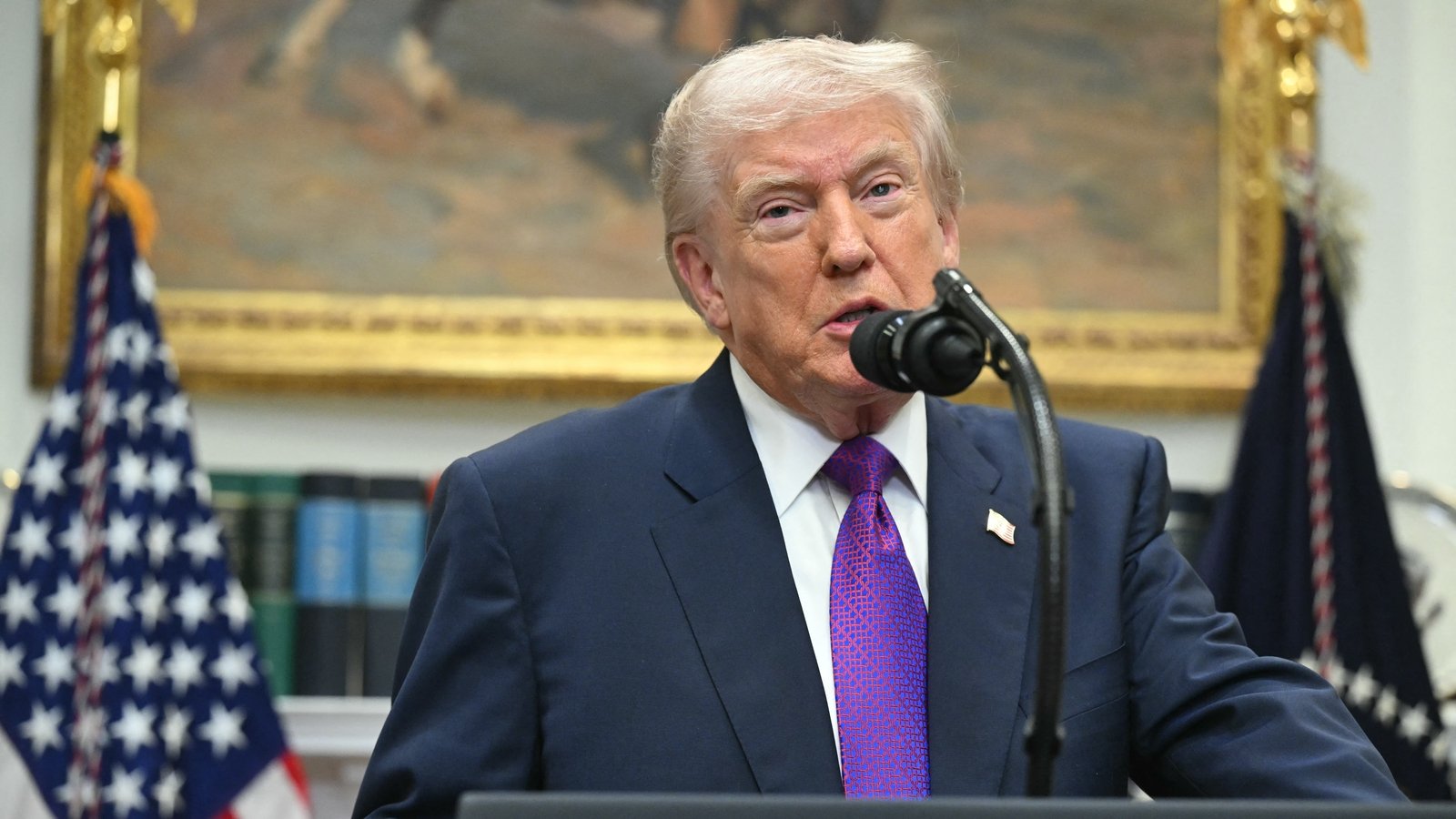
— Donald Trump has announced the repeal of a scientific finding that greenhouse gas emissions endanger human health, a move that removes the legal basis for federal climate regulations and ends federal greenhouse gas emission standards for vehicles and engines covering model years 2012 to 2027. The change follows a process carried out by the Environmental Protection Agency (EPA).
The announcement immediately drew criticism from former U.S. president Barack Obama, who warned the reversal would leave Americans “less safe, less healthy.” Environmental groups condemned the step, while legal scholars pointed to fresh uncertainty over how courts may handle climate-related claims in the absence of the finding.
At issue is the EPA’s 2009 “endangerment finding,” a formal determination under Section 202(a) of the Clean Air Act that carbon dioxide and five other greenhouse gases pose a danger to public health and welfare when emitted by new motor vehicles. The finding, rooted in the Supreme Court’s 2007 Massachusetts v. EPA ruling, has functioned for more than a decade as the legal trigger for federal climate rules on cars and trucks, and as a cornerstone for wider climate regulation.
What the EPA action does
– Terminates the EPA’s “endangerment finding” that greenhouse gases threaten human health, removing the scientific and legal determination that enabled federal regulation of vehicle-related climate pollution.
– Eliminates federal greenhouse gas (GHG) emission standards for vehicles and engines for model years 2012–2027, including current rules for light‑, medium‑ and heavy‑duty vehicles.
– Removes requirements for automakers to measure, report, certify, and comply with federal GHG standards for cars, effectively ending a nationwide compliance regime that has shaped product planning and technology investment for more than a decade.
– May not initially apply to stationary sources such as power plants, according to the description of the change, but lawyers say it undercuts the broader legal foundation for treating GHGs as pollutants across the economy.
The EPA said the repeal will save U.S. taxpayers $1.3 trillion and eliminate both the endangerment finding and all federal GHG standards for vehicles. The agency framed the move as the culmination of a multi‑year reconsideration of climate science, statutory authority and regulatory costs.
How we got here
– 2009: The United States adopted the endangerment finding, leading the EPA to act under the Clean Air Act of 1963 to curb emissions of carbon dioxide, methane and other heat‑trapping pollutants from vehicles, power plants and industry. The finding itself did not regulate emissions but unlocked the agency’s authority to do so.
– 2011: The U.S. Supreme Court ruled that GHG regulation should be handled by the EPA rather than through federal “public nuisance” lawsuits, channeling climate policy into administrative and statutory frameworks and reinforcing the centrality of EPA expertise.
– 2025: Renewables overtook coal as the world’s top electricity source, deepening the global shift away from fossil fuels even as the Trump administration accelerated efforts to dismantle domestic climate rules.
Trump, who has said he believes climate change is a hoax, previously withdrew the United States from the Paris Agreement and announced the current repeal at an event alongside EPA Administrator Lee Zeldin and White House Budget Director Russ Vought. The decision delivers on a long‑standing demand from conservative policy groups and some fossil‑fuel‑aligned lawmakers to strip the federal government of its most powerful climate regulatory tool.
What the White House and EPA said
“Under the process just completed by the EPA [Environmental Protection Agency], we are officially terminating the so-called endangerment finding, a disastrous Obama-era policy that severely damaged the American auto industry and drove up prices for American consumers,” Trump said, calling the move “one of the largest deregulatory actions in American history.”
EPA officials argued that without the endangerment finding, federal climate rules on vehicles are no longer legally required and that states and markets will continue to drive cleaner technologies. They also stressed that standards for smog‑forming and toxic pollutants, as well as fuel‑economy labeling and safety requirements, remain in place.
Pushback from Democrats and environmental groups
“Without it, we’ll be less safe, less healthy and less able to fight climate change – all so the fossil fuel industry can make even more money,” Obama wrote on X.
Fred Krupp, president of the Environmental Defense Fund, said EPA leadership had “directed EPA to stop protecting the American people from the pollution that’s causing worse storms, floods, and skyrocketing insurance costs,” arguing the step “will only lead to more of this pollution, and that will lead to higher costs and real harms for American families.”
Democratic lawmakers said they would seek oversight hearings and potential legislative responses, warning that the repeal could increase climate‑related disaster costs for federal agencies ranging from the Federal Emergency Management Agency to the Department of Defense.
Some industry groups have supported looser vehicle rules but have been reluctant to endorse eliminating the endangerment finding, citing legal and regulatory uncertainty it could trigger for manufacturers that plan investments years ahead and operate across multiple state and international regulatory regimes.
Legal uncertainty returns
The reversal could invite new “public nuisance” lawsuits over greenhouse gas emissions, legal experts said, pointing to a pathway that had been constrained since the Supreme Court’s 2011 ruling that regulation should rest with the EPA rather than the courts. With the agency stepping back from its prior scientific determination, plaintiffs may argue that federal courts must again fill the gap.
“This may be another classic case where overreach by the Trump administration comes back to bite it,” said Robert Percival, a University of Maryland environmental law professor, noting that courts will now be asked to decide not only whether the repeal is lawful but what, if anything, replaces the federal framework on climate.
Future administrations that seek to regulate greenhouse gas emissions would likely need to reinstate the endangerment finding, a step environmental lawyers describe as politically and legally complex. Any attempt to restore it would require rebuilding an evidentiary record, navigating fresh court challenges and reconciling federal action with an expanding patchwork of state‑level climate and zero‑emission vehicle programs.
International reaction and stakes
UN Climate Change Executive Secretary Simon Stiell, speaking in Istanbul during planning for COP31, framed global climate cooperation as a stabilizing force amid geopolitical strains. “There is a clear alternative to this chaos and regression and that is countries standing together, building on all we have achieved to date, to make it go further and faster, working more closely with businesses, investors, and regional and civic leaders – to deliver more real-world results in every country,” he said. He argued clean energy offers a clear path to energy security and price stability as climate impacts intensify.
Diplomats from several U.S. allies said privately the decision will complicate negotiations ahead of COP31 by raising questions about the durability of U.S. climate commitments from one administration to the next, even as many U.S. states, cities and companies continue to pursue net‑zero targets.

Status
According to the EPA, the repeal eliminates the endangerment finding and all federal GHG emission standards for vehicles and engines covering model years 2012 to 2027. The rule will now move through an inevitable gauntlet of court challenges from states and advocacy groups, a process that will determine whether the U.S. government retains any meaningful climate‑regulatory authority over the transport sector — or whether, for the first time since 2009, federal climate policy on vehicles effectively reverts to a state‑by‑state patchwork.
Worth a look
- Urban Infrastructure Resilience: How European and Asian Megacities Are Adapting to Extreme Climate Oscillations in 2026
- UN General Assembly 2026 Framework on Autonomous Systems: International Diplomacy Faces Algorithmic Governance
- Jay Clayton named White House AI czar by Trump to lead task force (globallypulse.com)
