
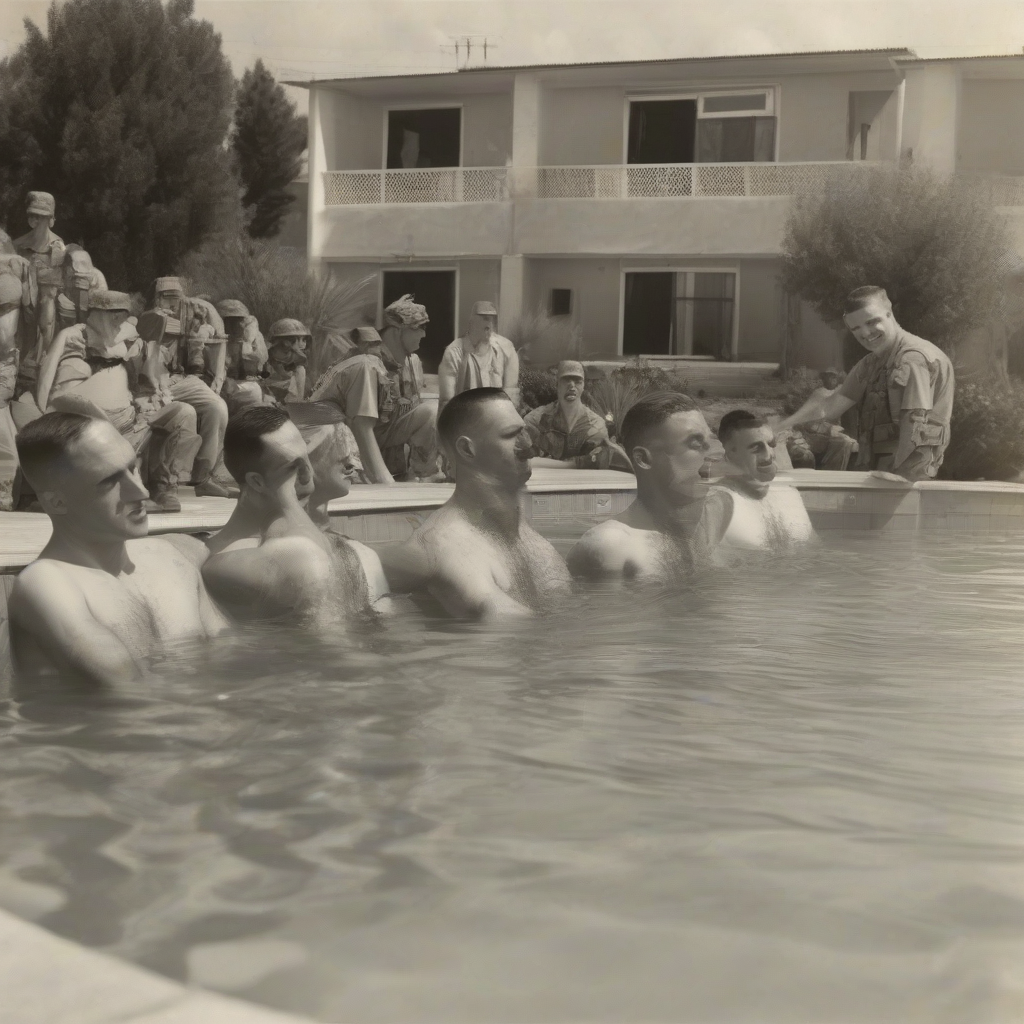
SOUTHERN ISRAEL – Residents of a small community in southern Israel have been barred from using a local swimming pool, which has been reserved exclusively for American soldiers following a directive from the U.S. Embassy.
The fenced-off facility, previously available to members and guests of a local hotel, is now restricted to U.S. military personnel. The move has triggered a dispute between the local leadership and the company managing the hotel, centering on the balance between diplomatic security requirements and the quality of life for the resident population.
The community secretariat, the administrative body governing the kibbutz, informed residents that the change was not a local decision but a mandate from higher authorities.
“This is a directive from the political echelon,” the kibbutz told visitors. “There is an instruction that the pool is only for the American soldiers.”
In a formal communication to the community, the secretariat further clarified that the restrictions were driven by diplomatic protocols intended to maintain a strict boundary between military personnel and the public.
“In light of the questions, we will explain and clarify that the directive from the U.S. Embassy is for complete separation between soldiers and civilians, and therefore the changes regarding the pool’s operation,” the secretariat stated.
Impact on Local Residents
The loss of the facility has caused significant friction within the community, particularly among families with children who relied on the pool as one of the few public amenities in the area’s intense summer heat.
Initial concerns regarding the presence of foreign soldiers in a shared space, including questions of cultural norms and privacy, led to the implementation of the current separation policy.
One resident expressed concern over the propriety of the arrangement, stating, “I have young daughters, and it is not appropriate for American soldiers to be walking around like that with them.”
While the separation addressed those concerns by limiting direct interaction, it resulted in the total exclusion of the Israeli community from the pool. Residents now report watching from the perimeter as soldiers use the facility undisturbed, a daily reminder of the change in access.
“Precisely in the summer there is no pool? My children are furious!” one resident said, adding that swim lessons and routine recreation have been abruptly halted.
The impact of the closure is described by the community as widespread, with one resident noting, “The harm is to everyone, from the oldest to the youngest,” citing both physical wellbeing and a sense of being sidelined in decisions taken over their shared public space.
The kibbutz pool (Photo: Ilana Curiel)
Legal and Administrative Disputes
The community secretariat has characterized the closure as a breach of existing agreements between the kibbutz and the hotel operator, which for years has allowed residents to use the hotel’s recreational infrastructure as part of their partnership.
Officials say the dispute now sits at the intersection of private commercial contracts, local governance and external diplomatic security demands. Under Israel’s municipal and planning framework, public-access amenities such as pools are often incorporated into broader development and operating agreements, even when physically located on privately managed land.
The body has engaged legal counsel to challenge the arrangement and to clarify whether a security directive transmitted via the U.S. Embassy can, in practice, override local contractual rights without formal state compensation or alternative provision.
“We view the decision to close the pool to residents as a blatant and serious violation of the agreements and partnership between us. Upon receiving the notice from the company operating the pool, we have been working to find a solution and alternatives with them and are being accompanied by the community’s lawyers in order to handle the matter in the best possible way. We understand the anger and share the feelings arising from the public. We view the incident as a serious blow to our quality of life and are dealing with it with full force.”
The secretariat has held meetings with the operating company to emphasize that the pool is “essential to the fabric of life here,” not a luxury, particularly given that kibbutz communities are built around shared services and communal facilities as a core part of their social model.
Legal experts consulted by the community have pointed to the need to examine how the arrangement aligns with Israel’s Basic Law: Human Dignity and Liberty, including residents’ rights to equality and reasonable enjoyment of communal resources when state or foreign-military considerations are introduced.
Company Response and Alternative Arrangements
The company managing the pool defended the decision as a necessary operational shift to accommodate the specific requirements of hosting U.S. forces, citing security vetting, controlled perimeters and movement restrictions typically applied to visiting foreign military units.
The company stated: “In light of the nature of the hosting during this period, a temporary operational adjustment was required that did not allow residents to enter the hotel grounds.”
To mitigate the impact, the operator claims to have provided an alternative for the community:
- Access to a water park adjacent to the kibbutz, with coordinated entry for residents.
- Provision of a pool and associated facilities at the external site, intended to serve as a substitute recreational venue.
The company described this as a “temporary arrangement only,” stating that the goal is to “allow the hosting to continue while preserving the good and longstanding relationship with the community, whose members are dear to us.” Residents, however, question whether the substitute site offers the same accessibility for elderly members and young children and whether transportation and added costs will be fully covered.
Company representatives have promised to provide a definitive answer regarding potential changes to the arrangement after conducting further checks with the American delegation and with Israeli authorities responsible for coordinating foreign forces’ presence, noting that any future solution will have to balance security protocols with the kibbutz’s expectations of restored access.
Keep reading
- Urban Infrastructure Resilience: How European and Asian Megacities Are Adapting to Extreme Climate Oscillations in 2026
- UN General Assembly 2026 Framework on Autonomous Systems: International Diplomacy Faces Algorithmic Governance
- Two Iranian nationals charged with terror plot targeting Manchester Jewish community (globallypulse.com)
