
Winter Games converge with a regional measles resurgence
The Winter Olympics will take place February 6-22, followed by the Paralympic Games from March 6-15, in northern Italy. The events arrive amid renewed measles activity across parts of Europe, including reports linked to ski destinations, prompting public-health agencies to underscore basic awareness and vaccination status checks ahead of peak travel. Measles remains one of the most contagious human viruses, capable of infecting up to nine in ten susceptible close contacts, and can lead to severe complications, particularly in young children and adults over 30, despite the availability of a safe and effective vaccine.[2]
- Key dates: Winter Olympics (February 6-22, 2026); Paralympic Games (March 6-15, 2026).
- Travel dynamics: Large, multi-venue gatherings draw participants and spectators from hundreds of countries, creating high mobility across borders and within indoor arenas and transport hubs.
- Risk setting: Cold-weather sports, après-ski venues, and shared accommodations increase opportunities for airborne transmission in crowded indoor spaces.
Ireland’s surveillance highlights a protection gap
Health authorities in Ireland are urging travelers to review their measles-mumps-rubella (MMR) status in light of ongoing cases and recent outbreaks in Europe. Officials advise that those not fully vaccinated receive the MMR vaccine at least 14 days before travel, to allow time for immunity to develop. The latest data for the first quarter of 2025 show MMR uptake among children aged 24 months at 87.6%, below the 95% threshold used to prevent outbreaks and interrupt sustained transmission.
“As measles is one of the most infectious diseases, case numbers can increase quickly when vaccination coverage falls below this protective threshold. Maintaining high uptake is essential to safeguarding population health.”
“The best way to protect yourself and those around you against measles and to prevent the spread of measles in Ireland is to ensure you and your family members are vaccinated against measles.”
MMR vaccine is offered nationally through Primary Childhood and Schools Immunisation Programmes, with two routine doses-at 12 months of age and again in junior infants in primary school. Public-health officials stress that these routine services are the backbone of outbreak prevention, particularly when large international events increase the likelihood of imported cases.
| Indicator | Figure | Benchmark | Implication |
|---|---|---|---|
| MMR uptake at 24 months (Ireland, Q1 2025) | 87.6% | 95% (two-dose coverage to interrupt transmission) | Below target; conditions conducive to outbreaks if importations occur |
Elimination status lost in multiple countries
The United Kingdom, Armenia, Austria, Azerbaijan, Spain and Uzbekistan are no longer recognised as measles-free following spikes in cases during 2024. These countries have re-established endemic measles transmission based on the number of cases in 2024. Under regional verification criteria, a country loses its measles-free status if the virus returns and transmission is sustained continuously for more than a year, signalling that immunity gaps have become entrenched rather than episodic.
“Through strengthened surveillance, improved outbreak response, and focused efforts to reach under-vaccinated communities, all countries can achieve and sustain elimination,” said Bhanu Bhatnagar, WHO Europe spokesperson.
| Country | Measles-free status (2024) | Case trend information |
|---|---|---|
| Spain | Lost (endemic transmission re-established) | ~400 cases in 2025; doubled from 2024; up from 11 in 2023 |
| Austria | Lost (endemic transmission re-established) | 542 cases in 2024, up from 186 in 2023 |
| United Kingdom | Lost (endemic transmission re-established) | Case increases reported through 2024 |
| Armenia | Lost (endemic transmission re-established) | Case increases reported through 2024 |
| Azerbaijan | Lost (endemic transmission re-established) | Case increases reported through 2024 |
| Uzbekistan | Lost (endemic transmission re-established) | Case increases reported through 2024 |
What agencies are telling prospective travelers
Public-health messaging emphasizes up-to-date vaccination ahead of international travel and major events. Individuals who are not vaccinated, or who are unsure of their status, are advised to complete MMR vaccination in advance of trips to minimize the risk of travel-associated importation and onward spread when they return home.
“If you think you or your child are not up to date with MMR vaccines, vaccination can be arranged with your GP. MMR vaccine is available free of charge for individuals who are not age-appropriately vaccinated. In addition, infants aged 6 months to under 12 months are eligible to receive an MMR vaccine, free of charge at their GP, prior to travel abroad. It is recommended that you receive this MMR vaccine at least 14 days prior to travel.”
Transmission profile and clinical picture relevant to mass gatherings
- Mode of transmission: Airborne spread via respiratory aerosols and droplets; the virus can remain suspended in indoor air and on surfaces for several hours, allowing infection even after an infectious person has left the space.[3]
- Incubation period: Typically 7-21 days from exposure to onset of symptoms, which can complicate efforts to link cases to specific venues or travel itineraries.
- Infectious window: Individuals are generally contagious from about 4 days before to 4 days after rash onset, a period when they may still be attending events, travelling, or working.
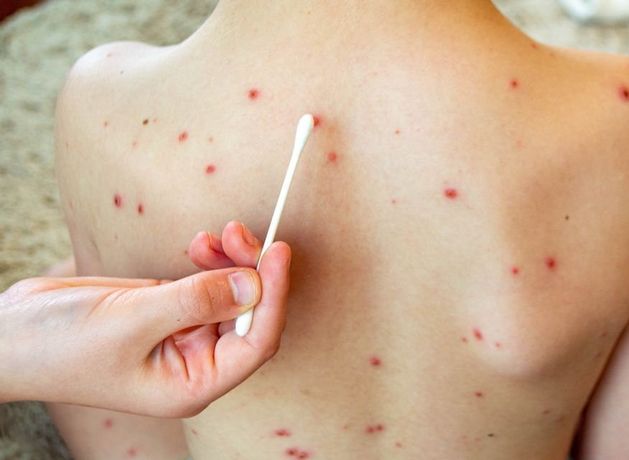
- Common symptoms: High fever, cough, runny nose, red eyes, followed by a characteristic rash; small white spots inside the cheeks may appear before the rash.
- Vaccine performance: Two MMR doses provide high protection against measles infection and severe disease; one dose confers meaningful but lower protection than two doses.
- Higher-risk environments: Crowded indoor venues, shared lodging, après-ski bars, and prolonged public transport, especially where ventilation is poor.
System readiness and policy levers for the Winter and Paralympic Games
- Enhanced surveillance: Event-time syndromic surveillance across emergency departments and primary care, coupled with rapid laboratory confirmation capacity, to detect clusters early.
- Cross-border coordination: Timely case notification and data sharing under the International Health Regulations (2005), which legally bind states to report certain public-health events and to strengthen core surveillance and response capacities.
- Outbreak response: Pre-identified isolation capacity, contact-tracing protocols, and expedited access to post-exposure prophylaxis where indicated by national policy.
- Targeted communications: Multilingual, pre-travel messaging for spectators and teams; on-site alerts for symptom recognition and event health services, coordinated with local health authorities.
- Laboratory networks: Surge arrangements for PCR testing and genotyping to map transmission chains during the Games period and distinguish imported cases from local spread.
Equity and access considerations
- Coverage gaps: Subnational pockets with lower MMR uptake can experience rapid amplification after importation, even when national coverage appears high.
- Barriers: Missed routine appointments, mobility, documentation hurdles, and misinformation can depress vaccine uptake, particularly among marginalised or mobile populations.
- Cost and availability: In Ireland, MMR is available free of charge for individuals who are not age-appropriately vaccinated; infants 6-11 months may receive an early dose prior to travel under national policy.
- Inclusive outreach: Community partnerships and tailored campaigns help reach under‑vaccinated groups while keeping routine services on track, an approach officials say will be critical as international visitors move through European transport hubs and tourist regions.
The near-term outlook
- February-March 2026: Large-scale travel linked to the Winter Olympics and Paralympics intersects with ongoing measles activity in parts of Europe.
- Primary risk: Travel-associated importations seeding outbreaks in under‑immunised communities, including areas that have seen recent declines in childhood vaccination.
- Mitigation focus: Maintaining high two‑dose MMR coverage, swift detection, and coordinated response to interrupt transmission chains, alongside clear, consistent risk communication to travelers and host communities.
Keep reading
- Global Antimicrobial Resistance Action: Surveillance Networks and Novel Bacteriophage Therapies in Late 2026
- Wearable Biosensors and Continuous Metabolic Monitoring: Preventive Healthcare’s Next Frontier
- Bangladesh measles outbreak: 202,000 cases, 1,147 deaths since March (archyde.com)
- 4,588 Measles Cases Clear Double 2025 by 10; Pennsylvania Has 29% (daybreakwire.com)
