
Strengthening Urban Primary Care Infrastructure in Mysuru
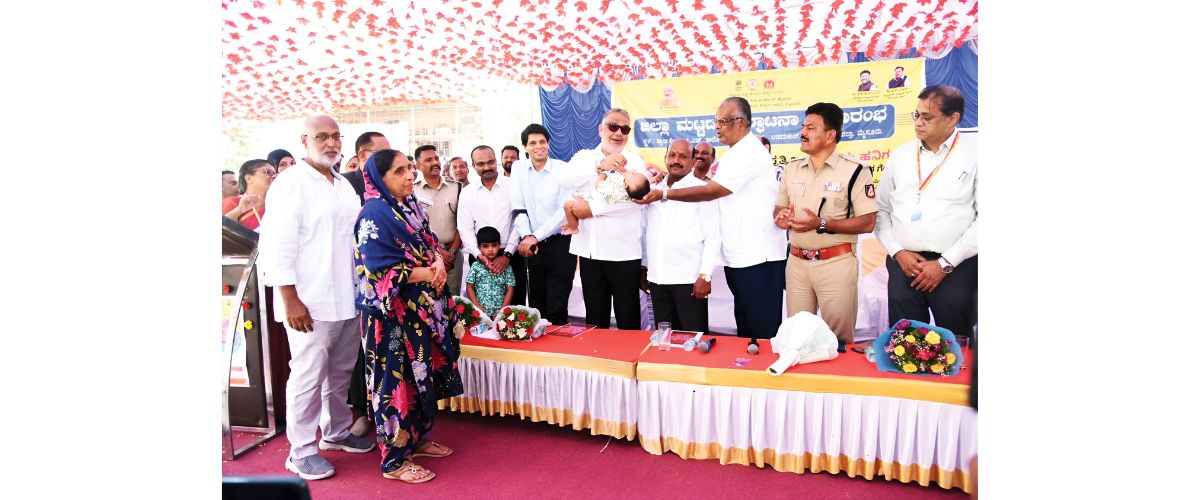
The inauguration of a new Primary Health Centre (PHC) in Badamakan and the launch of a district-level pulse polio vaccination drive in Mysuru underscore a strategic shift toward enhancing localized healthcare accessibility. By transitioning essential services from temporary or shared administrative spaces into dedicated community facilities, the regional health administration aims to reduce barriers to entry for vulnerable urban populations and align with India’s broader push to strengthen primary care under the National Health Mission.
The Badamakan PHC previously operated out of a Police Department building in Jyothinagar, a configuration that often complicates patient access, deters walk-in visits and limits the facility’s operational capacity. The relocation to a renovated community hall reflects a broader public health policy of repurposing underutilized civic assets to meet urgent medical needs in fast-growing urban wards. During the inauguration, MLA Tanveer Sait noted that “community halls were getting converted to a place for anti-community activities and called for converting them to hospitals and educational institutions for public utility,” framing the move as both a health intervention and a civic order measure.
The financial framework for the facility’s development relied on a combination of local government and legislative allocations, illustrating how urban health infrastructure is actually funded at the ward level:
- Total Renovation Cost: Rs. 80 lakh
- MLA Local Area Development (LAD) Funds: Rs. 30 lakh
- Mysuru City Corporation: Rs. 50 lakh
Officials say the upgraded PHC is expected to provide outpatient care, maternal and child health services, basic diagnostics and pharmacy support closer to where low-income households live, reducing travel time to tertiary hospitals and out-of-pocket spending on routine care.
Public Health Surveillance and Polio Eradication
Concurrent with the facility opening, the District Administration, Mysuru Zilla Panchayat (ZP), and the Department of Health and Family Welfare initiated a pulse polio vaccination programme across the city. While India and the World Health Organization’s South-East Asia Region were certified polio-free in 2014, health authorities continue to treat poliovirus as a live risk, particularly in dense urban settlements linked to high-mobility transport corridors.
The Global Polio Eradication Initiative emphasizes that continued surveillance and supplementary immunization activities are critical to prevent the re-importation of the virus and to maintain population immunity. Nationally, this approach is embedded in India’s ongoing implementation of the National Urban Health Mission, which mandates periodic campaigns to protect high-risk urban and peri-urban populations.
The current drive in Mysuru specifically targets children under five years of age, a demographic most susceptible to the virus. Frontline health workers are being deployed to anganwadis, schools, construction sites and informal settlements to reach families who may have missed routine immunization visits. This systemic, door-to-door approach is designed to close immunization gaps that can emerge when urban poor communities are highly mobile or lack stable documentation, thereby reducing the risk of localized outbreaks in densely populated corridors like Badamakan.
Integration of Namma Clinics in Urban Health Delivery
The expansion of the PHC network in Mysuru is complemented by the ‘Namma Clinics’ initiative, which functions as a first-contact point for primary care in several urban neighborhoods. Conceived as walk-in facilities embedded within the existing public health architecture, these clinics are designed to decongest tertiary hospitals by managing chronic conditions and acute but non-emergency ailments at the neighborhood level, thereby improving the overall efficiency of the healthcare workforce.
According to Department of Health and Family Welfare Officer Dr. P.C. Kumaraswamy, these clinics have expanded the scope of available primary care within city limits and provide a platform to implement state and national health schemes more effectively. In practical terms, that means consistent access to doctors, diagnostics and counselling in localities that previously depended on overcrowded district hospitals.
| Service Metric | Capacity / Detail |
|---|---|
| Treatment Scope | Management of 40+ types of common and chronic ailments |
| Specialist Availability | 8 specialist doctors covering key disciplines |
| Operational Frequency | 3 days per week per specialist, on a rotating schedule |
By integrating specialized care into the Primary Health Centre model, including through Namma Clinics, the city is moving toward a more resilient health system capable of managing both preventative measures, such as vaccinations, and complex diagnostic treatments within the community. Health planners see Mysuru’s approach as an example of how India’s urban health policy architecture-from the National Urban Health Mission to local PHC conversions-can translate into visible, street-level gains in access, accountability and trust in the public health system.
Related reading
