
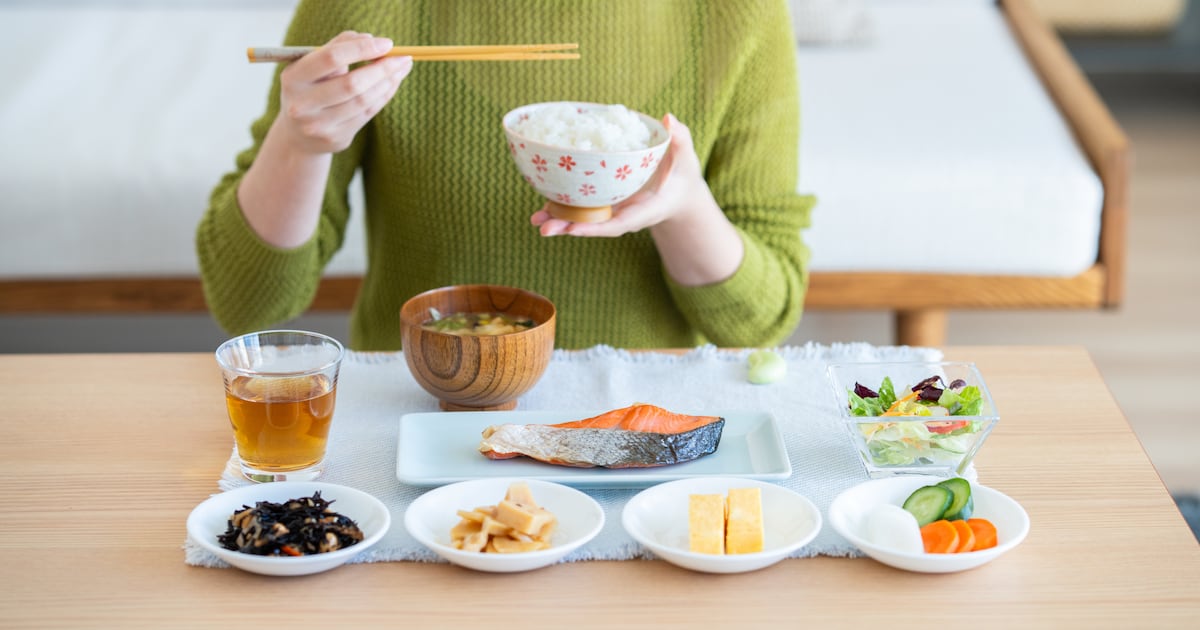
Japanese study links rice-centered meal patterns with healthier diets, raising policy questions far beyond Asia
New data from a middle‑aged cohort in Hyogo Prefecture suggests that meal structures built around rice are associated with better diet quality and weight control behaviors tied to non‑communicable disease (NCD) prevention. “Maintaining appropriate weight and eating rice were positively associated with healthy diet scores in both sexes,” wrote researchers in Nutrients.
The findings arrive as governments revisit national dietary guidelines and food‑environment regulation in light of rising NCD burdens. Japan has long embedded its traditional rice‑centered “washoku” meal pattern into public guidance, including its Food Guide Spinning Top and official food‑based dietary guidelines, offering a structured contrast to the increasingly globalized trend toward ultra‑processed, convenience‑driven eating.
Inside the Hyogo Prefecture study
| Feature | Details |
|---|---|
| Design | Cross-sectional survey of diet behaviors and weight-control practices |
| Setting | Hyogo Prefecture, Japan, a major industrial and logistics hub in western Japan where expressways and large infrastructure projects such as the Akashi Kaikyo Bridge connect urban centers and commuter belts across regions[1] |
| Population | 577 adults aged 40-59 (255 men; 322 women) |
| Primary measures | Healthy diet score; weight maintenance behavior for NCD prevention; frequency of rice intake; frequency of eating out and home‑meal‑replacement use |
| Key traditional context | Washoku meal structure (ichijū‑sansai) that centers a staple (often rice), soup, and multiple side dishes |
By focusing on a working‑age population in a highly connected prefecture, the study effectively tests how traditional patterns compete with – or are adapted to – an environment saturated with restaurant, convenience‑store, and ready‑to‑eat options.
Key associations reported
- “Results showed that maintaining an appropriate weight to prevent NCDs was associated with healthy diets composed of at least two balanced meals daily, eating breakfast regularly, and eating at least five vegetable-based dishes daily in both men and women,” researchers said.
- They found that weight control for NCD prevention and rice consumption were linked to healthy diets.
- “In Japan, the 2000 Japanese food-based dietary guidelines recommend a well-balanced diet consisting of a staple, main dish, and side dishes. Our findings on the positive effect of rice consumption frequency and healthy diets agreed with those of previous studies showing links between this traditional meal structure and consuming breakfast,” said researchers.
Taken together, the associations support the idea that in this context rice is a proxy for a broader, regulated meal format rather than simply another carbohydrate source to be minimized.
How meal structure-not macronutrient minimalism-may steer diet quality
The analysis engages directly with a long‑running tension in nutrition policy: the popularity of low‑carbohydrate approaches versus evidence that structured, balanced meals can support weight maintenance and overall diet quality. In this dataset, rice functions less as a stand‑alone nutrient source and more as an anchor for a composed meal that increases the likelihood of vegetable, soup, and protein side‑dish intake. The signal echoes prior work in Japan and the United States linking rice consumers to higher overall dietary quality-while also highlighting that eating out and heavy reliance on ready‑to‑eat meals correlate with lower vegetable consumption and poorer scores.
For regulators and guideline‑setting bodies, the study reinforces a shift away from single‑nutrient targets toward pattern‑based guidance: what is on the table together, at the level of the meal, may matter as much as how many grams of carbohydrate or fat appear on a label.
Public‑health interpretation and system implications
- Population impact: Observational associations suggest that culturally familiar staple‑anchored meals can coexist with weight‑control behaviors relevant to NCD prevention.
- Health‑system relevance: NCDs continue to command substantial primary‑care and specialty resources; dietary patterns that support weight maintenance can reduce downstream demand on cardiometabolic services.
- Food‑environment signal: Frequent eating out or reliance on ready‑to‑eat meals is linked to lower diet quality, underscoring the role of restaurants, cafeterias, and convenience retail in shaping outcomes.
Because many governments now embed diet‑related NCD targets into national health strategies and universal health coverage plans, the Hyogo findings are likely to be read not just by clinicians and nutritionists but by budget officials and planners weighing prevention investments against hospital capacity.
Policy and regulatory levers that align with the findings
Japan’s experience also sits within a wider international push to codify healthy diet standards. The Hyogo evidence dovetails with the global disaster‑risk‑reduction agenda’s emphasis on strengthening resilience of health systems and communities, as set out in the successor to the Hyogo Framework for Action, where NCD prevention and food security are treated as core components of societal resilience.
- Public procurement standards: Specify balanced “set‑meal” patterns in schools, hospitals, and government workplaces (vegetable-forward sides; whole‑grain options; limits on sodium and saturated fat).
- Menu standards in food service: Voluntary or mandated targets for salt reduction, default inclusion of vegetables, and smaller portions of energy‑dense sides-consistent with World Health Organization healthy diet guidance on salt and vegetable intake.
- Front‑of‑pack and menu labeling: Simple interpretive labels can make balanced set meals more visible than single large entrées.
- Retail placement and pricing: Incentives for combination meals that pair a staple with vegetables and lean protein, with price parity versus high‑calorie alternatives.
- Workplace and community settings: Breakfast availability and culturally familiar balanced meal options, reflecting the study’s breakfast association with healthier patterns.
For ministries of health, education, and finance, these levers translate a culturally specific signal from Hyogo into practical decisions about contracts, standards, and subsidies in cafeterias and canteens.
Equity and access considerations
- Time and cost constraints: Households facing long work hours or limited kitchen access are more likely to depend on ready‑to‑eat options; healthier defaults in convenience retail can narrow gaps.
- Cultural tailoring: For communities where rice is a staple, framing balanced meals around familiar staples may increase uptake compared with prescriptive macronutrient targets.
- Whole‑grain availability: Ensuring affordable brown rice and other whole‑grain choices in institutional and retail settings supports fiber intake without abandoning staple foods.
Policy choices on transport, housing, and labor conditions also shape who can realistically cook at home or access fresh ingredients. The Hyogo study, conducted in a region with dense transport links and extensive food retail, underscores how infrastructure decisions can indirectly influence diet quality by making certain meal formats easier to obtain than others.
Scientific cautions and research gaps
| Limitation | Why it matters | Priority for future research |
|---|---|---|
| Cross‑sectional design | Cannot establish causality between rice‑anchored meals, weight control behaviors, and diet quality | Longitudinal cohorts and intervention trials to track sustained effects |
| No distinction between white and brown rice | Whole‑grain guidance emphasizes fiber and cardiometabolic benefits; effects may differ by rice type | Differentiate grain type and degree of processing in analyses |
| Self‑reported behaviors | Potential recall and social‑desirability bias | Incorporate objective diet measures and portion tracking where feasible |
| Regional sample of middle‑aged adults | Generalizability beyond Hyogo Prefecture and beyond ages 40-59 is uncertain | Replicate in diverse age groups and in non‑Japanese populations |
These caveats are critical for policymakers: the study is a signal, not a mandate. Any move to redesign procurement or labeling standards around rice‑anchored patterns will need to be backed by broader evidence, including cost‑effectiveness and cultural‑acceptability analyses in other settings.
Industry role in building healthier defaults
Food service operators are well positioned to operationalize balanced meal structures by normalizing vegetable‑rich sides, offering whole‑grain options, moderating salt, and presenting set meals that prioritize variety over volume. “In the future, policies should encourage the food service industry to promote healthy eating environments by offering low-salt meals with ample vegetables and fruits in addition to other efforts to support weight management to prevent NCDs,” researchers concluded.
For multinational chains and domestic caterers alike, aligning with government nutrition standards can also reduce regulatory risk, anticipate future labeling rules, and tap into demand from employers and insurers who increasingly view food environments as part of workforce health strategy.
Beyond Japan: why staple‑anchored balance travels
- Translatability: The concept of a staple anchoring multiple sides is adaptable to diverse cuisines (e.g., rice, millet, corn, whole‑wheat flatbreads) without mandating a single “ideal” plate.
- Measurement opportunity: Healthy‑diet scoring tools can explicitly reward meal composition-vegetable count, whole‑grain presence, and sodium limits-rather than focusing narrowly on macronutrient totals.
- Cultural resonance: Emphasizing familiar staples may improve adherence and reduce diet polarization driven by one‑size‑fits‑all low‑carb messaging.
“These findings suggest that rice may be widely considered a potential aid for sustainable healthy diets in the future, even in countries where rice is not the staple food,” said researchers. “Furthermore, the causal relationship between maintaining an appropriate weight and healthy diets, including the potential role of eating rice, needs to be further investigated using nationwide longitudinal studies and research involving non-Japanese populations.”
For governments now revising dietary guidelines or negotiating food‑industry pledges, the Hyogo study adds a pragmatic message: protecting traditional, staple‑anchored meal structures-while tightening standards for salt, portion size, and vegetable content-may be a more realistic pathway to healthier diets than betting everything on abstract macronutrient formulas.
