
A sign identifying Sandler Neurosciences Center on the UCSF Mission Bay campus, Feb. 10, 2025, in San Francisco.
The clinical approach to identifying neurodegenerative risk is undergoing a fundamental shift. Traditionally, the diagnosis of Alzheimer’s disease has relied upon the manifestation of clinical symptoms, often supplemented by expensive neuroimaging or invasive procedures such as lumbar punctures to collect cerebrospinal fluid. However, emerging research is pivoting toward blood-based biomarkers, which offer a less intrusive and more scalable method for identifying pathology decades before cognitive impairment becomes apparent.
A recent study from UC San Francisco has highlighted the utility of these blood tests in middle-aged adults, suggesting that specific biomarkers can signal a heightened risk of future cognitive decline even in individuals who currently exhibit no symptoms of dementia. The work adds to a broader effort to redefine Alzheimer’s as a biological disease process that begins long before memory problems surface, and to build screening tools that public health systems could one day deploy proactively.
Midlife Biomarkers and Cognitive Trajectory
Utilizing data from the long-term Coronary Artery Risk Development in Young Adults (CARDIA) study, researchers analyzed a cohort of 1,350 individuals who underwent blood testing and standardized cognitive assessments. The study focused on adults in midlife-generally defined as ages 45 to 65-to determine whether the presence of amyloid plaque and tau proteins in the blood correlated with current cognitive performance and future decline.
The study found that individuals with “positive” biomarker results experienced subtle but measurable differences in cognitive function compared to those who tested negative. Specifically, these individuals showed reduced processing speed-the rate at which a person absorbs and reacts to information-and diminished executive function, which governs the ability to plan, organize and manage daily tasks.
Dr. Kristine Yaffe, vice chair in the UCSF Department of Psychiatry and Behavioral Sciences, noted the significance of these early markers: “These weren’t huge differences, but still it was interesting that we’re able to find this,” she said, arguing that even modest, measurable gaps in midlife can foreshadow steeper decline later on.
| Biomarker profile | Share of cohort |
|---|---|
| High levels of both tau and amyloid | 6% |
| Positive for at least one biomarker | 4% to 15% |
The long-term implications of these markers are more pronounced. Follow-up data collected five years after the initial tests revealed a significant acceleration in cognitive decline for the biomarker-positive group, even after accounting for education and cardiovascular risk factors.
- Verbal memory: Biomarker-positive individuals were 2.5 to 4 times more likely to experience rapid decline.
- Processing speed: Biomarker-positive individuals were 3 to 4 times more likely to show accelerated decline.
Researchers stress that a positive blood test does not amount to an Alzheimer’s diagnosis. Instead, they say it flags people whose brains may already be undergoing disease processes, potentially years before they would otherwise enter a memory clinic or specialty care.
Public Health Scale and Diagnostic Infrastructure
The push for early detection is driven by a looming public health crisis. The prevalence of Alzheimer’s is expanding rapidly, placing immense pressure on healthcare systems to move from reactive treatment to proactive risk management. According to data from the Alzheimer’s Association, cases among those 65 and older in the United States are projected to climb from 7.4 million to 13.8 million by 2060, sharply increasing demand for long-term care, caregiver support and dementia-capable services.
The transition to blood-based testing represents a potential revolution in how these risks are screened at the population level. Such tests could theoretically be incorporated into routine midlife checkups or even primary care panels, in contrast to PET scans and lumbar punctures that are costly, capacity-constrained and largely confined to specialty centers.
As Dr. Yaffe explained, “This idea of being able to get a blood test for Alzheimer’s is just a huge breakthrough.” But she and other experts emphasize that the breakthrough is only useful if health systems, payers and regulators can decide who should be offered testing, how often, and what follows a high-risk result-questions that are rapidly moving from research labs into policy circles.
For public programs such as Medicare and Medicaid, and for private insurers, decisions about reimbursement will shape whether blood-based screening becomes a tool for a small subset of patients or a standard part of aging-related care. Health departments, in turn, will need to consider how positive results feed into counseling, referrals to memory clinics, and evidence-based lifestyle and vascular-risk interventions.

Nicole Weber, a UCSF phlebotomist, places vials of blood drawn for a study of chemical exposures, comparing women firefighters and women who work in offices, in a specimen bag in Supervisor Katy Tang’s office at City Hall on Tuesday, Oc. 14, 2014, in San Francisco.
Regulatory Gaps and Direct-to-Consumer Screening
While the science of blood-based biomarkers advances, regulatory oversight has struggled to keep pace with the commercialization of these tests. A growing number of companies are marketing Alzheimer’s risk tests directly to consumers, bypassing the traditional clinical relationship between a patient and a physician.
In the United States, most laboratory-developed tests still fall under a patchwork of oversight shared between the Food and Drug Administration and the laboratory certification program established under the Clinical Laboratory Improvement Amendments. That framework focuses primarily on test quality and laboratory processes, not on how well a test predicts disease in relatively young, symptom-free adults.
This gap raises significant public health concerns regarding the interpretation of results. In younger, asymptomatic populations, the clinical meaning of high biomarker levels is not yet fully understood, and a positive result does not guarantee a diagnosis of Alzheimer’s. Without professional guidance, such results may lead to unnecessary psychological distress, stigma in workplaces or insurance settings, or misguided health decisions based on an incomplete risk picture.
Dr. Yaffe warned that “The floodgates are about to open,” adding, “… There’s a lot of people doing direct-to-consumer marketing.” Policy experts say that as biomarker tests become cheaper and more widely advertised, agencies will be pressed to clarify what claims companies can make, what kind of counseling must accompany results, and how to protect consumers from overdiagnosis and predatory upselling of unproven interventions.
Xue Zhong, an assistant professor at Vanderbilt University Medical Center, cautioned that the current findings should be interpreted with care, stating, “The finding should be viewed as hypothesis generating rather than [a] definitive pinnacle prediction,” underscoring that regulators and clinicians are still learning how to translate biomarker patterns into individualized prognoses.
Equity in Neurodegenerative Research
A critical component of the UCSF study was its demographic composition. By utilizing the CARDIA cohort, which included a population that was 55% white and 45% Black, the research addresses a long-standing gap in dementia studies, which have historically been skewed toward white, higher-income participants. Ensuring that biomarkers are validated across diverse racial and ethnic groups is essential for preventing disparities in how early detection and preventative care are deployed.
Public health officials have raised concerns that, without deliberate design, new screening tools can widen inequities: affluent patients may gain early access to testing and follow-on care, while communities with higher dementia burden remain underdiagnosed or receive results without adequate support. Integrating blood-based tests into community clinics, safety-net hospitals and federally qualified health centers is likely to be as important as the science of the assays themselves.
Despite the potential of these tests, the medical community continues to emphasize that biological markers are only one part of a broader health picture. Lifestyle factors-including the avoidance of tobacco, moderation of alcohol, management of blood pressure and diabetes, regular physical activity and the maintenance of a healthy diet-remain primary tools for reducing the risk of dementia and other neurodegenerative conditions.

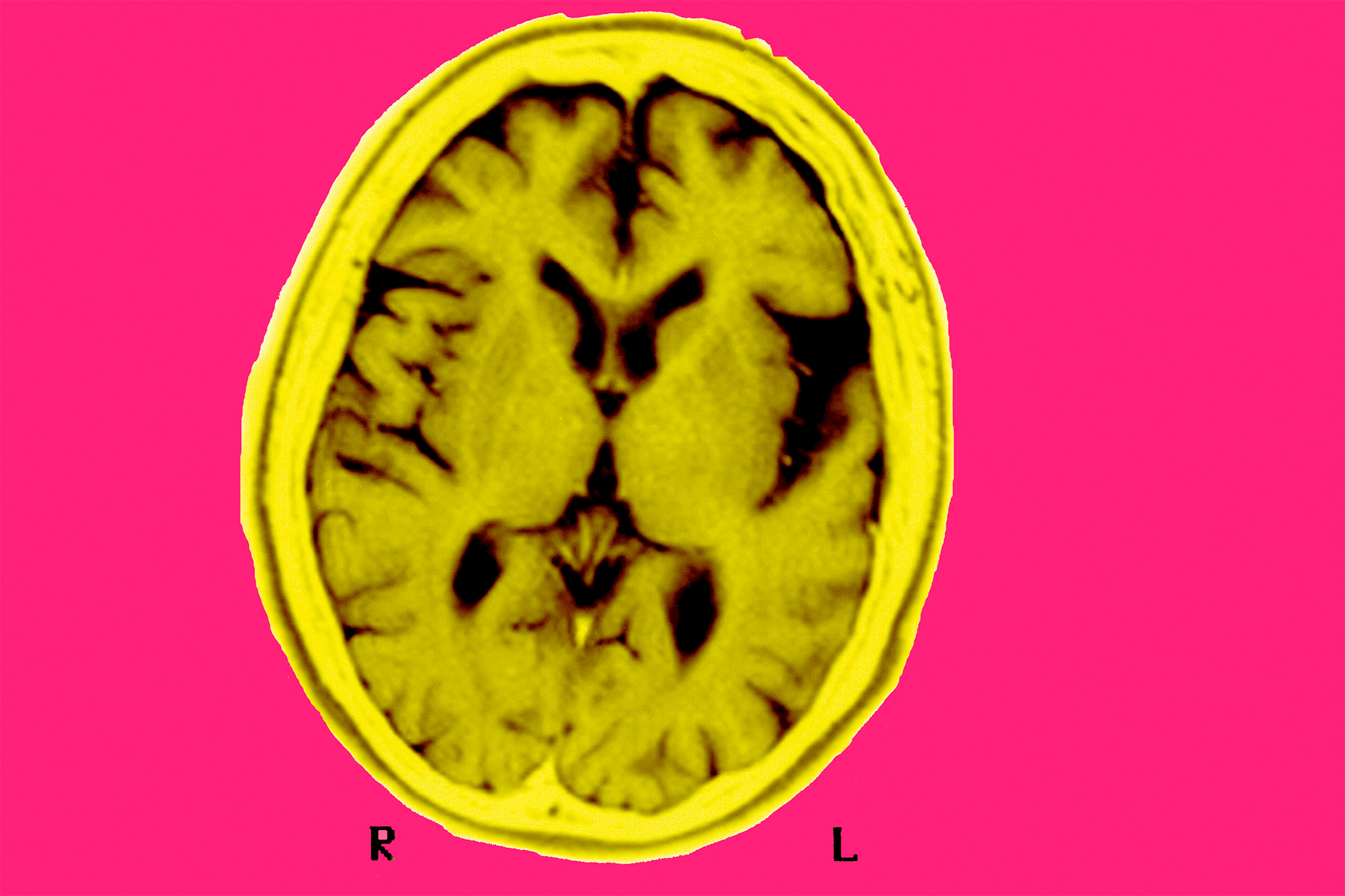
MRI of the brain of a patient affected by Alzheimer’s disease, axial cut-away view.
As the technology for early screening evolves, the gap between diagnostic capability and clinical interpretation remains a primary concern. Clinicians, ethicists and regulators are now being asked to move as quickly as the assay developers. Dr. Yaffe noted that technology “is moving faster” than the current medical understanding of how to apply it in long-term patient care. “We’re hoping that this study helps a little.”
For now, researchers say, blood-based Alzheimer’s tests should be viewed as powerful tools still in search of a fully built system around them-one that can protect patients, guide clinical decisions and ensure that the first generation of scalable brain health screening does more good than harm.
Related reading
