
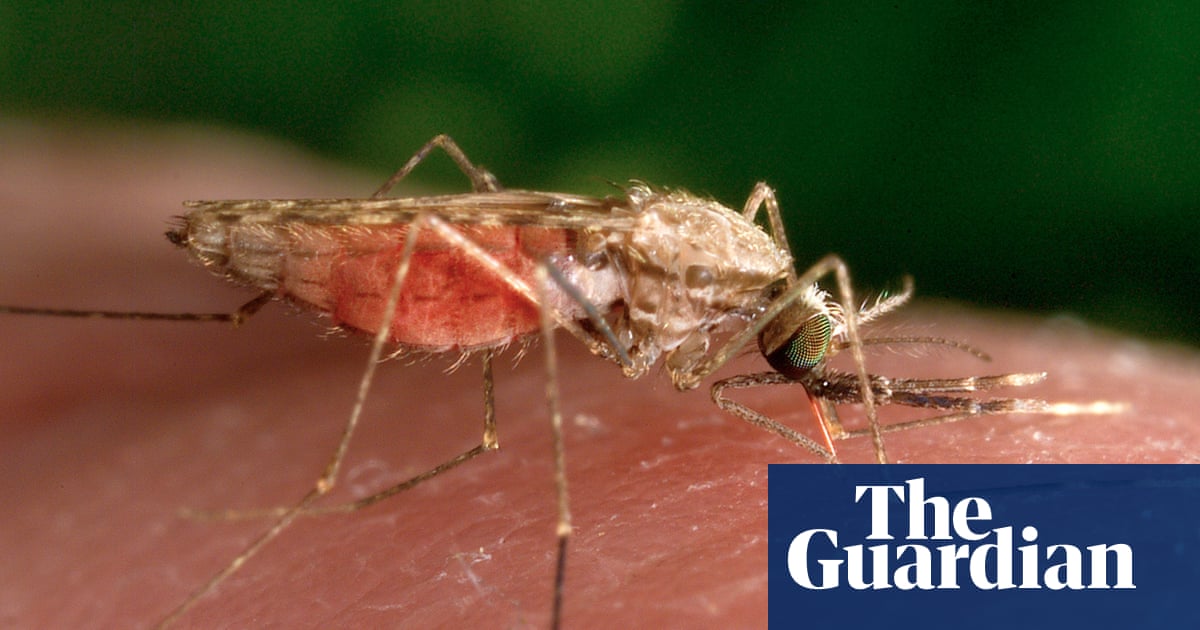
Behavioral Plasticity in Insect Repellency
The efficacy of chemical barriers in preventing vector-borne diseases has long been viewed through the lens of static biochemistry. N,N-diethyl-meta-toluamide, commonly known as Deet, is a cornerstone of global public health strategies, utilized to disrupt the sensory mechanisms mosquitoes use to locate human hosts. However, new evidence indicates that the interaction between insects and repellents may be dynamic, influenced by associative learning.
Research published in the Journal of Experimental Biology suggests that mosquitoes can develop a positive association with Deet if the chemical is present during a successful blood meal. This indicates that the repellent’s effect is not merely a fixed chemical reaction but can be modified by the insect’s experience.
“For a long time, it was believed that repellants worked solely because of their chemical properties, either by being toxic or unpleasant to mosquitoes and driving them away, or by blocking their ability to detect humans. However, our findings suggest that the reaction can be modified by experience,” said Prof Claudio Lazzari, from the University of Tours, France. “We believe this represents a significant change in our understanding of repellants.”
The study utilized controlled environments to observe how mosquitoes responded to Deet after different stimuli. The findings revealed a stark contrast in behavior based on prior exposure:
- Trained Group: 60% of mosquitoes that fed on warm blood while exposed to Deet subsequently attempted to bite when presented with Deet alone.
- Untrained Group: Only 17% of insects with no prior training showed biting attempts when exposed to Deet.
- Control Group A: 13% of mosquitoes previously presented with Deet alone showed biting attempts.
- Control Group B: 17% of mosquitoes that fed on warm blood without Deet exposure showed biting attempts.
- Control Group C: 23% of mosquitoes that fed on warm blood and were exposed to Deet, but not simultaneously, showed biting attempts.
In a practical application test, nearly 60% of the trained mosquitoes attempted to bite a researcher’s Deet-treated hand, while untrained mosquitoes ignored the treated hand in favor of an untreated one. Taken together, the results suggest that Deet is not only a chemical barrier but also a cue that mosquitoes can, under tightly controlled circumstances, learn to reinterpret.
Systemic Implications for Vector-Borne Disease Control
The ability of mosquitoes to override a chemical repellent through learning has significant implications for the management of population-level health risks. Vector-borne diseases place an immense burden on healthcare infrastructure, particularly in tropical and subtropical regions where systemic capacity is often strained and where frontline protection often relies on a limited toolkit of bed nets, indoor residual spraying, and personal repellents.
| Disease | Public Health Impact | Systemic Burden |
|---|---|---|
| Malaria | High mortality and morbidity, particularly in children | Extensive requirements for diagnostic kits, antimalarial medication, and vector control campaigns |
| Dengue | Acute febrile illness with risk of hemorrhagic shock | Seasonal surges that can overwhelm hospital bed capacity and emergency services |
| Zika | Congenital complications including microcephaly | Long-term pediatric neurological care and specialist support, with cross-sector social impacts |
| Japanese Encephalitis | Severe neurological inflammation and permanent disability | High demand for long-term rehabilitation, intensive care, and vaccination programmes |
Dr Nina Stanczyk of ETH Zürich, who has studied Deet’s effectiveness, noted the significance of these behavioral shifts. “Mosquitoes have been shown to have impressive learning abilities, but the fact they can associate such a strong repellent smell with their food and are then attracted to it afterwards is remarkable, and important for us to be aware of for the future,” she said.
From a regulatory and policy perspective, the stability of repellent efficacy is critical for the World Health Organization and national health agencies that issue travel advisories, prevention guidelines, and procurement standards for public-sector health programmes. At the global level, these efforts sit within the WHO Global Vector Control Response, the strategic framework that guides how countries deploy and evaluate tools such as Deet-based repellents in combination with vaccination, environmental management, and surveillance.
If vectors can, even partially, adapt to common chemical barriers through learning, the long-term strategy for prevention may need to shift toward integrated pest management, more diverse repellent chemistries, and regulatory pathways that can bring new active substances to market without weakening existing safety and efficacy thresholds. For health ministries and donors, that would mean treating personal repellents not as a static commodity but as a technology that may need periodic reassessment as entomological evidence evolves.
Clinical Application and Field Reality
Despite the laboratory findings, the immediate risk to the general public remains low. The conditions required to “train” a mosquito to ignore Deet are specific, involve repeated controlled exposures, and are rarely mirrored in natural environments, where hosts, odours, and repellent use are far more variable.
“People should understand that Deet does not lose its effectiveness through normal use, but only under specific laboratory conditions designed to reveal how it works on mosquitoes,” said Lazzari. In real-world settings, Deet remains one of the most extensively studied and widely recommended active ingredients in insect repellents for both civilian and military use.
Entomological perspectives suggest that the variety of repellents used in the field and the intermittent nature of blood meals likely prevent this associative learning from occurring on a broad scale. Prof Francesca Romana Dani, an entomologist at the University of Florence, pointed out that insects encounter different chemicals across various hosts.
“Furthermore, although a single mosquito can take multiple blood meals, they do so every few days, so it’s important to evaluate how long the memory of a blood meal taken in the presence of Deet will last,” she said. That temporal gap, combined with changing hosts and environments, makes it harder for the kind of tight association observed in the lab to form consistently in the wild.
The primary vulnerability occurs not when the chemical is at full strength, but during the window of degradation. The failure to maintain a consistent chemical barrier provides the opportunity for the insect to associate the diminishing scent of the repellent with the proximity of a food source. This is also the period when travellers and residents are most likely to underestimate their exposure risk, assuming some residual protection remains.
Stanczyk emphasized that the current guidelines for repellent use remain the most effective defense. “The study authors state it was challenging to make mosquitoes feed a first time in the presence of Deet, and that the highest risk an association would form is when [the] repellant starts to wear off,” she said. “Therefore, the most important point for travellers is to regularly reapply repellant as instructed by the product label.”
For public health agencies and regulatory bodies, the focus remains on ensuring user compliance with application instructions to prevent the sensory gaps that could potentially lead to vector adaptation. That includes clear labelling, harmonised safety and efficacy requirements for active ingredients and formulations, and consistent messaging in travel health advice. As evidence on mosquito learning accumulates, regulators and policymakers will need to decide whether existing testing protocols and post-market surveillance are sufficient to capture these behavioural dimensions-or whether updated standards are required to keep Deet and its successors effective on the front lines of disease prevention.
Keep reading
