
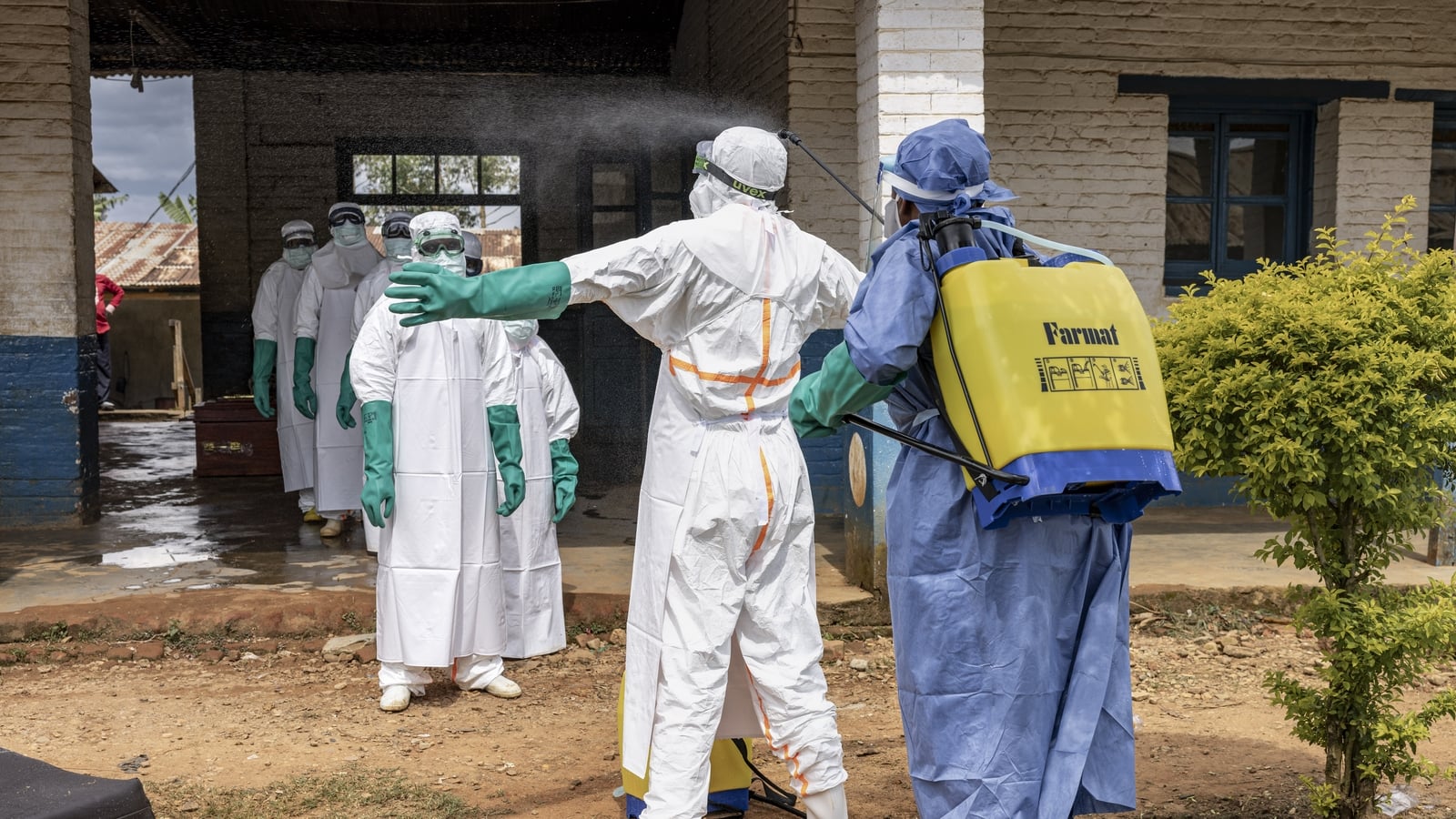
Epidemiological Shift in Bundibugyo Ebola Outbreak
Current data from the Democratic Republic of Congo (DRC) indicates a significant deviation in the lethality of the ongoing Ebola outbreak. While the virus remains a severe threat to public health, the case fatality rate (CFR) has remained below 25%, a stark contrast to the devastating mortality rates observed in previous regional epidemics.
Since the initial declaration in mid-May, more than 1,000 suspected and confirmed cases have been documented. The distribution of fatalities highlights a variance between confirmed clinical diagnoses and suspected cases, reflecting the challenges of rapid diagnostic deployment in the field and the uneven reach of treatment centres in conflict-affected areas.
| Metric | Current Outbreak Data (DRC) |
|---|---|
| Total Suspected/Confirmed Cases | 1,000+ |
| Confirmed Deaths | 10 |
| Suspected Deaths | 223 |
| CFR (Suspected Cases) | 24.6% |
| CFR (Confirmed Cases) | 9.8% |
Strain Variability and Vaccine Limitations
The current public health crisis is driven by the Bundibugyo strain of the virus, one of the ebolaviruses known to cause Ebola virus disease in humans. Compared with the Zaire strain, which is more common in the DRC and has been the focus of most clinical trials and countermeasures, Bundibugyo presents a distinct challenge for regulators and frontline clinicians alike. The Zaire strain typically carries a fatality rate between 60% and 90%, but it is the only variant for which approved vaccines currently exist.
The Bundibugyo strain lacks approved vaccines or standardized antiviral treatments, forcing health authorities to rely exclusively on supportive care, aggressive surveillance and non-pharmaceutical interventions. Historical data shows that previous Bundibugyo outbreaks in 2007 and 2012 resulted in fatality rates between 30% and 50%, suggesting that the current lower CFR may be linked to improved systemic responses, including faster triage, better-trained isolation teams and clearer clinical protocols.
The reduction in mortality is often attributed to the acceleration of the care pipeline. Abdi Rahman Mahamud, the World Health Organization emergency alert and response director, emphasized the importance of timing in clinical outcomes, stating, “Early referral and early care saves lives.” That message has informed national Ebola preparedness plans in the region, but the Bundibugyo strain is now stress-testing how adaptable those plans really are when vaccines are unavailable.
Cross-Border Containment and Regulatory Measures
The movement of the virus into neighboring Uganda has triggered immediate state-level interventions and regional coordination. With seven recorded cases of the Bundibugyo strain in Uganda, including one confirmed death, the Ugandan government has pivoted toward a strategy of strict geographic containment to prevent a wider regional epidemic while keeping essential trade and humanitarian corridors open.
The Ugandan health ministry has implemented a series of restrictive protocols to limit human transmission across the border, operating under the cross-border notification and coordination principles laid out in the International Health Regulations (2005):
- Border Closure: Total suspension of standard transit between Uganda and the DRC at designated crossing points. Diana Atwine, health ministry permanent secretary, stated, “Uganda is temporarily closing the border with the DRC with immediate effect.”
- Selective Exemptions: Entry is permitted only for “authorised Ebola response teams, humanitarian operations, food and cargo transportation, and security under strict health screening and monitoring protocols,” balancing disease control with economic and humanitarian imperatives.
- Mandatory Quarantine: A 21-day observation period for all individuals arriving from the DRC, overseen by district surveillance teams and the Ministry of Health, mirroring the known incubation period of Ebola virus disease.
- Institutional Screening: Implementation of regular health checks for students and staff in schools located near the border zones, with rapid referral pathways for any suspected case.
These measures, while disruptive to border communities, are intended to demonstrate compliance with international outbreak reporting norms and reassure partners that Uganda is moving quickly to contain cross-border spread.
Systemic Surveillance and Public Health Capacity
Despite the lower fatality rates, the World Health Organization has warned that the virus may have been circulating undetected for some time before the outbreak was formally declared. This suggests a gap in early detection capabilities, which is a recurring vulnerability in regions with limited healthcare infrastructure, insecurity or constrained laboratory capacity.
The ability to suppress a viral hemorrhagic fever outbreak depends heavily on the strength of the community-based surveillance system and the legal and policy frameworks that support it. When cases are identified early, the window for isolation is wider, which reduces the secondary attack rate and prevents the collapse of local healthcare facilities as healthcare workers fall ill or facilities become overwhelmed.
For governments in the region, the Bundibugyo outbreak is therefore not only a clinical emergency but also a test of governance: how quickly health alerts move through national reporting chains; how consistently district authorities can enforce quarantine and movement restrictions; and whether cross-border data sharing keeps pace with the virus. The current situation underscores the critical need for expanded diagnostic capacity, sustained investment in surveillance networks and the development of strain-specific countermeasures to address the gaps left by the absence of a Bundibugyo-specific vaccine.
Related reading
