
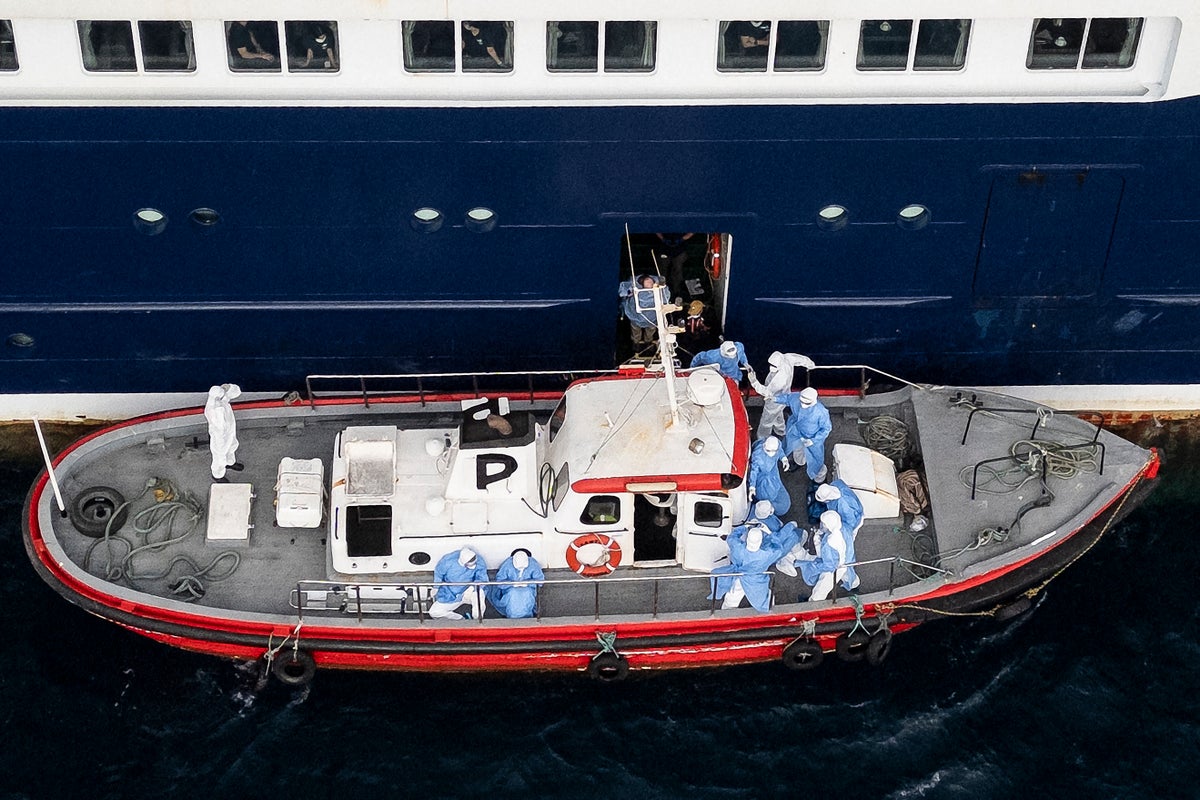
The emergence of a hantavirus outbreak aboard the MV Hondius cruise ship has triggered a coordinated international public health response, highlighting the complexities of managing zoonotic diseases within closed travel environments. Following the ship’s departure from Argentina on 1 April, health authorities in several countries have shifted focus toward aggressive contact tracing and the monitoring of passengers who disembarked prior to the detection of the first confirmed case in early May, treating the episode as a live test of post-pandemic cruise health protocols.
Epidemiological Impact and Patient Outcomes
The World Health Organisation (WHO) is currently tracking a cluster of infections that have resulted in several fatalities and intensive-care admissions across multiple jurisdictions. While the majority of the vessel’s passengers and crew remain asymptomatic, the extended incubation period of the virus necessitates prolonged surveillance and coordinated reporting between national health ministries and the WHO under the International Health Regulations (IHR).
| Metric | Status/Count |
|---|---|
| Confirmed Cases | 5 |
| Suspected Cases | 3 |
| Confirmed Fatalities | 3 (Dutch and German nationals) |
| Current Public Health Risk | Low, according to WHO and national health agencies |
Medical evacuations have been necessary for critically ill passengers. A 69-year-old British man is receiving care in Johannesburg, South Africa, while another British national, Martin Anstee, 56, was transported to the Netherlands for specialist treatment. Global health officials indicate that while some patients remain in intensive care, there are signs of improvement, and clinicians are now using the shipboard cluster to refine clinical pathways for rare but severe rodent-borne infections.
Clinical Profile and Transmission Risks
Hantaviruses are zoonotic viruses primarily transmitted through the inhalation of aerosolized droppings, urine, or saliva from infected rodents. While human-to-human transmission is rare, certain strains, such as those found in the Andean region, have shown a limited capacity for inter-human spread, which increases the necessity for isolation protocols and respiratory protection in crowded or poorly ventilated settings such as cruise ships, transit hubs, and remote research stations.
The clinical manifestation of the virus typically falls into two distinct syndromes:
- Hantavirus Pulmonary Syndrome (HPS): Characterized by an incubation period of one to eight weeks. Initial flu-like symptoms-fever, chills, and muscle aches-can rapidly progress to pulmonary edema, where the lungs fill with fluid, causing severe chest tightness and respiratory failure. Rapid escalation to intensive care and ventilatory support is often required once the cardiopulmonary phase begins.
- Hemorrhagic Fever with Renal Syndrome (HFRS): Typically developing within one to two weeks of exposure, this syndrome manifests as high fever, internal bleeding, and acute kidney failure. Management is largely supportive, with close monitoring of blood pressure, coagulation, and renal function.
Regulatory Response and Containment Measures
The Foreign Office has updated travel guidance for Argentina, formally categorizing hantavirus as a health concern for British nationals and advising heightened vigilance in rural and wilderness areas where rodent exposure is more likely. This regulatory shift reflects a precautionary approach to population-level risk management in regions where the virus is endemic, and it signals to travel operators and insurers that additional mitigation measures – from pre-departure briefings to onboard surveillance – will be expected.
Containment efforts are currently focused on a group of seven British citizens who disembarked at St Helena on 24 April. The UK Health Security Agency (UKHSA), operating within the statutory framework of the UK Health and Social Care Act and aligned with obligations under the International Health Regulations, is managing the following distribution of these individuals:
- Two individuals: Currently self-isolating within the UK under public health advice.
- Four individuals: Remaining in St Helena under the guidance of local health officials, with monitoring protocols agreed in consultation with UK authorities.
- One individual: Contacted and confirmed to be outside the UK, with follow-up coordinated through the relevant national health system.
Global Health Perspective on Pandemic Potential
The visibility of hazmat suits and isolation protocols has prompted public concern regarding the potential for a wider outbreak and raised questions about whether governments might need to reimpose travel restrictions. However, the WHO has been clear in distinguishing this event from previous respiratory pandemics. Dr Maria Van Kerkhove, director of epidemic and pandemic preparedness at the WHO, stated, “This is not the next COVID, but it is a serious infectious disease.”
Institutional guidance emphasizes that the biological behavior of hantavirus differs fundamentally from the coronavirus that caused the COVID-19 pandemic. “This is not coronavirus, this is a very different virus,” Van Kerkhove noted, adding, “This is not the same situation we were in six years ago.” Officials stress that, unlike SARS-CoV-2, hantaviruses have not shown sustained community transmission through casual contact, meaning that standard infection prevention and control measures – case isolation, contact tracing, and careful environmental cleaning – remain proportionate and effective tools.
The WHO continues to develop step-by-step guidance for the remaining passengers on the MV Hondius as the vessel approaches the Canary Islands, working with Spanish and Dutch authorities on disembarkation, quarantine options, and post-cruise monitoring. Despite the severity of individual cases, the consensus among World Health Organisation officials is that “the public health risk is low” and “most people will never be exposed to this.” For governments, the incident is being treated less as a trigger for sweeping restrictions and more as a stress test of existing cross-border alert systems and the cruise industry’s capacity to implement them at speed.
