
The transition from acute clinical intervention to long-term community reintegration remains one of the most challenging phases of stroke recovery. While hospital-based care focuses on stabilization and the prevention of secondary events, the subsequent psychological and social recovery often falls to community-led initiatives and non-governmental organizations. In Dundalk, this critical gap in the healthcare continuum is being bridged by the Irish Heart Foundation’s Stroke Support Group, operating alongside statutory services delivered under Ireland’s National Clinical Programme for Stroke.
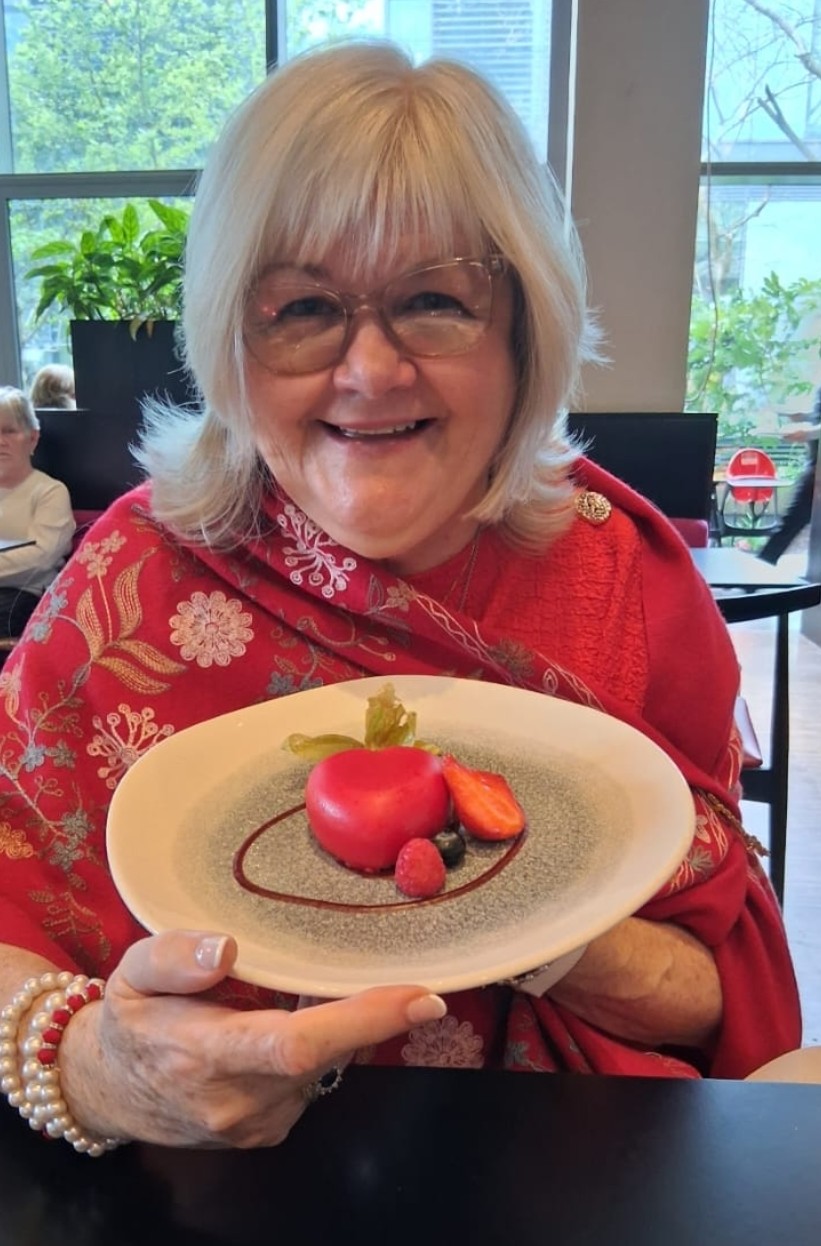
For Catherine O’Callaghan, a retired employee of the Health Service Executive (HSE) with 44 years of service, volunteering with the foundation provided a new lens through which to view the lasting impact of cardiovascular events. Catherine entered the volunteer network in January 2024, prompted by her niece Katie, a Stroke Service Co-Ordinator with the Irish Heart Foundation.
“Katie didn’t waste any time, as soon as I was retired she was telling me all about her work with the Irish Heart Foundation, the various services and supports they offer to people affected by heart disease, stroke and thrombosis and especially her work with the Stroke Support groups. Katie herself had a stroke and because of that and her enthusiasm for her work, I couldn’t say no!”
The Psychosocial Architecture of Stroke Recovery
Clinical outcomes for stroke patients are not measured solely by the restoration of motor function or speech. Public health frameworks increasingly recognize “social prescribing”-the act of connecting patients to community groups-as a vital component of holistic recovery and a tool for easing pressure on overstretched primary care systems. The isolation following a stroke can lead to severe depression and cognitive decline, making peer-to-peer support an essential adjunct to medical treatment and formal rehabilitation.
Catherine now assists with the monthly meet-ups at the Dundalk Sports Centre in Muirhevnamore, where the focus is on creating a sustainable environment for social reintegration rather than replicating the clinical setting patients have just left. “I love it, I love going, we’re one big happy family and there’s a really nice atmosphere. I’ve enjoyed getting to know the other volunteers and all the different members of the group who all have their own stories to tell. It’s a safe space for everyone to talk, share their experiences with like-minded people, and have the craic and banter!”
This model of support addresses the “invisible” deficits that often persist after a patient is clinically discharged. The variability of stroke impact means that two patients with similar clinical profiles may experience vastly different lived realities, with consequences for their ability to return to work, maintain independence and navigate public services.
| Dimension of Impact | Common Manifestations | Community Support Role |
|---|---|---|
| Physical | Hemiparesis, balance issues, fatigue | Adaptive exercise, encouragement to stay active and confidence-building |
| Cognitive/Speech | Aphasia, memory loss, executive dysfunction | Safe communication environments, peer patience and informal practice |
| Emotional | Post-stroke depression, anxiety, isolation | Peer validation, shared experience and structured social reintegration |
| Systemic | Navigating post-discharge bureaucracy | Information sharing, signposting and informal advocacy |
Addressing the Variability of Cerebrovascular Events
A significant challenge in public health awareness is the misconception that stroke presents uniformly. In reality, the location and severity of the infarct or hemorrhage determine the specific deficits, which may not always be immediately apparent to an observer. This discrepancy often leads to a lack of societal empathy or understanding for those living with “invisible” disabilities and can influence how public services, employers and social protection systems respond to survivors.
Catherine’s experience as a volunteer has highlighted this clinical diversity. “It’s been a big learning curve. When you hear someone has had a stroke you tend to picture in your head what that looks like, and you think everyone is affected the same way, but I’ve learnt that stroke can affect everyone differently. You don’t necessarily know by looking at someone, what is really going on. Also, people don’t realise how quickly a stroke can happen, and how it can happen to anybody”.
This unpredictability underscores the necessity of widespread stroke awareness and the importance of recognizing rapid-onset symptoms to reduce time-to-treatment, which is the primary determinant of long-term morbidity. It also heightens the policy case for sustained investment in community-based follow-up so that patients are not left to manage complex, variable disabilities alone once they leave hospital.
Integrating Health Literacy and Community Resilience
The Irish Heart Foundation’s approach extends beyond social interaction, incorporating elements of health literacy and preventative training. By integrating CPR training and fitness exercises into their social gatherings, these groups transform from simple support networks into hubs of community resilience that complement, rather than duplicate, statutory care pathways.
“There’s a lot going on!” Catherine notes. “We’ve had CPR training, we’ve had some lovely celebrations for Christmas and even had a trad band join us one year, we’ve gone to local hotels for lovely meals in the summer and I know of one member who says how much he looks forward to the fitness exercises and practices them at home! It all makes me think, what would these people do without it”.
From a health systems perspective, such initiatives reduce the burden on primary care providers by maintaining the mental and physical wellbeing of patients outside of a clinical setting. They also give practical expression, at local level, to national strategies on healthy ageing and chronic disease management, which increasingly depend on partnership between the state and civil society.
Katie, reflecting on the impact of the volunteer workforce in Dundalk, emphasizes that the value provided by individuals like Catherine transcends basic logistics. “Catherine is a very dedicated, friendly and helpful volunteer who has devoted her retirement time to help others. Her kindness, patience and dedication bring comfort and hope to everyone in our Stroke Support Group in Dundalk along with our other volunteers Elizabeth & Albright. Catherine may just think that she is there to make the tea and coffee, but she brings so much more to our group than she knows and makes such a difference to everyone who attends. Our members love her light-hearted humour and warm presence. Thank you Catherine & thank you to all of our other volunteers!”
The integration of public health guidelines with grassroots volunteerism represents a critical strategy for managing chronic conditions in an aging population, ensuring that patients are not lost to the system once the acute phase of their illness has passed. In Dundalk, that strategy is visible not in policy documents but in a sports centre where survivors, clinicians and volunteers quietly test what a more joined-up model of care can look like in practice.
Related reading
- Global Antimicrobial Resistance Action: Surveillance Networks and Novel Bacteriophage Therapies in Late 2026
- Wearable Biosensors and Continuous Metabolic Monitoring: Preventive Healthcare’s Next Frontier
- Two Iranian nationals charged with terror plot targeting Manchester Jewish community (globallypulse.com)
