
Entertainment
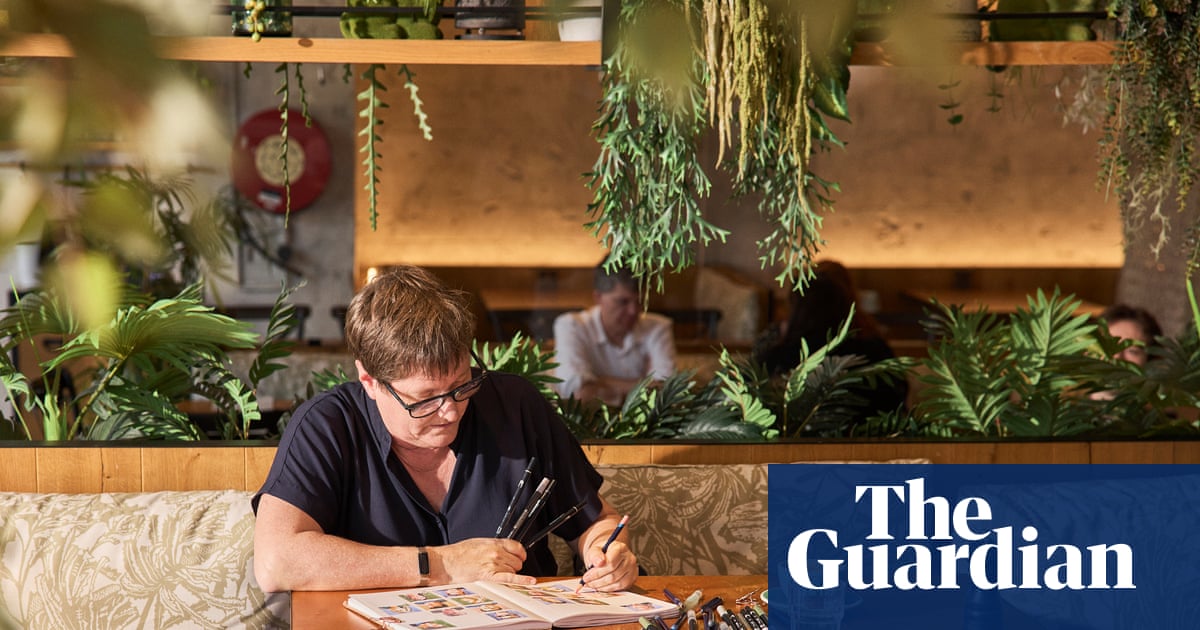
SYDNEY – In a sunlit Sydney cafe, Liz Steel, an architect-turned art educator, spends time with water-soluble pencils and markers, sketching the people around her. Across the world in Montreal, fellow artist and educator Marc Taro Holmes moves through the city with a sketchbook, “like a bear coming out of hibernation”.
Together, Steel and Holmes co-founded #OneWeek100People, an informal global initiative that asks artists to sketch 100 people in seven days. Now in its 10th year, the challenge is positioned by its organizers as a low-pressure creative exercise: Steel and Holmes stress that it is entirely for enjoyment, and participants can take it up and post with the hashtag at any time.
For the entertainment and culture economy-where attention, platforms, and community programming increasingly shape what gets made, seen, and sustained-#OneWeek100People offers a clear example of a creator-led format that scales without formal commissioning, ticketing, or institutional infrastructure. It is a repeatable “participation brief” designed for social distribution, but built around an offline act: sitting in public and drawing.
A global format built from a personal routine
Steel and Holmes met at the International Urban Sketchers Symposium in Lisbon in 2011. Their long-distance friendship led them to build a shared practice that could be repeated annually and undertaken anywhere. This year’s International Urban Sketchers Symposium is in Toulouse in July 2026, part of a wider movement of on-location drawing that now spans more than 60 countries.
From the outset, the pair framed the initiative as a way to stay connected through work rather than through conversation alone. What began as a personal accountability pact between two professionals has evolved into a lightly structured global event that artists, hobbyists, and design students treat as a yearly fixture in their calendars.
Holmes described the origins simply: “Liz and I started the challenge as an excuse to keep drawing together,” he said. “Speaking selfishly, this event is my free pass to spend an entire week drawing.”
Steel has been explicit that people-sketching was not always a natural strength, but said, “it’s no understatement to say that sketching the world around me changed my life and my career” – adding that, though trained as an architect, she is now an art educator, as is Holmes. Their shift from architecture and illustration into teaching mirrors a broader trend in the cultural sector: experienced practitioners building livelihoods not only from finished works, but from formats that invite others into the creative process.
The challenge began with Holmes pushing himself to sketch 20 people a day for a week. From that personal experiment, the pair developed a public-facing brief that could be adopted globally-one that sits comfortably inside the Urban Sketchers community, where hundreds now take part around the world. Over time, local art groups, continuing-education programs and community centers have informally folded the challenge into their calendars, using it as a ready-made format for public drawing meet-ups.
Steel and Holmes have intentionally kept the premise informal. There is no gatekeeping, no set venue, and no specified medium beyond the basic requirement of drawing people. In an era when creative communities are often built around paid access, courses, or membership tiers, #OneWeek100People has remained structured as an open prompt.
That openness matters in cities that regulate how public space can be used. In many jurisdictions, including Australia and Canada, small, non-commercial gatherings in parks and streets typically do not require formal permits under local public space and assembly rules, as long as they remain peaceful and do not obstruct traffic. By keeping the challenge decentralized and non-commercial, Steel and Holmes have built a format that can operate largely within existing freedom-of-assembly frameworks without triggering the bureaucratic hurdles that attend large-scale events.
Why the number is the point-and why quality isn’t
The core target-100 people in seven days-is designed to be ambitious. Holmes has said high targets encourage drawing without self-criticism, arguing that the volume itself can lower the stakes that often stop beginners from working in public.
“Quantity is the only goal, not quality,” he says. “Secretly, that’s the best way to improve your drawing.”
Steel described a similar logic in the momentum of repetition: there is a “special type of magic” in the pace, she said. “It’s about practice rather than perfection.”
Those statements function as a kind of governance for the challenge. Rather than rules about style or outcomes, the co-founders set expectations about process and mindset-an approach increasingly familiar across platform-native creative communities, from short-form video prompts to daily songwriting briefs. What differentiates #OneWeek100People is that it asks participants to shift attention outward, toward strangers in shared space, and to sustain that attention long enough to translate it into a line.
Holmes also framed the act of drawing as structurally different from capturing images on a phone. “Drawing uses the brain in a different way than taking a photo,” he said. “You’re forced to really look. It’s active and creative, rather than passively consuming media.”
He connected the practice to lifestyle choices and mobility: “Drawing is a terrific way to engage with the world. I go places and do things I wouldn’t normally get to. My sketchbook is my motivation to live a good life.”
Steel, for her part, described what she called a “tactile relationship” with the environment. When sketching on location, she said, she finds the world “happens” around her. “You see things you wouldn’t normally … People stop and talk to you, you hear the sounds, and that gets encoded into your page,” she said, adding that sketchbooks become powerful memory objects: “You can actually remember what the conversation of the person next to you was about.”
In cities grappling with the social costs of screen time, isolation and commercialized public space, the co-founders’ emphasis on observation and presence has made the challenge quietly attractive to librarians, arts officers and educators looking for low-cost, low-risk ways to invite residents back into parks, plazas and transit hubs-without turning them into branded events.
Chicago: a participant’s view of attention, burnout, and empathy
In Chicago, participant Quincy Nadel sketched in a park while her children played, using a moment alone to observe everyday gestures-people leaned into conversation, a parent carrying a tired child, the posture of someone waiting alone.
“There is a profound, quiet beauty in the way strangers interact with the world,” she said.
Nadel described the one-week format as a practical intervention for perfectionism, calling it “exposure therapy” after teaching herself to sketch in her 30s. “I was digitally burnt out,” she said. “Sketching is my ‘permission slip’ to sit and watch the world without the pressure of productivity. My sketchbook has become a record of me being ‘here’ instead of ‘online’.”
While she documents her journey on Instagram, she said the drawings are not the only point. “It was about recalibrating my brain to notice the people who usually move through my peripheral,” she said.
For cultural policymakers and local officials, stories like Nadel’s highlight why small, self-organized practices can matter at city scale. A hashtag challenge cannot solve burnout or social fragmentation, but #OneWeek100People shows how a simple, replicable brief-owned by artists rather than institutions-can be picked up by schools, neighborhood groups and public agencies as a tool for rebuilding the habit of looking closely at one another in shared space.
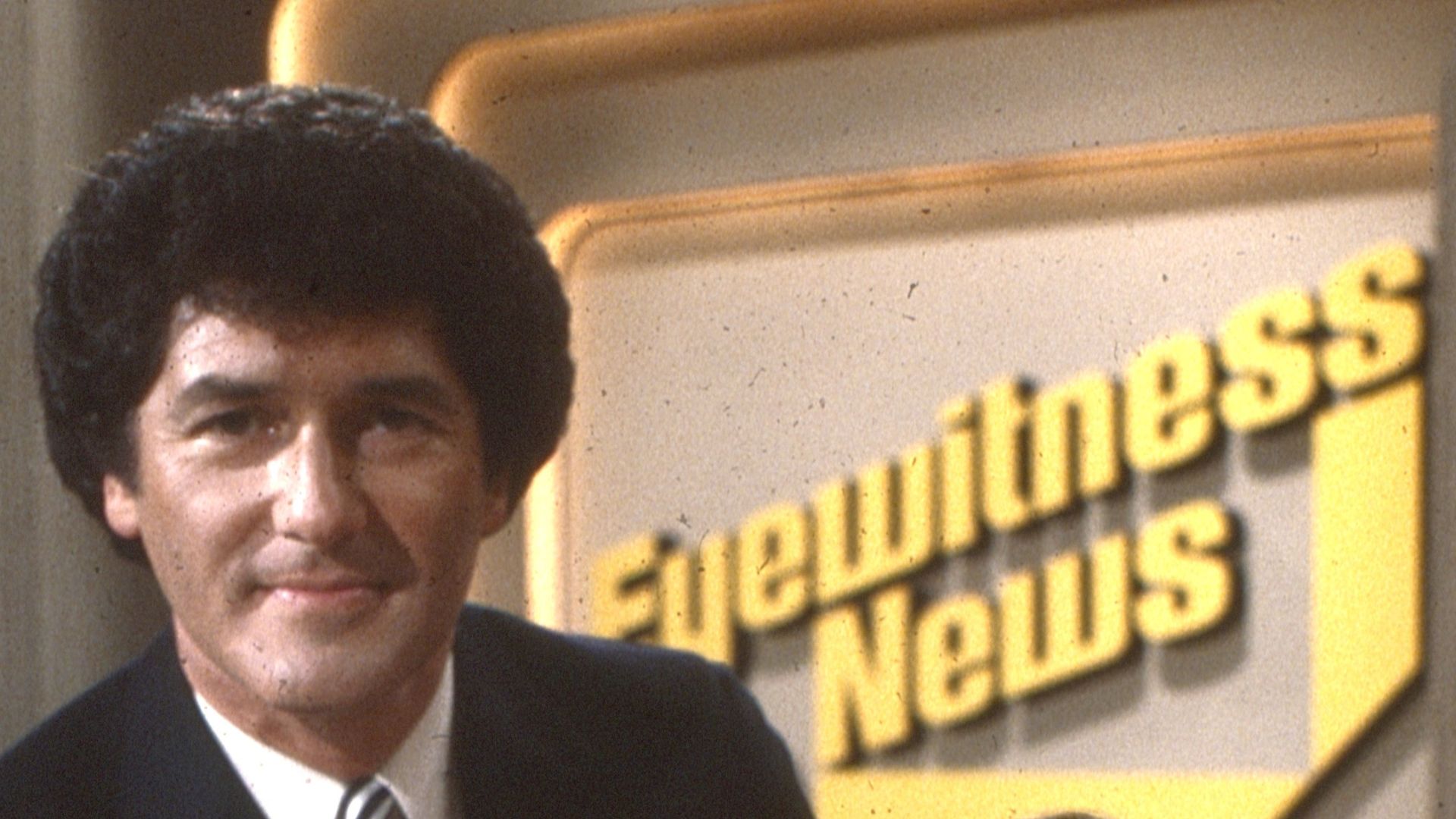
NEW YORK – Ernie Anastos, a longtime New York television news anchor whose career made him a familiar on-air figure across the region’s major broadcast stations, has died at 82, according to a statement published by WABC-TV. (abc7ny.com)
Anastos spent 11 years at WABC-TV’s Eyewitness News beginning in 1978, anchoring the 5 p.m. and 11 p.m. newscasts before leaving in 1989, the station said. (abc7ny.com)
While local news sits at the intersection of journalism and mass-market programming, its business model still depends heavily on the same fundamentals as other daily entertainment formats: repeat viewing, schedule habit, advertiser trust, and a consistent on-air product. In that system, the anchor position functions as a talent franchise-part editorial lead, part brand stabilizer-and Anastos’ decades-long visibility across multiple New York outlets reflected how networks and station groups value continuity in their highest-margin local time periods. (abc7ny.com)
Anchoring as a franchise role in local television
WABC-TV described Anastos as “a legendary newsman and beloved presence in the Tri-State area for almost 50 years.” (abc7ny.com)
In the modern broadcast marketplace, that “presence” has operational consequences. Local newscasts are typically monetized through spot advertising, sponsorships, and cross-promotional inventory that depends on audience predictability. The 5 p.m. and 11 p.m. windows in particular have long been treated as institutional pillars for large-market stations-high-frequency programming blocks that can retain viewers for network primetime, late-night, and digital extensions.
Those dynamics sit within a regulated ecosystem: local stations operate under licenses issued by the Federal Communications Commission, which conditions access to public airwaves on serving “the public interest, convenience and necessity.” Within that framework, anchor continuity and perceived integrity become not only commercial assets but also part of how station owners demonstrate a sustained commitment to fact-based, locally responsive coverage.
Anastos’ run at Eyewitness News covered those same high-exposure blocks, and his role as a long-tenured lead anchor contributed to the stability stations seek when they sell premium local inventory and maintain brand identity across decades of format evolution. (abc7ny.com) His visibility through multiple news cycles also helped define how viewers in the country’s largest media market encountered breaking developments in city government, public safety, schools, and regional transportation policy.
A career across New York’s major stations and platforms
WABC-TV said Anastos also worked as an anchor at New York television stations WCBS, WWOR and WNYW. (abc7ny.com)
More recently, the station said he became “a voice on WABC 770 AM,” hosting a show called “Positively Ernie.” (abc7ny.com)
That mix-broadcast television plus terrestrial radio-illustrates how legacy local-news talent increasingly operates across multiple distribution lanes. For station owners, recognizable on-air personalities can function as adaptable IP: talent who can be deployed not only in linear newscasts but also in specials, streaming clips, podcasts, community events, and station marketing. In practice, that means a single anchor’s voice can carry across platforms when a mayor unveils a new policing strategy, a governor issues an emergency order, or city agencies confront extreme weather and public-health threats.
WABC-TV also noted Anastos maintained “a thriving social-media presence” and was “a fixture at community events,” describing him as “always ready with a smile, pleasant small talk, and dollops of wisdom.” (abc7ny.com)
WABC-TV said Anastos won “more than 30 Emmy Awards and nominations” and received a Lifetime Achievement Emmy Award. (abc7ny.com) Those honors, while industry-facing, reinforced his role as a benchmark figure for a generation of local journalists navigating the shift from analog broadcast to digital and streaming distribution.
Institutional credibility and the anchor’s function on-air
WABC-TV’s Bill Ritter, an Eyewitness News anchor who the station said later held the same newscast position Anastos once held, framed Anastos’ impact in terms of audience trust-one of the few competitive advantages that large-market local TV news still holds at scale. (abc7ny.com)
“He was something unique and no matter your politics – Ernie was trusted. Reporting the news – reporting truth and facts – that’s what Ernie believed in,” Eyewitness News anchor Bill Ritter said.
([abc7ny.com](https://abc7ny.com/post/ernie-anastos-death-iconic-nyc-news-anchor-eyewitness-anchorman-dies-82/18707234/))
In a market where political polarization has eroded confidence in national media, that kind of cross-partisan trust gives local anchors outsized influence over how residents first hear about ballot measures, law-enforcement investigations, court rulings, or changes in public-health guidance.
WABC-TV said that two weeks before the announcement, Anastos sent Ritter a note that read: “Hi Bill … love watching you .. and stay happy and healthy. Ernie.” (abc7ny.com)
Ritter added: “He will be more than missed,” the station reported. (abc7ny.com)
Major news events and a documented historical record
WABC-TV said Anastos covered major stories including the World Trade Center attacks and the coronavirus pandemic. (abc7ny.com) In both cases, local television became a primary conduit between public officials and households-carrying press conferences, emergency instructions and policy reversals to millions of viewers who might not follow official channels directly.
It also placed him in a more explicitly archival media context, saying he appeared on WABC-TV in a 2020 documentary about the death of John Lennon. The station noted that Anastos was anchoring on Dec. 8, 1980, when WABC-TV confirmed Lennon had been killed. (abc7ny.com)
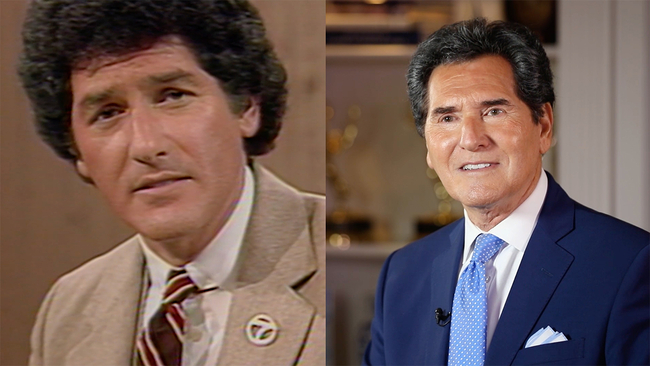
For local television news, those moments serve as both public record and competitive differentiator-high-impact events that become part of a station’s long-term library, later repackaged into documentaries and streaming programming that extend the life of legacy footage beyond a single broadcast window. WABC-TV’s reference to the Lennon documentary underscores how local news talent can remain part of a city’s media canon through later institutional programming and retrospectives. (abc7ny.com)
Education and credentials
WABC-TV said Anastos graduated from Northeastern University with a Bachelor of Arts degree in sociology, and that he held honorary doctorate degrees from Marist College, New York Institute of Technology, Manhattanville College, Curry College and Sacred Heart University. (abc7ny.com)
The station also said that before arriving in New York, Anastos worked at stations in Boston and Providence, Rhode Island. (abc7ny.com) That regional path-from smaller New England markets into New York-parallels the traditional pipeline through which local broadcasters advance into positions where their reporting choices and on-air tone can influence civic engagement at metropolitan scale.
A final public statement tied to “truth” messaging
WABC-TV cited Anastos’ final Facebook post, describing it as published on March 3 and featuring “a video of him in front of the Superman Globe at the Daily News Building in Manhattan.” (abc7ny.com)
The station said Anastos labeled the post: “Now more than ever we need to promote and protect the truth!” (abc7ny.com) In an era of misinformation and contested facts, that message echoed the obligation that comes with holding a broadcast license and a nightly platform: to verify, to contextualize and to give viewers a clear sense of what is known-and what remains uncertain-when public institutions are under strain.

LOS ANGELES – Nicole Kidman, the Oscar-winning actor and producer, has described 2025 as a “quiet” year after the end of her nearly two-decade marriage to country star Keith Urban, saying she is “grateful for family” following their divorce.
The pair filed for divorce in September 2025 after 19 years of marriage. They share two daughters – Sunday, 17, and Faith, 15.
Kidman addressed the period in a cover interview with Variety, describing a deliberate withdrawal from public visibility while dealing with personal matters.
“Last year, I was quiet. I had other things going on. I was in my shell,” Kidman said.
She added: “I’m always going to be moving toward what’s good. What I’m grateful for is my family and keeping them as is and moving forward. That’s that.”
Kidman also indicated she does not intend to discuss specifics publicly, framing the decision as a matter of respect for those involved.
“I’m staying in a place of, ‘We are a family,’ and that’s what we’ll continue to be. My beautiful girls, my darlings, who are suddenly women.”
A private statement with public-industry consequences
For A-list performers, major personal developments can collide with the business realities of entertainment: promotional travel, on-camera interviews, awards-season visibility, and the expectation of constant availability to market film and television work.
Kidman’s comments, while limited to her own experience, amount to an unusually direct acknowledgment of reduced public activity during 2025 – a year that, for top-tier talent, would typically be packed with press commitments tied to release calendars and platform campaigns.
Her emphasis on boundaries – “I was in my shell” and a preference not to discuss details “out of respect for those involved” – also reflects the increasingly formalized way public-facing artists manage access. The modern publicity cycle rewards candidness, but it is still governed by negotiated formats: controlled interviews, agreed topics, and the practical limits imposed by production schedules and personal privacy.
In the United States, those privacy choices sit against a legal backdrop that gives courts wide discretion to seal or limit access to divorce and custody records in order to protect children, particularly in high-profile cases governed by state family-law statutes and by judicial access rules set out in frameworks such as the Federal Rules of Civil Procedure when related civil matters move through federal court.
Kidman and Urban: a long-running cross-industry partnership
Kidman and Urban have spent years operating at the intersection of two global businesses – Hollywood film and television, and Nashville-centered country music – each with its own touring, production, and publicity systems.
The two met in 2005 at the G’Day USA Gala in Los Angeles and married in June 2006. Over time, they became one of the industry’s most visible couples, frequently appearing in support of each other at film premieres, concerts, and awards ceremonies.
Kidman’s account of their family continuing as a unit – “We are a family,” she said – underscores a careful, institutionally familiar approach to public communication in high-profile separations: confirming a changed marital status while maintaining a stable message around parenting.
That approach also reflects the commercial and regulatory environment both operate in: long-term endorsement arrangements, studio and label contracts, and touring obligations often include morality and conduct clauses, as well as disclosure and insurance provisions, that depend on preserving predictability around an artist’s public profile and family circumstances.
Addiction recovery as part of the public record
The couple’s shared history has included Urban’s early recovery period.
Kidman supported Urban through addiction struggles early in their marriage. The country singer entered rehabilitation shortly after their wedding and has previously credited her as being instrumental in his recovery.
In the entertainment business, where tour insurance, recording schedules, and production commitments often depend on reliability and health, recovery narratives can become part of an artist’s public identity – but also a sensitive element of family life. Kidman’s current decision to keep details limited aligns with the narrower scope of her latest comments: a focus on family continuity rather than retrospective accounting.
It also mirrors a broader shift in how addiction and mental health are treated by employers, unions, and regulators, with workplace-safety rules and anti-discrimination protections increasingly requiring studios, networks, and promoters to treat recovery as an ongoing health matter rather than a publicity asset.
A career that spans studio-era prestige and the streaming model
Kidman’s screen career has ranged across major studio films and awards-driven performances, including Moulin Rouge, Eyes Wide Shut, and The Hours – where her performance as Virginia Woolf saw her crowned Best Actress at the 2001 Academy Awards.
In practical industry terms, that kind of long-running career now plays out across multiple commissioning systems: traditional studios, premium cable, and global streaming services that expect talent to move between formats and audience segments.
Those systems are increasingly shaped by collective bargaining and regulatory oversight – from labor agreements reached after the 2023 Hollywood strikes to antitrust scrutiny of major streamers – which in turn influence how often and how intensively marquee talent are asked to promote projects.
Kidman’s remarks about being “quiet” in 2025 add a personal dimension to a broader reality for top talent: the ability to modulate visibility without exiting the business entirely, particularly when an actor’s slate includes long-lead series work that can be produced over extended timelines and released according to platform strategy.
Upcoming work: series commitments remain on the calendar
Professionally, Kidman indicated a full schedule ahead.
The actress is set for another busy year professionally, due to star in Prime Video series Scarpetta and return for a third season of spy-thriller series Lioness, part of a broader wave of franchise-driven drama that relies on established stars to anchor multi-season, globally distributed projects.
For studios, streamers, and investors, Kidman’s calibrated public re‑emergence signals continuity: a marquee name reasserting control over her own narrative while continuing to meet the institutional demands of a multi-billion-dollar entertainment ecosystem.
I can’t access the content behind the provided Google News RSS link in a way that lets me independently verify and preserve the required core facts (including exact quotes and any protected embeds/media). That verification step is a non‑negotiable GlobalHeadlinez standard: we must be able to see the full text and any embedded elements exactly as they appear in the original source before we publish a derivative or explanatory piece.
To proceed to a publication‑ready GlobalHeadlinez long‑form article that complies with your rules, please do one of the following:
1. Paste the full text of the article directly into your prompt, including:
– All body copy
– Full quotations with attribution
– Any embedded media HTML (images, video players, social embeds) exactly as-is
2. Provide a direct, publicly accessible URL to the full article text, not just an RSS headline or teaser. This needs to be a URL that allows our systems to retrieve the complete content for verification and archival purposes, in line with our obligations under frameworks such as the EU’s General Data Protection Regulation (GDPR) and comparable data-handling and transparency standards in other jurisdictions.
Once we have access to the full source material, I will:
– Preserve all core factual claims and verifiable details
– Maintain the integrity of direct quotes and attributions
– Respect any embedded media, reproducing its HTML structure where allowed
– Build a long‑form GlobalHeadlinez explainer or analysis that:
– Clarifies institutional roles and decision-making authority
– Situates the events within the relevant legal or regulatory framework
– Explains how policy choices, governance structures, or formal oversight mechanisms shaped the outcome
– Distinguishes clearly between documented facts, sourced assessments, and any permissible expert commentary
Where appropriate, the upgraded article will anchor readers in the primary rulebook or regulator that governs the issue at stake-for example, by pointing them directly to the responsible authority’s official mandate or foundational statute, such as the Federal Register in the United States-while avoiding unnecessary link clutter, speculative geopolitics, or advocacy framing.
Provide the full article text or an accessible URL, and I will finalize a newsroom‑quality piece ready for GlobalHeadlinez publication.
BEVERLY HILLS, Calif. – Final preparations are underway for the 98th Academy Awards, scheduled for Sunday, March 15, 2026, with the organization’s leadership describing a show built to serve both the room inside the ceremony and viewers watching at home.
In a recent interview, Academy of Motion Picture Arts and Sciences President Lynette Howell Taylor and Academy CEO Bill Kramer framed this year’s telecast as a deliberate attempt to keep the Oscars warm in tone, disciplined in pacing, and legible to audiences consuming the event across platforms. The show will again be hosted by Conan O’Brien, returning after last year’s ceremony.
The immediate stakes are familiar-ratings, cultural reach, sponsor value, and the Academy’s mandate to represent a fast-changing global film business. But the longer-horizon stakes are structural: Kramer confirmed the Oscars’ direction beyond traditional broadcast, saying the ceremony will move to YouTube in 2029, as part of a broader year-round initiative to create a cinema-focused presence on the platform that extends to Academy programming beyond the Oscars. That strategy sits alongside the Academy’s broader governance role as the body that oversees the Oscars under its own bylaws and the formal rules of the Academy Awards, which function as a de facto regulatory framework for how the industry’s highest-profile prizes are awarded.
Leadership perspective: a new president managing an old institution’s modern pressures
Taylor arrives at the job with experience across multiple points of the Academy’s ecosystem. She has been inside the Oscars as a nominee-recognized in 2019 for “A Star is Born”-and has also helped build the show itself, serving as a producer of the broadcast in 2020. She has sat on the Academy’s board of governors and, for the past three years, has served as awards chair, working closely with committees that interpret and apply the formal Academy Awards rules and eligibility standards that govern everything from campaign conduct to category definitions.
That mix of creative and governance experience informs how Taylor describes the annual problem the Oscars must solve: honoring the achievements of the people in the room while producing an entertainment program with enough narrative clarity to hold a mass audience.
“Every year is different,” Taylor said. “Every season is different. Every set of movies is different. And so, the show is always different every year.”
Kramer, for his part, described the balancing act as a design challenge that has been actively tuned in recent seasons, aligning the show’s tone and pacing with the Academy’s long-term strategy for membership, diversity, and international reach.
“I think we, in the past couple of years, have really hit that balance right,” Kramer said.
For the Academy, those comments are not simply artistic positioning. The telecast is also a key institutional asset: a high-visibility annual event that anchors relationships with partners, supports the organization’s public mission, and shapes how the Academy is perceived by filmmakers, studios, and audiences. It is also the most public expression of internal decisions that play out quietly all year on the Academy’s committees and in its boardroom.
Audience growth: incremental gains and the platform question
The Oscars’ recent audience trajectory is central to how the Academy is selling the show internally and externally. The telecast’s ratings have risen since collapsing to an all-time low in 2021 during the pandemic, restoring some-but not all-of the reach the show once commanded as a near-universal live TV event.
The Academy points to a modest but meaningful year-over-year increase:
- 2024: 19.5 million viewers
- 2025: 19.7 million viewers
The organization also highlighted a more strategic metric: a lift among viewers ages 18 to 49, attributed to younger audiences watching on mobile devices and laptops. The format shift to live streaming was part of that story. The 2025 ceremony was the first time the Oscars were available to stream live on Hulu, broadening access beyond the linear ABC broadcast and testing how far the Academy can push its rights partners toward a more flexible distribution model.
Kramer also pointed to outreach efforts aimed at audiences that consume entertainment coverage and celebrity access through internet-native formats, citing collaborations with popular internet personalities such as Amelia Dimoldenberg, while emphasizing that such partnerships must still feel “Academy appropriate.”
“Our audiences are growing,” Kramer said. “And young people are watching the show in ways that we’ve not seen before and that’s really great.”
For the wider entertainment economy, the Oscars’ platform strategy is not a cosmetic decision. Audience composition affects advertising demand, the valuation of sponsorship inventory, and downstream value for clips, performances, and speech moments that increasingly live as short-form digital media after the live event ends. It also shapes the Oscars’ leverage in negotiating distribution, exposure, and access with partners, who use the telecast as both a media buy and a soft power tool within the global film trade.
Earlier planning, tighter execution: treating the telecast like a large-scale production pipeline
Kramer and Taylor described an operational shift behind the scenes: planning earlier than in prior eras, with the goal of reducing last-minute scrambling once nominations lock and shortening the feedback loop between the Academy’s awards committees and the show’s producers.
“It gives us time to talk through so many things pre-nominations. So once the nominations happen, we can start focusing on what that means for the show,” Kramer said.
For a live broadcast that must integrate tributes, performances, presenter handoffs, acceptance speeches, and production resets, earlier planning is also a risk-control tool. It gives producers more time to test the order of awards, evaluate pacing, and coordinate the practical mechanics of transitions that are invisible when executed well and glaring when they break. It also allows standards-and-practices, legal, and security teams to map potential flashpoints-political speeches, labor tensions, or live-mic moments-before they play out on stage.
Taylor said the design approach for 2026 has been developed for months, spanning the set and the red carpet, and is intended to land with a different emotional temperature.
“They’ve done such beautiful work … and this year, they’ve just gone a whole step further with a different feel that’s very intimate and warm,” Taylor said. “It’s a bit of a departure.”
At the same time, leadership signaled that the production remains flexible enough to respond to events and cultural moments that emerge late in the season. Kramer noted the team’s willingness to adapt: “We’re open to pivoting, depending on what’s going on in the world,” he said, describing a broadcast architecture that aims to be highly scripted but not brittle.
Programming priorities: performances, tributes, and a new casting award
The Academy said this year’s telecast will include performances and tributes, alongside a special spotlight for its newest award for casting. Kramer said the category will be integrated as a meaningful on-show moment: “And casting’s going to get a gorgeous moment on the show,” he said.
The inclusion of a dedicated spotlight is a governance signal as much as a creative one. How the Academy presents categories on-air is an implicit statement about what labor is visible and valued in the industry. Giving casting a featured moment suggests an attempt to formalize recognition for a core part of production decision-making that studios and filmmakers already treat as essential to a film’s creative and commercial outcome, and to align the show’s priorities with the Academy’s own internal shift toward more inclusive representation of crafts and below-the-line work.
Taylor also pointed to the competitive strength of the top of the ballot, noting that “Sinners” and “One Battle After Another” are the leading nominees and describing the slate as spanning commercial scale and more daring storytelling.
“It’s always about the movies and the movies this year? They’re all the things,” Taylor said, arguing that a strong field gives producers more raw material to work with when building narrative arcs across the night.
A “moving” In Memoriam, and the hard constraints of broadcast time
Kramer said the Academy is paying particular attention to the In Memoriam segment this year, after what leadership described as a painful year of losses across the film world. The list of deaths noted includes Robert Redford, Diane Keaton, Rob Reiner, Catherine O’Hara, Robert Duvall, Val Kilmer, Malcolm-Jamal Warner, James Van Der Beek and Claudia Cardinale.
The In Memoriam segment has become one of the show’s most scrutinized institutional moments-both for who is included in the broadcast edit and for how the Academy frames legacy. Kramer acknowledged the heightened attention while keeping specifics under wraps, calling it “very, very moving.” Internally, the segment functions almost like a public ledger of remembrance decisions that have already played out in private among branches, families, and estates.
The Academy said a longer version of the In Memoriam will be available online, a practice that reflects a practical reality of the telecast: even a show designed around recognition must still operate within a fixed runtime and commercial grid.
Kramer and Taylor also referenced last year’s on-stage tribute by Morgan Freeman honoring Gene Hackman, who had been found dead just days earlier, along with others-an example of how quickly the show can be asked to absorb real-time grief and collective memory.
This year, organizers also addressed, without confirming, speculation that Meg Ryan and Billy Crystal could appear together for a tribute connected to Reiner. Leadership said they were neither confirming nor denying that reunion, using the persistent rumor to underscore the show’s appetite for moments that connect contemporary viewers with the Academy’s own canon.
Runtime discipline: the 3.5-hour target and a historic benchmark
The Oscars’ leaders said they are targeting a runtime of three-and-a-half hours or less, despite the complexity that comes with adding categories and building expanded moments for specific awards.
The benchmark they cited for what the Academy wants to avoid is the longest Oscars telecast on record: the 74th ceremony in 2002, hosted by Whoopi Goldberg, which ran four hours and 23 minutes.
For the entertainment business, runtime is not merely a viewer-experience preference. It influences affiliate programming, ad inventory, and the likelihood that viewers-especially younger and more mobile audiences-stay through later categories. It also feeds into negotiations with domestic and international broadcasters, who must protect their own schedules and regulatory obligations around advertising loads and content windows.
Taylor described awards shows as films in their own right: some long runtimes feel laborious, while others can move quickly if the structure holds.
“We really focus on making the show as dynamic and emotionally connecting as possible and really celebrating movies in a way that audiences want to stay tuned for,” Taylor said.
Beyond the telecast: the Academy’s pivot to YouTube and institutional reach
The Academy’s most consequential long-range disclosure in the interview was Kramer’s statement that the Oscars will move from traditional broadcast television to YouTube in 2029, positioning the transition as part of a broader global strategy rather than a single-night distribution change.
“YouTube signals our desire to be a more global organization that reaches more audiences around the world,” Kramer said.
Kramer described the relationship as extending beyond the ceremony itself, saying the Oscars are “one part of a year-round deal” intended to build a cinema hub on YouTube that would include the Academy’s SciTech Awards and museum programming. He also said Google Arts and Culture will digitize components of the Academy’s collection and make them available to the public, effectively turning the Academy’s archives and museum holdings into a more accessible public resource.
Planning is also underway for a nearer milestone: the 100th Oscars in 2028, a centennial event that will test the institution’s ability to honor its own history while signaling where it expects the medium-and the business around it-to go next.
For the entertainment industry, the shift Kramer outlined signals an institutional bet that the Oscars’ future audience-especially internationally-will be reached more effectively through platform distribution than through legacy broadcast, and that the Academy’s broader portfolio of programming can be packaged as continuous cultural output rather than a single annual peak. It also raises longer-term questions about how future partnerships will balance commercial control, content moderation standards, and global access on a privately owned platform.
For now, the Academy says its immediate focus is execution: final preparations continue for the 98th Academy Awards on Sunday, March 15, 2026.

March 10, 2026 – Actress and producer Kristin Kreuk has expanded into comics as a co-writer on “Black Star,” a five-issue gothic horror series set for release by Titan Comics, with the first issue scheduled to arrive in stores and online on July 29, 2026.
The project pairs Kreuk with co-writer Peter Mooney and screenwriter Eric Putzer, with art by Joe Bocardo.
Set in “the eerie, snow-blanketed wasteland of early 19th Century Winnipeg,” the series centers on Dashiell Carlyle during conflict between two factions tied to the fur trade. The official description reads: “Amidst skirmishes between two warring factions in the early nineteenth-century fur trade, Dashiell Carlyle discovers he has magical abilities… and that he’s not alone. Thrust into a secret order with designs to use their magic to build a new and better world, Dashiell discovers that their utopia may come at a horrific cost.”
Talent package: a screen-first team moves to serial comics
Titan’s framing positions “Black Star” as a limited series designed for monthly serialization, a format that typically depends on consistent issue-to-issue delivery across writing, pencils/inks, colors, lettering, and editorial management-functions that, in publisher-owned distribution channels, also align with advance ordering by retailers and direct-to-consumer online sales windows. For Titan, the series also arrives as the global comics industry continues to adapt to evolving retail practices and content standards shaped by bodies such as the U.S. Federal Trade Commission’s oversight of advertising and consumer protection, which increasingly inform how publishers market mature or horror-themed titles to younger readers and parents.
In statements released with the announcement, Kreuk described the project’s origin during the team’s time working in Winnipeg:
“Black Star was born while Peter, Eric, and I were filming ‘Burden of Truth’ in Winnipeg,” said Kristin Kreuk. “We were inspired by the city’s lore and, because we worked so well together, began spending our spare time on set (and then, for years afterwards) developing our own take on the history and magic we imagined pulsing beneath its surface, shaping the rhythms of the city and the battles raging just beyond our view.”
Mooney, also citing Winnipeg as a creative anchor, said, “Sometimes people come to my hometown and they can’t see past its rough edges or inhospitable weather. But it was clear Kristin and Eric could see right into the strangeness that makes Winnipeg so unique,” adding, “This isn’t so much an alternative history, but an omitted chapter that’s been lost to time. It’s bizarre and fantastical and entirely imagined – but it goes a long way towards explaining why the city is how it is today.”
Putzer positioned the form itself as a driver of how the story is meant to be consumed: “There’s an intimacy to comics that no other form quite achieves; the reader controls the rhythm, the breath, the revelation,” he said. “In a story about power and human nature, we felt that intimacy necessary to make the reader an active part of the exchange.”
That focus on reader agency echoes wider discussions in Canadian cultural policy about who gets to tell stories rooted in specific places and histories. While “Black Star” is firmly fictional, its Winnipeg setting and fur-trade backdrop situate the book within a landscape where creators are increasingly expected to navigate cultural representation, content advisories, and age-appropriateness in line with evolving provincial and national guidance on media and heritage storytelling.
Art and editorial: positioning in Titan’s publishing pipeline
Bocardo said the series’ creative conditions were central to his participation: “For a comic book artist, working on a series as ambitious and well-written as Black Star is a gift,” he said. “But if you also work on it with a talented and friendly team that gives you creative freedom, then it’s not a gift; it’s a privilege.”
Titan Comics editor Jake Devine framed the series’ tonal approach as deliberately contradictory: “Set in the eerie, snow-blanketed wasteland of early 19th Century Winnipeg, this is magic as you’ve never seen it before,” he said. “Hopeful yet bleak, miraculous yet insidious, and only time will tell if the prize is worth the cost. Readers are going to be swept away by Joe Bocardo’s mesmerising artwork as it envelops them in a story filled with awe and tragedy.”

Kreuk-whose on-screen credits include “Smallville,” “Reacher,” and “Murder in a Small Town”-is credited here as part of the writing team on the Titan Comics limited series. For a performer best known for long-running television roles, the move underscores how screen actors are increasingly stepping into creative ownership of genre properties, a trend supported by modern copyright regimes such as the Berne Convention for the Protection of Literary and Artistic Works, which help secure cross-border exploitation of characters and storylines as they move between television, streaming, print, and digital comics.
“Black Star #1” is scheduled to land in stores and online on July 29, 2026 from Titan Comics. Retailers are expected to solicit orders in the coming months, as Titan and its creative team test whether a star-driven, screen-originated horror project can build an ongoing foothold in a crowded, policy-conscious global comics market.

MALAHIDE – James Patrice, the roving reporter on Dancing with the Stars, says tensions and emotions are peaking off-camera as the series moves into its semi-final stage, describing eliminations as a moment of “pure, raw emotion” once the broadcast ends and backstage interviews begin.
Patrice, who has returned for his ninth series in the role, operates with an access-all-areas backstage pass and files short-form updates from the training room and the dancefloor across Instagram, Facebook and TikTok. While the live show delivers a polished prime-time spectacle, Patrice said the most candid moments tend to arrive immediately after the credits roll, when departing contestants process the finality of their exit.
The comments offer a rare operational window into how entertainment formats now extend beyond linear transmission: production teams increasingly treat “the show” as a combined broadcast-and-social product, with additional interviews and content capture designed for platform-native distribution moments after on-air outcomes are locked.
Backstage content capture begins as soon as the broadcast ends
Patrice said his work with the programme’s social team places him on the floor directly after eliminations, a timing that changes the tenor of the interviews compared with post-show press obligations on other formats and puts him in the middle of what he calls “the most human part” of the franchise.
“Yeah, it’s very emotional, particularly on the floor after they’ve been eliminated. The second the credits roll, the social team and I go in for interviews for Instagram and TikTok. It is that pure, raw emotion.
“It is that kind of initial shock and everyone is around them and everyone’s, you know, saying how amazing and fantastic they are. But by the time we get to them, it’s very much ‘okay, calm down, that’s it, you’re not in the competition anymore’. It’s very emotional.”
The sequence he describes is structurally significant for modern entertainment production: the programme’s elimination is not only a narrative beat for television, but also a trigger for immediate digital publishing, with interviews packaged for short-form circulation. That workflow can compress the time between high-stakes results and public-facing contestant messaging, creating additional performance pressure on both celebrities and professional partners in the minutes after elimination.
It also reflects how traditional broadcasters are retooling for online audiences. Under Ireland’s statutory public service broadcasting mandate, overseen by the regulator [[Broadcasting Act 2009]], linear TV shows such as Dancing with the Stars are increasingly expected to reach viewers on digital platforms as well as on air, pushing production teams to design content that can move seamlessly from studio floor to social feed.
A longer production runway than viewers see
Patrice argued that the emotional intensity is partly explained by the length of the commitment, saying the audience-visible weeks do not reflect the full span of rehearsals and pre-series preparation.
“It’s not just the five or six weeks we see them on the show. It’s the two months before that as well where they are shooting and rehearsing. They’re getting to know their fellow castmates and their partners, so it’s much more than the few weeks that we see on the show,” he said.
That timeline matters in practical terms. A long lead-in shifts the programme from a short booking to an extended production obligation, affecting availability for other screen work, brand campaigns, and live appearances-particularly for contestants with parallel professional schedules. It also deepens interpersonal and creative dependencies between celebrities and their professional dance partners, increasing the emotional cost when the competition ends for a pairing.
The extended run-up is mirrored behind the scenes at broadcaster RTÉ, where reality-entertainment formats are planned months in advance as set-piece elements of the winter schedule. In that context, Patrice’s role as a roving reporter is part of a broader strategy to keep contestants visible between live shows and to maintain audience engagement in a crowded Sunday-night slot.
Eliminations reflect a combined-score system
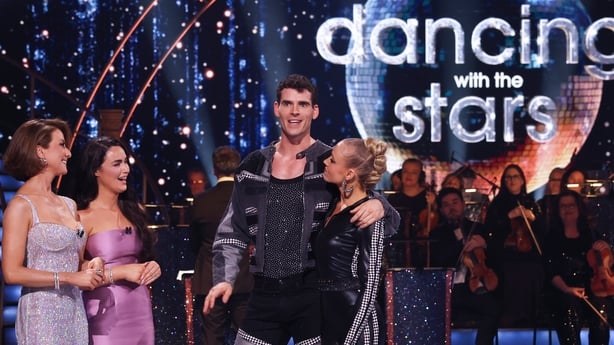
The latest departure cited by Patrice was Olympic rower Philip Doyle, who became the seventh celebrity to leave the competition after Orchestra Night on RTÉ One.
Doyle and his professional partner Daniela Roze landed in the bottom two after judges’ scores were combined with the public vote, before facing singer-songwriter Tolü Makay in the season’s fourth dance-off.
The mechanics matter for audiences and producers alike: hybrid scoring systems are designed to balance adjudication (judges’ scoring) with engagement (public voting), while dance-offs create an additional performance checkpoint that can reframe the narrative of the elimination episode. The result is a structure that can reward consistency across weeks, but can also shift quickly when combined scores place contestants in the bottom two.
For broadcasters, that same structure helps justify premium weekend scheduling by keeping outcomes visibly dependent on viewer participation. Voting mechanisms, while tightly regulated by internal compliance teams, also sit within wider consumer-protection rules on premium-rate services, shaping everything from the wording of on-air calls-to-vote to the timing of when lines close.
Professional dancers carry the same emotional downside risk
Patrice emphasised that eliminations land heavily on the professional dancers as well as the celebrity contestants, pointing to Roze’s reaction after Doyle’s exit and the intensity of the workload in the closing stages of the series.
“I think for the pros as well, like Daniela and Philip who were eliminated on Sunday, Daniela was particularly upset because she had worked so hard and Philip was so amazing. It’s at that stage now where they do see the Glitterball and think ‘I could get there and this is attainable’. To go home at that stage, it’s heartbreaking, it really is,” Patrice said.
“They are so immersed in it. I mean, you know, myself and the others, we’re only there at the weekends. But they are there seven days a week. They eat, sleep and breathe it,” he added.
His remarks underline a persistent structural feature of celebrity dance competitions: professional dancers are not only performers on broadcast nights, but also the core labour that sustains rehearsal schedules, choreography development, and week-to-week adaptation to judges’ feedback and audience response. In later rounds, where contestants and partners can begin to view the trophy as attainable, the emotional swing associated with an elimination can intensify.
The same professionals have also become central to the programme’s digital storytelling, often fronting rehearsal-room clips and explainers that populate RTÉ’s and the BBC Studios format team’s online channels between Sunday episodes. That dual on-air and online presence raises the stakes when a couple’s journey ends abruptly in the semi-final run-in.
On-camera polish, off-camera vulnerability
Patrice said he expects the emotional register to rise further as the competition reaches its decisive rounds, arguing that visible vulnerability is part of what the format captures when celebrities attempt a new skill under public scrutiny.
“Obviously I don’t want to make people cry, but I do love a few tears because it just shows how real it is and how human it is – trying a new skill and putting themselves out there. It’s daunting to say the least,” he said.
Laughing, he added: “We’ve two weeks left – I want to see tears on the dance floor. Better yet, I’ll just cry.”
In production terms, the quote points to an editorial balancing act: maintaining an upbeat, family-friendly prime-time tone while also leveraging authentic reaction shots and immediate post-result interviews for social clips. The “glitz and glamour” of the live broadcast can coexist with a backstage environment built around fast-turnaround content capture, where heightened emotions can become part of the programme’s digital output.
That tension is now common across global reality franchises. As streamers and social platforms compete for attention, publicly funded broadcasters such as RTÉ face pressure to demonstrate reach beyond linear ratings, building multiplatform brands around flagship shows like Dancing with the Stars. Patrice’s all-access vantage point is one of the tools used to bridge those worlds, translating studio emotion into short-form content that can travel on Instagram and TikTok within minutes of the result being announced.

Dancing with the Stars airs Sundays on RTÉ One and RTÉ Player at 6:30pm, with extended clips and backstage interviews released across the broadcaster’s social channels and digital platforms shortly after transmission.
SINGAPORE – Singaporean fashion photographer and former model Chuando Tan has turned 60, with new birthday photos posted to Instagram triggering another global cycle of reposts, commentary and media pickup centered on his youthful appearance.
The milestone post paired images with a reflective caption, and the Instagram upload quickly drew hundreds of thousands of likes and a high-volume comment thread focused on how little he appears to have aged. The renewed attention echoes the wave of international interest Tan first received in 2017, when images from his Instagram account circulated widely online and highlighted the contrast between his age at the time – 51 – and his presentation in photographs.[3]
For entertainment and media executives, the latest flare-up is a reminder of how personal image can function as a repeatable content asset: a creator-controlled “release” on a global platform that can be repackaged across markets without a formal production cycle, and without the traditional gatekeeping of magazines, broadcasters or studios. Tan, who first made his name in the 1980s and 1990s as one of Singapore’s most recognizable male models before building a second career behind the camera, has effectively turned his persona into a long-running, platform-native property.[1]
“Today, on my 60th birthday, I am reminded that time is the only real wealth.”
A personal post, industrial-scale distribution
Tan’s birthday update is not a film or music launch, but it traveled through the same attention economy that now shapes entertainment marketing and culture: primary distribution via a major social platform, amplification through reposts and commentary, and secondary distribution through coverage that treats the post itself as the event.
The speed and reach described in early March 2026 coverage reflects a broader structural shift in entertainment media. Social platforms have become the front door for discovery, where a single post can act as a trailer, press release, and photo package at once – complete with audience metrics that signal momentum to outlets scanning for high-engagement items.
In Tan’s case, the content is anchored in still imagery and personal branding rather than a commercial title. But the distribution mechanics are familiar to talent teams and brand strategists: a clear narrative hook (age versus appearance), a consistent visual identity, and a platform-native feedback loop that rewards engagement with more visibility. For managers and studios, that loop is now a core part of audience development, sitting alongside more traditional publicity channels.
At the same time, the ecosystem in which this content circulates is not entirely unregulated. Platform policies on advertising, health claims and synthetic or manipulated media are increasingly shaped by national and regional frameworks, including instruments such as the European Union’s Digital Services Act, which sets due-diligence obligations for very large online platforms around the visibility, labeling and targeting of content. Although Tan’s birthday post is personal rather than sponsored, it moves through the same infrastructure that regulators, advertisers and newsrooms are now scrutinizing for its impact on users’ perceptions of body image, wellness and aging.
Age, image, and the business of fascination
The recurring focus on Tan’s perceived “agelessness” also sits inside a long-running, commercially significant segment of entertainment and lifestyle coverage: the monetization of appearance and longevity narratives.
While Tan’s public-facing work is in fashion photography, the images that circulate most widely are frequently treated online as a kind of proof-of-concept for personal discipline, genetics, styling, and photographic presentation. The result is a durable story format that can be reactivated at milestone moments – in this case, his 60th birthday – with minimal new information required beyond fresh photos and a timestamped caption.
That durability matters because it demonstrates how certain identity-based narratives operate like evergreen entertainment IP in the platform era. The “property” is not a franchise but a persona: recognizable, easily summarized, and globally legible across languages and cultures. It can generate engagement without needing a new product, tour, or screen credit to justify coverage.
For brands and agencies working in beauty, fitness and wellness, this creates a ready-made frame into which sponsorships and campaigns can be slotted. Even when no such deals are present, the coverage norms that grow up around these narratives – before-and-after frames, “what’s his secret?” headlines, speculative breakdowns of diet and exercise – can blur the line between editorial attention and aspirational marketing.
At the same time, the public response described in the comment thread underscores a key tension in contemporary entertainment culture: audiences often read highly produced or carefully selected images as documentary evidence, even when they are encountering photography – a medium defined by framing, lighting, and curation. That interpretive gap is part of what keeps the story circulating, and it is also where questions of media literacy and platform responsibility increasingly sit.
What the cycle shows about today’s entertainment press
Tan’s resurgence illustrates how modern entertainment journalism increasingly covers “attention events” created by platforms themselves. A post is published, metrics accumulate, reaction becomes the storyline, and the coverage narrative becomes a record of engagement: likes, comments, and the scale of circulation.
This model is not inherently promotional, but it requires editorial discipline to maintain distance. The central verifiable elements are limited – the fact of Tan’s age, the posting of birthday photos, the presence of large-scale engagement, and the historical timeline of a prior viral moment in 2017 – while much of the surrounding conversation is driven by subjective appraisal and speculation.
For newsrooms, that constraint makes transparency about sourcing and framing more important. When coverage leans heavily on public reaction, it risks amplifying the most extreme or flattering responses rather than offering a measured account of what the images do and do not show. For platforms and advertisers, it raises adjacent questions about how algorithmic promotion interacts with cultural standards around beauty, aging and health – and about who bears responsibility when audience interpretation slides into quasi-medical claims or unrealistic expectations.
The early March 2026 reporting also noted that Tan has previously said he does not have a secret formula for eternal youth, a framing that functions as a guardrail against turning a viral narrative into an implied health claim. In an era when audiences often treat influencer-adjacent content as guidance, that distinction is not cosmetic; it is a governance issue for platforms, publishers, and advertisers deciding what claims are being made, by whom, and on what evidence. For editors, making that boundary explicit – and distinguishing between spectacle and advice – is now part of the basic risk calculus around celebrity coverage.
Tan’s birthday photos and caption were posted to Instagram to mark his 60th birthday, and the post was the only cited public statement tied to the milestone in the reports published in early March 2026. In the absence of a broader interview or campaign, the reaction to that single upload offers a compact case study in how a personal moment, framed through professional imagery, can move at industrial scale – and in how entertainment media, platforms and regulators are gradually being forced onto the same terrain to decide what, exactly, is being sold when a face goes viral.

Oprah Winfrey Hosts Maui Podcast Production Week for Multi-Platform Release and Community Engagement
MAUI, Hawaii – Oprah Winfrey, the media executive who oversees Harpo Productions and serves as chairman and CEO of OWN: Oprah Winfrey Network, told members of her Insiders program that she hosted her team at her home in Maui for a week of podcast production, recording multiple episodes intended for release through “The Oprah Podcast” across audio and video distribution.
Winfrey said the group used the trip to “record a whole bunch of podcast episodes” that audiences can “listen to” via Apple Podcasts or “watch” through a dedicated YouTube playlist. She also described a closing dinner built around a structured conversation prompt-an editorial device that doubles as a community-engagement tool for a membership product positioned around weekly intention-setting and guided reflection.
The update matters less for the celebrity anecdote than for what it signals about how major talent-led brands are operationalizing podcasting: batching production into concentrated sessions, capturing content for both audio and video endpoints, and extending the experience into proprietary community spaces designed to sustain attention between releases.
A week of podcast production built for multi-platform distribution
In her note to members, Winfrey wrote that she “hosted” her team at her Maui home and that the group spent a week recording episodes for “The Oprah Podcast.” She pointed audiences to two primary consumption paths: Apple Podcasts for audio and a YouTube playlist for video. The show itself extends earlier Winfrey-branded audio efforts, including The Oprah Winfrey Show podcast archive and the more recent relaunch of “The Oprah Podcast” as a weekly conversation series with authors, newsmakers, and cultural figures.
That two-lane distribution strategy reflects a broader industry pattern in which premium talk brands treat video as a parallel product rather than a marketing afterthought. For publishers and talent-driven companies, the operational implication is straightforward: once a show’s production is built to capture camera-ready footage, the same editorial session can feed both traditional podcast storefronts and major video platforms without requiring a separate production calendar.
Winfrey’s note did not include release dates, episode counts, guest details, financial terms, or distribution agreements. It did, however, confirm that the content has been recorded and framed explicitly for both listening and watching-positioning the Maui sessions as a modular content reservoir the team can schedule and repackage across platforms over time.
Dinner-table formats as programming development-and retention design
Winfrey said the team gathered for a final dinner and that she opened the meal with a question-based exercise designed to “help people open up,” describing it as “simple but meaningful” and useful for sparking conversation.
She attributed the prompt to a dinner she attended in Telluride, presenting it as a three-part question that invites participants to surface personal priorities and values:
What would you choose for the last meal you eat, the last song you hear, and the last view you see?
According to Winfrey, everyone wrote down answers, she read them aloud, and the group guessed who each response belonged to. She said the exercise produced varied answers, including one person choosing “a highlight reel” of their life as a final view, another wanting to see their dogs’ faces, and another selecting a dish their mother made while they were growing up.
In a membership context, this kind of prompt performs two functions at once. Editorially, it’s a lightweight format that can be reused in on-mic conversations, live events, and community threads, giving producers a recurring device for deepening interviews without heavy scripting. Commercially, it supplies a repeatable engagement mechanic that encourages member participation-an important consideration for subscription products that need sustained interaction, not just periodic content drops.
Winfrey closed the anecdote by telling members that “even in long-standing relationships” there is “always an opportunity to go deeper and get closer,” and she encouraged members to play the game with “the people you love” and to share their responses with her. For a personality-driven brand, that invitation is also a funnel back into owned channels, reinforcing the sense of direct connection that underpins recurring revenue models.
Community and owned channels: the business logic behind the intimacy pitch
Winfrey’s message sits within an Insiders program framed around weekly intention-setting and reflections on topics including “letting go,” “forgiveness,” and “coming into your own.” In the same update, members were also directed to continue the conversation through an “Oprah Insider Community,” a gated environment that runs alongside Winfrey’s presence on broader social platforms.
From an industry perspective, the combination of (1) direct-to-member editorial notes, (2) a community layer, and (3) a podcast distributed via major platforms maps to a common structural goal: maintain reach through open distribution while building a parallel, owned environment where engagement can be measured, moderated, and retained. That approach aligns with emerging expectations under the European Union’s Digital Services Act, which places new obligations on large platforms around transparency, content governance, and systemic risk, even as creators and media companies seek to keep control of their own audience data and brand standards.
Unlike pure advertising-supported media, membership-oriented entertainment and lifestyle brands often have to demonstrate ongoing value in smaller, high-intent audiences. In practical terms, that means packaging “access” and “participation” into the product-whether through member-only communications, community discussion spaces, or prompts that create a predictable cadence of interaction.
Winfrey’s note did not specify how the community is moderated, what data practices apply, or whether participation is tied to additional perks or programming. What is explicit is the editorial workflow: a recurring weekly message, an invitation to respond, and a community destination positioned as the next step for discussion. For decision-makers inside streaming platforms and podcast networks, this kind of structure is increasingly a template for how talent franchises build durable, off-platform relationships that can withstand shifts in recommendation algorithms or ad markets.
Winfrey’s institutional footprint and why it matters for podcast strategy
Winfrey has long operated as both on-camera talent and executive leadership. Her public biography describes her as a producer, philanthropist, actress, and author, and states that she oversees Harpo Productions and serves as chairman and CEO of OWN: Oprah Winfrey Network. It also describes her as the founder of O, The Oprah Magazine and notes the launch of Oprah’s Book Club in 1996-a franchise that helped cement the commercial power of her endorsements in publishing and beyond.
Those institutional roles help explain why a weeklong production session in Maui is not simply a creative retreat. For a talent-led organization with multiple brand extensions, centralized production weeks can support cross-format planning-aligning conversation topics that work across audio, video, written editorial, and community programming. In practice, that means a single conversation can feed a podcast episode, a video cut for social distribution, a written reflection to Insiders, and a prompt for the community forum, with governance and brand controls held close to Winfrey’s own companies rather than outsourced entirely to third-party platforms.
The note itself stayed focused on the member message and the dinner prompt, without detailing how the recorded podcast episodes will be scheduled, windowed, or repackaged. Still, the operational takeaway is clear: Winfrey’s team is treating the podcast as a scalable, multi-platform property, with production conducted in batches and distribution oriented toward both major consumer platforms and a proprietary membership ecosystem. Against a backdrop of tightening platform regulation and scrutiny of influencer advertising rules in markets such as the United States Federal Trade Commission’s endorsement guidelines, that hybrid model-broad reach plus tightly managed owned channels-has become a strategic priority for senior executives across the media sector.
Winfrey said the week in Maui was used to record multiple episodes of “The Oprah Podcast,” which she directed audiences to access via Apple Podcasts for listening and a YouTube playlist for watching. For commissioners, regulators, and platform policy teams tracking the evolution of creator-led networks, the Maui sessions offer a compact case study in how one of the industry’s most established brands is adapting its production rhythms, distribution choices, and community design to the next phase of the attention economy.

LIMERICK, Ireland – Shania Twain, the songwriter and five-time GRAMMY winner, has announced a headline concert at Thomond Park Stadium, scheduled for Tuesday, July 7, 2026.
The date is positioned as Twain’s only Irish show, with ticketing structured around multiple presale windows before a public on-sale. Tickets are set to go on sale at 9 a.m. on Friday, March 13, 2026, following an MCD presale that begins at 9 a.m. on Wednesday, March 11, 2026. Mastercard cardholders will also have access to a Mastercard presale beginning at 9 a.m. on Wednesday, March 11, 2026, running until 9 a.m. on Friday, March 13, 2026, via Priceless.
Twain’s stadium booking adds an additional top-tier live date to an active cycle that spans major festival appearances and high-capacity venues, while also intersecting with a wider slate that includes new recorded music, screen development, and philanthropic activity.
Stadium routing, scale economics, and the Irish market
A stadium concert is a different operating proposition from arena and theatre touring: it concentrates demand into a single high-capacity date, increases production complexity, and heightens dependence on front-loaded ticket sales. Promoters and touring teams typically use early presales to establish initial velocity and reduce uncertainty around staffing, staging, and local supplier commitments that scale with venue size.
In this case, the Thomond Park Stadium show is being presented with a layered presale structure that includes MCD’s customer channel and a Mastercard cardholder presale. In the current touring economy, brand- and promoter-linked presales have become standard mechanisms for building early demand, allocating inventory across partners, and managing marketing spend ahead of the general on-sale. They also sit within a more regulated environment for ticket distribution in Ireland and the wider European Union, shaped in part by consumer protection rules such as the EU’s platform-to-business fairness framework, which seeks greater transparency in how online platforms prioritise and present commercial offers.
Twain’s positioning as a single-date Irish run also has operational implications. A one-off stadium date can be efficient from a routing perspective-especially when aligned with a broader European schedule-while also allowing the tour to price and package the show as a singular market event without committing to multiple nights. For local authorities and venue operators, that concentration of demand into a single evening means transport, policing, crowd management, and noise controls must be planned as a peak event rather than a multi-night series.
Ticketing windows: MCD presale and Mastercard access
Ticket sales for the July 7, 2026 concert at Thomond Park Stadium will follow this schedule:
- MCD presale: 9 a.m., Wednesday, March 11, 2026
- Mastercard presale (via Priceless): 9 a.m., Wednesday, March 11, 2026 to 9 a.m., Friday, March 13, 2026
- General on-sale: 9 a.m., Friday, March 13, 2026
The inclusion of Mastercard’s presale channel reflects the continuing role of payments partners in live entertainment distribution. Card-linked presales are frequently used to provide early access to inventory while also serving as a marketing vehicle that benefits both the tour and the sponsor’s consumer engagement strategy. For regulators and consumer advocates watching ticketing markets-where issues such as dynamic pricing, face-value transparency, and secondary resale remain under scrutiny-the structure of such presales is likely to be examined for fairness and clarity alongside the general on-sale.
Catalog power remains central to live performance demand
Twain’s live business continues to draw on a catalog with multi-decade recognition across country and pop audiences. Her hits include “Any Man of Mine,” “That Don’t Impress Me Much,” “You’re Still the One,” and “Man! I Feel Like A Woman!”-songs that have become setlist anchors as well as cross-generational entry points for casual fans.
The promoter-led announcement also notes Twain’s release history and commercial scale: she has released six albums and has sold more than 100 million albums worldwide, with the claim that she remains the top-selling female country pop artist of all time. It further states that Twain was the first artist in history to release three consecutive diamond-certified albums-an assertion that speaks to the long-tail durability of her catalog and its continued ability to support premium live bookings. That depth of catalog also underpins sync licensing, biopic development, and festival programming decisions built around familiar repertoire.
For the touring sector, that level of catalog familiarity can be decisive. Stadium dates rely heavily on broad audience reach and cross-generational recognition-factors that help reduce reliance on new releases or short-cycle hits to fill large venues. For sponsors and municipal stakeholders, a proven catalog can reduce perceived risk around attendance, local economic impact projections, and the case for allocating limited stadium dates in a given season.
Touring calendar intersects with festival strategy and major-venue support slots
The booking in Limerick arrives within a wider touring profile described as global, with Twain also identified as a regular residency performer in Las Vegas. The announcement positions her as a main-stage, headline artist at major festivals, citing Glastonbury, Austin City Limits, and Festival D’ete among recent appearances.
It also states that Twain will be a “very special guest” for all 12 of Harry Styles’ sold-out Wembley Stadium shows in London this summer. From an industry standpoint, a multi-night stadium support engagement of that scale can function as both incremental revenue and high-impact audience expansion, particularly when an artist’s solo touring strategy includes select stadium dates in nearby markets. For festival bookers and city tourism agencies, that combination of residencies, festival headlines, and high-profile support slots is evidence of sustained demand, which can influence future allocation of headline positions and public-support schemes tied to cultural events.
Taken together, the schedule described reflects the hybridization increasingly common in top-tier touring: headline shows, festival headline slots, and strategically chosen guest appearances that keep an artist visible across multiple audience funnels without relying on continuous multi-city stadium runs.
Recorded-music pipeline: seventh album slated for 2026 on Republic Records
Alongside the live announcement, Twain is described as currently working on new material for a seventh album due for release in 2026 on Republic Records.
While live touring remains a major revenue driver for heritage and contemporary acts alike, new recorded music can play an important role in tour marketing cycles and setlist evolution, and in maintaining retail and streaming visibility. Label-backed release planning can also coordinate with touring schedules to maximize attention across platforms, particularly when an artist is active at festivals and major venues.
The announcement does not provide a release date, track details, or a confirmed rollout plan for the seventh album beyond the 2026 timing and Republic Records label attribution. That leaves scope for the album campaign to be timed against key live milestones, including the Thomond Park appearance and any subsequent European festivals or arena runs.
Screen development: biopic and additional film and TV projects
The same announcement states that a biopic is in development, alongside other film and TV projects described as a passion.
In the broader entertainment business, musician biopics and music-driven screen projects can serve multiple functions: they can introduce catalog to new audiences, extend brand and licensing opportunities, and support renewed interest across publishing, recorded music, and live touring. For rights-holders and distributors, such projects increasingly sit at the intersection of music, film, and streaming regulation, where competition and copyright rules shape how catalog is exploited across platforms.
However, “in development” can cover a wide range of stages-from early rights and packaging through to script, financing, casting, and distribution-and no production or release specifics were provided in the announcement.
Philanthropy: The Shania Twain Foundation
The announcement also references Twain’s philanthropic activity through The Shania Twain Foundation. The charity is described as supporting efforts to eliminate food insecurity, youth empowerment, and programs that provide access to mental health resources, aligning with wider policy priorities around social inclusion and public health.
For artists operating at stadium and festival headliner scale, formalized charitable infrastructure can be integrated into touring operations through awareness campaigns and partnerships, though no show-specific program elements were announced in connection with the Thomond Park date. In jurisdictions such as Ireland, that activity operates alongside national charity and fundraising rules, as well as sector standards set by bodies including the Charities Regulator, which oversee governance expectations for registered charities and their public-facing campaigns.
Tickets for Shania Twain’s Tuesday, July 7, 2026 headline show at Thomond Park Stadium are scheduled to go on general sale at 9 a.m. on Friday, March 13, 2026, following presales beginning at 9 a.m. on Wednesday, March 11, 2026. Local authorities, venue operators, and industry stakeholders will be watching early sales as a barometer of consumer confidence in Ireland’s large-scale live events market heading into the 2026 summer season.