
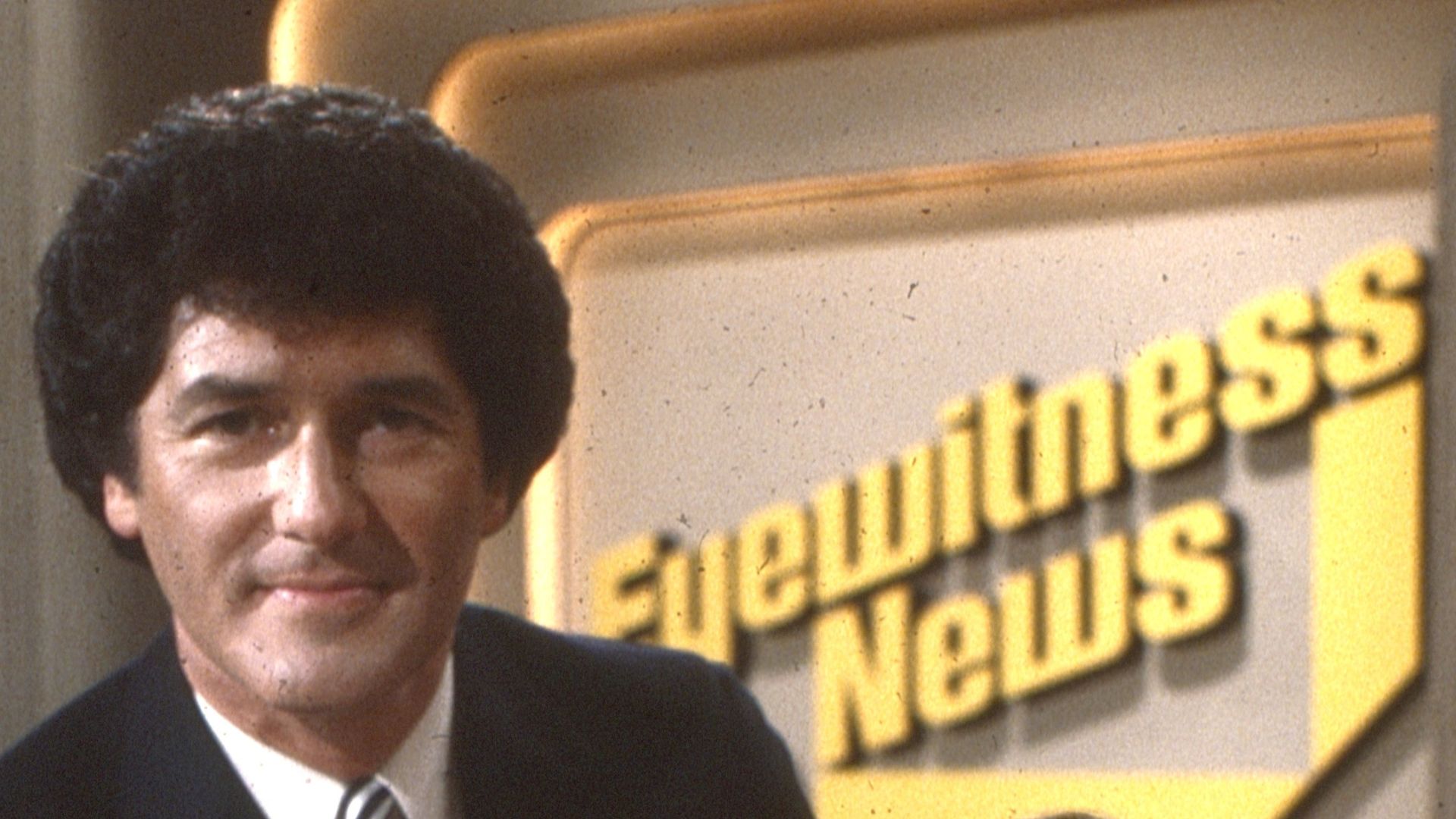
NEW YORK – Ernie Anastos, a longtime New York television news anchor whose career made him a familiar on-air figure across the region’s major broadcast stations, has died at 82, according to a statement published by WABC-TV. (abc7ny.com)
Anastos spent 11 years at WABC-TV’s Eyewitness News beginning in 1978, anchoring the 5 p.m. and 11 p.m. newscasts before leaving in 1989, the station said. (abc7ny.com)
While local news sits at the intersection of journalism and mass-market programming, its business model still depends heavily on the same fundamentals as other daily entertainment formats: repeat viewing, schedule habit, advertiser trust, and a consistent on-air product. In that system, the anchor position functions as a talent franchise-part editorial lead, part brand stabilizer-and Anastos’ decades-long visibility across multiple New York outlets reflected how networks and station groups value continuity in their highest-margin local time periods. (abc7ny.com)
Anchoring as a franchise role in local television
WABC-TV described Anastos as “a legendary newsman and beloved presence in the Tri-State area for almost 50 years.” (abc7ny.com)
In the modern broadcast marketplace, that “presence” has operational consequences. Local newscasts are typically monetized through spot advertising, sponsorships, and cross-promotional inventory that depends on audience predictability. The 5 p.m. and 11 p.m. windows in particular have long been treated as institutional pillars for large-market stations-high-frequency programming blocks that can retain viewers for network primetime, late-night, and digital extensions.
Those dynamics sit within a regulated ecosystem: local stations operate under licenses issued by the Federal Communications Commission, which conditions access to public airwaves on serving “the public interest, convenience and necessity.” Within that framework, anchor continuity and perceived integrity become not only commercial assets but also part of how station owners demonstrate a sustained commitment to fact-based, locally responsive coverage.
Anastos’ run at Eyewitness News covered those same high-exposure blocks, and his role as a long-tenured lead anchor contributed to the stability stations seek when they sell premium local inventory and maintain brand identity across decades of format evolution. (abc7ny.com) His visibility through multiple news cycles also helped define how viewers in the country’s largest media market encountered breaking developments in city government, public safety, schools, and regional transportation policy.
A career across New York’s major stations and platforms
WABC-TV said Anastos also worked as an anchor at New York television stations WCBS, WWOR and WNYW. (abc7ny.com)
More recently, the station said he became “a voice on WABC 770 AM,” hosting a show called “Positively Ernie.” (abc7ny.com)
That mix-broadcast television plus terrestrial radio-illustrates how legacy local-news talent increasingly operates across multiple distribution lanes. For station owners, recognizable on-air personalities can function as adaptable IP: talent who can be deployed not only in linear newscasts but also in specials, streaming clips, podcasts, community events, and station marketing. In practice, that means a single anchor’s voice can carry across platforms when a mayor unveils a new policing strategy, a governor issues an emergency order, or city agencies confront extreme weather and public-health threats.
WABC-TV also noted Anastos maintained “a thriving social-media presence” and was “a fixture at community events,” describing him as “always ready with a smile, pleasant small talk, and dollops of wisdom.” (abc7ny.com)
WABC-TV said Anastos won “more than 30 Emmy Awards and nominations” and received a Lifetime Achievement Emmy Award. (abc7ny.com) Those honors, while industry-facing, reinforced his role as a benchmark figure for a generation of local journalists navigating the shift from analog broadcast to digital and streaming distribution.
Institutional credibility and the anchor’s function on-air
WABC-TV’s Bill Ritter, an Eyewitness News anchor who the station said later held the same newscast position Anastos once held, framed Anastos’ impact in terms of audience trust-one of the few competitive advantages that large-market local TV news still holds at scale. (abc7ny.com)
“He was something unique and no matter your politics – Ernie was trusted. Reporting the news – reporting truth and facts – that’s what Ernie believed in,” Eyewitness News anchor Bill Ritter said.
([abc7ny.com](https://abc7ny.com/post/ernie-anastos-death-iconic-nyc-news-anchor-eyewitness-anchorman-dies-82/18707234/))
In a market where political polarization has eroded confidence in national media, that kind of cross-partisan trust gives local anchors outsized influence over how residents first hear about ballot measures, law-enforcement investigations, court rulings, or changes in public-health guidance.
WABC-TV said that two weeks before the announcement, Anastos sent Ritter a note that read: “Hi Bill … love watching you .. and stay happy and healthy. Ernie.” (abc7ny.com)
Ritter added: “He will be more than missed,” the station reported. (abc7ny.com)
Major news events and a documented historical record
WABC-TV said Anastos covered major stories including the World Trade Center attacks and the coronavirus pandemic. (abc7ny.com) In both cases, local television became a primary conduit between public officials and households-carrying press conferences, emergency instructions and policy reversals to millions of viewers who might not follow official channels directly.
It also placed him in a more explicitly archival media context, saying he appeared on WABC-TV in a 2020 documentary about the death of John Lennon. The station noted that Anastos was anchoring on Dec. 8, 1980, when WABC-TV confirmed Lennon had been killed. (abc7ny.com)
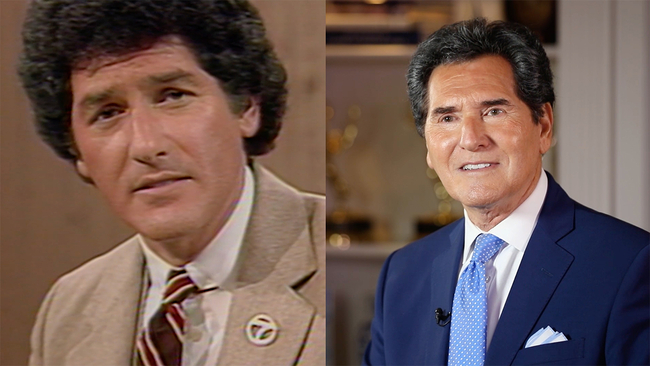
For local television news, those moments serve as both public record and competitive differentiator-high-impact events that become part of a station’s long-term library, later repackaged into documentaries and streaming programming that extend the life of legacy footage beyond a single broadcast window. WABC-TV’s reference to the Lennon documentary underscores how local news talent can remain part of a city’s media canon through later institutional programming and retrospectives. (abc7ny.com)
Education and credentials
WABC-TV said Anastos graduated from Northeastern University with a Bachelor of Arts degree in sociology, and that he held honorary doctorate degrees from Marist College, New York Institute of Technology, Manhattanville College, Curry College and Sacred Heart University. (abc7ny.com)
The station also said that before arriving in New York, Anastos worked at stations in Boston and Providence, Rhode Island. (abc7ny.com) That regional path-from smaller New England markets into New York-parallels the traditional pipeline through which local broadcasters advance into positions where their reporting choices and on-air tone can influence civic engagement at metropolitan scale.
A final public statement tied to “truth” messaging
WABC-TV cited Anastos’ final Facebook post, describing it as published on March 3 and featuring “a video of him in front of the Superman Globe at the Daily News Building in Manhattan.” (abc7ny.com)
The station said Anastos labeled the post: “Now more than ever we need to promote and protect the truth!” (abc7ny.com) In an era of misinformation and contested facts, that message echoed the obligation that comes with holding a broadcast license and a nightly platform: to verify, to contextualize and to give viewers a clear sense of what is known-and what remains uncertain-when public institutions are under strain.
Related reading
