
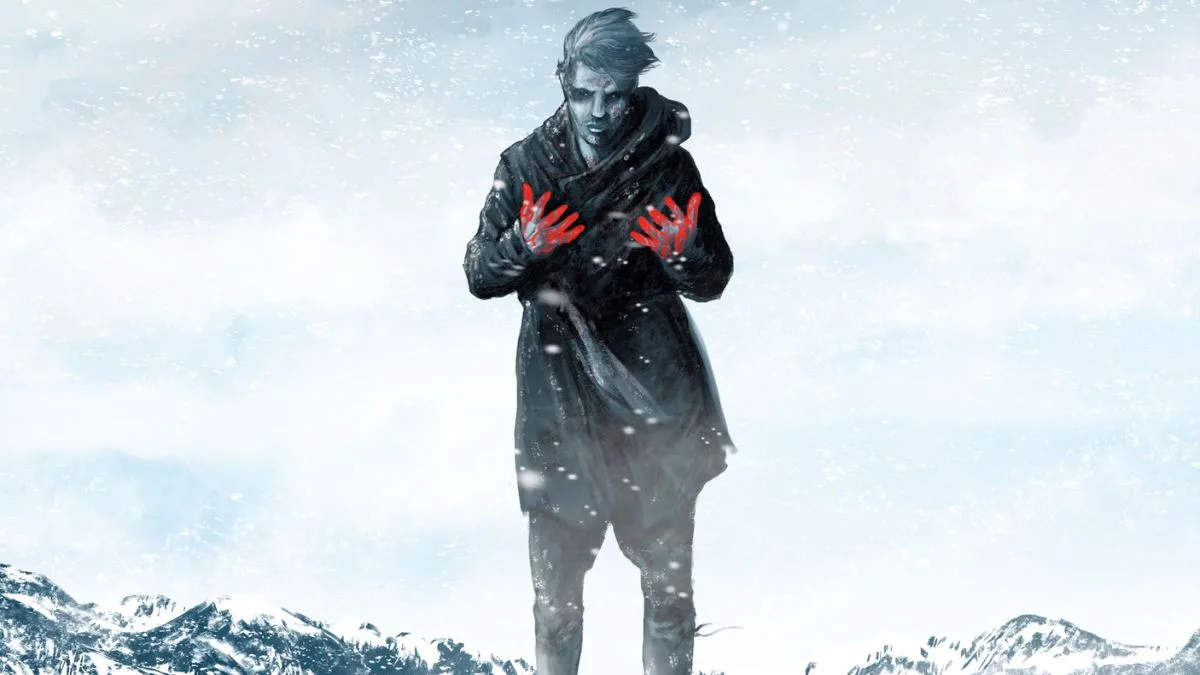
March 10, 2026 – Actress and producer Kristin Kreuk has expanded into comics as a co-writer on “Black Star,” a five-issue gothic horror series set for release by Titan Comics, with the first issue scheduled to arrive in stores and online on July 29, 2026.
The project pairs Kreuk with co-writer Peter Mooney and screenwriter Eric Putzer, with art by Joe Bocardo.
Set in “the eerie, snow-blanketed wasteland of early 19th Century Winnipeg,” the series centers on Dashiell Carlyle during conflict between two factions tied to the fur trade. The official description reads: “Amidst skirmishes between two warring factions in the early nineteenth-century fur trade, Dashiell Carlyle discovers he has magical abilities… and that he’s not alone. Thrust into a secret order with designs to use their magic to build a new and better world, Dashiell discovers that their utopia may come at a horrific cost.”
Talent package: a screen-first team moves to serial comics
Titan’s framing positions “Black Star” as a limited series designed for monthly serialization, a format that typically depends on consistent issue-to-issue delivery across writing, pencils/inks, colors, lettering, and editorial management-functions that, in publisher-owned distribution channels, also align with advance ordering by retailers and direct-to-consumer online sales windows. For Titan, the series also arrives as the global comics industry continues to adapt to evolving retail practices and content standards shaped by bodies such as the U.S. Federal Trade Commission’s oversight of advertising and consumer protection, which increasingly inform how publishers market mature or horror-themed titles to younger readers and parents.
In statements released with the announcement, Kreuk described the project’s origin during the team’s time working in Winnipeg:
“Black Star was born while Peter, Eric, and I were filming ‘Burden of Truth’ in Winnipeg,” said Kristin Kreuk. “We were inspired by the city’s lore and, because we worked so well together, began spending our spare time on set (and then, for years afterwards) developing our own take on the history and magic we imagined pulsing beneath its surface, shaping the rhythms of the city and the battles raging just beyond our view.”
Mooney, also citing Winnipeg as a creative anchor, said, “Sometimes people come to my hometown and they can’t see past its rough edges or inhospitable weather. But it was clear Kristin and Eric could see right into the strangeness that makes Winnipeg so unique,” adding, “This isn’t so much an alternative history, but an omitted chapter that’s been lost to time. It’s bizarre and fantastical and entirely imagined – but it goes a long way towards explaining why the city is how it is today.”
Putzer positioned the form itself as a driver of how the story is meant to be consumed: “There’s an intimacy to comics that no other form quite achieves; the reader controls the rhythm, the breath, the revelation,” he said. “In a story about power and human nature, we felt that intimacy necessary to make the reader an active part of the exchange.”
That focus on reader agency echoes wider discussions in Canadian cultural policy about who gets to tell stories rooted in specific places and histories. While “Black Star” is firmly fictional, its Winnipeg setting and fur-trade backdrop situate the book within a landscape where creators are increasingly expected to navigate cultural representation, content advisories, and age-appropriateness in line with evolving provincial and national guidance on media and heritage storytelling.
Art and editorial: positioning in Titan’s publishing pipeline
Bocardo said the series’ creative conditions were central to his participation: “For a comic book artist, working on a series as ambitious and well-written as Black Star is a gift,” he said. “But if you also work on it with a talented and friendly team that gives you creative freedom, then it’s not a gift; it’s a privilege.”
Titan Comics editor Jake Devine framed the series’ tonal approach as deliberately contradictory: “Set in the eerie, snow-blanketed wasteland of early 19th Century Winnipeg, this is magic as you’ve never seen it before,” he said. “Hopeful yet bleak, miraculous yet insidious, and only time will tell if the prize is worth the cost. Readers are going to be swept away by Joe Bocardo’s mesmerising artwork as it envelops them in a story filled with awe and tragedy.”
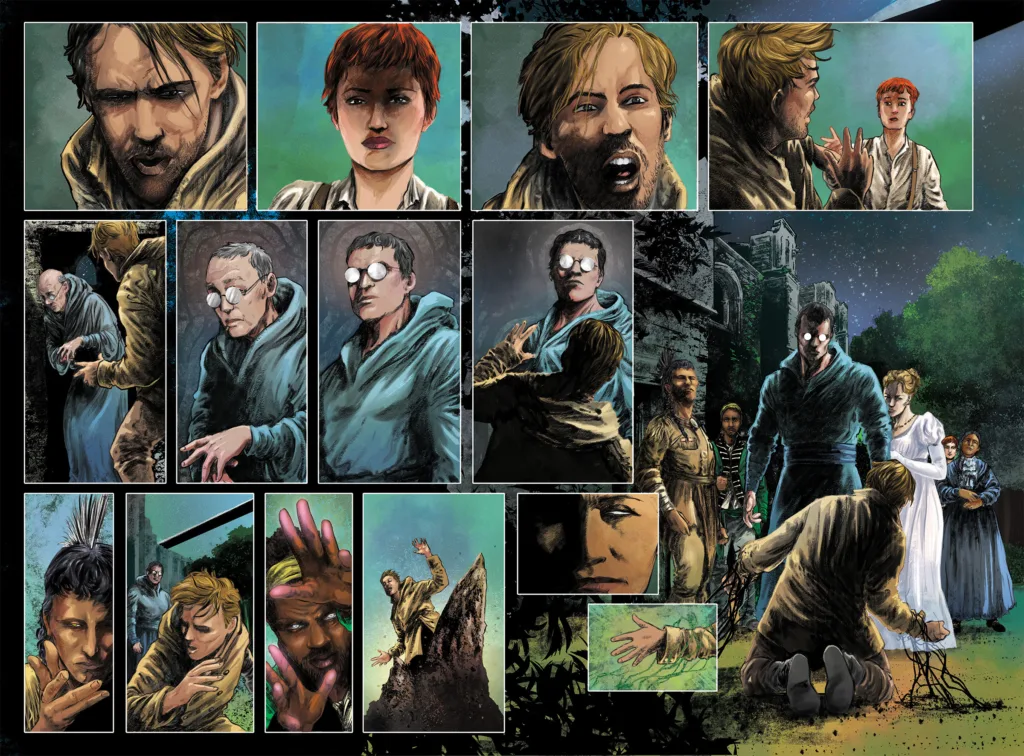
Kreuk-whose on-screen credits include “Smallville,” “Reacher,” and “Murder in a Small Town”-is credited here as part of the writing team on the Titan Comics limited series. For a performer best known for long-running television roles, the move underscores how screen actors are increasingly stepping into creative ownership of genre properties, a trend supported by modern copyright regimes such as the Berne Convention for the Protection of Literary and Artistic Works, which help secure cross-border exploitation of characters and storylines as they move between television, streaming, print, and digital comics.
“Black Star #1” is scheduled to land in stores and online on July 29, 2026 from Titan Comics. Retailers are expected to solicit orders in the coming months, as Titan and its creative team test whether a star-driven, screen-originated horror project can build an ongoing foothold in a crowded, policy-conscious global comics market.
Worth a look
- Interactive Storytelling and Immersive Audio: How Next-Gen Gaming Engines Are Transforming Contemporary Television Production
- Independent Cinema’s New Distribution Paradigms: How Direct-to-Consumer Micro-Premiers Are Shifting Box Office Dynamics
- Hollywood Once Dodged October With Horror Movies. Clayface Is Moving In. (daybreakwire.com)
