
SINGAPORE –
Lede – Six winning tickets split a S$13,524,372 TOTO Group 1 jackpot in the Jan. 29 draw, with each share amounting to S,254,062. The winning numbers were 11, 13, 16, 31, 42 and 48; the additional number was 21. The jackpot had accumulated from an initial pool of nearly S$1.3 million on Jan. 19 and expanded to about S$5.9 million by Jan. 26 before reaching the final figure on Jan. 29.
Nut graph – Large, infrequent payouts in Singapore’s state-managed lottery change short-term liquidity flows through retail outlets and the operator, and intersect with the island-state’s regulatory and tax regimes for gambling proceeds. This event highlights the mechanics of prize accumulation in TOTO draws and the role of authorised distribution channels in moving large sums to retail and digital customers, against the backdrop of Singapore’s emphasis on tightly controlled, socially responsible gambling.
Jackpot breakdown and ticket distribution
A summary of the draw and prize splits:
| Item | Detail |
|---|---|
| Draw date | Jan. 29 |
| Winning numbers | 11, 13, 16, 31, 42, 48 |
| Additional number | 21 |
| Final jackpot | S$13,524,372 |
| Share per Group 1 ticket | S$2,254,062 |
| Accumulation timeline | Started ~S$1.3m (Jan. 19); ~S$5.9m (Jan. 26); S$13,524,372 (Jan. 29) |
Of the six winning Group 1 tickets, three were purchased via Singapore Pools’ account betting service under the QuickPick System 7 Entry, System 7 Entry and Ordinary Entry respectively. The other three winning tickets were bought at retail outlets: Lee Eng Trading Store in Tampines Street 21 (QuickPick System 8 Entry); the 7‑Eleven outlet on Owen Road (QuickPick System 7 Entry); and a Sheng Siong outlet on Sengkang West Avenue (Ordinary Entry). The split outcome illustrates how both neighbourhood outlets and digital channels participate in the largest prize events.
A Group 1 prize requires a ticket to match all six winning numbers; the additional number is used to determine lower-tier prize groups and does not affect eligibility for the top prize. When no Group 1 winners emerge, the prize pool rolls over to the next draw, up to the fourth consecutive draw, after which the accumulated amount is shared among Group 2 winners. This rollover design is what allows relatively modest starting pools to build quickly into eight-figure jackpots that draw broad public attention.
Operational and institutional context
Singapore Pools operates as the authorised lottery and betting operator in Singapore and is a wholly owned subsidiary of the Tote Board, a statutory entity that exercises oversight and receives channelled surpluses for public and community causes. The Tote Board’s governance over Singapore Pools covers corporate oversight, distribution of net gaming proceeds to public-good projects, and adherence to socially responsible gaming standards.
The national regulatory framework for gambling in Singapore was consolidated with the establishment of the Gambling Regulatory Authority (GRA) as the single regulator for all forms of gambling. The GRA Act and related legislative changes took effect on Aug. 1, 2022, expanding regulatory oversight beyond the earlier casino-focused model and placing products such as TOTO within a unified licensing, compliance and enforcement regime.
Under Singapore tax rules, cash winnings from lotteries and bets such as TOTO are treated as windfalls and are not subject to personal income tax; recipients are not required to declare such payouts as taxable income to the Inland Revenue Authority of Singapore. Taxation instead occurs upstream, through gambling duties and operator-level obligations, which means headline payouts like the S$2.25 million shares in this draw are received tax-free by individual winners.
Market and retail implications
Large pooled prizes affect multiple parts of the authorised distribution chain. Retail outlets that sold winning tickets will see immediate demand for retail settlement services and the administrative steps tied to prize verification and payout processing, including identity checks and coordination with Singapore Pools for higher-value disbursements. For smaller wins, convenience-store and supermarket operators typically handle basic validation, but Group 1 prizes are settled directly with the operator under stricter procedures.
Online account channels – which accounted for half of the Group 1 tickets in this draw – continue to represent a material share of high-value ticket distribution and prize collection, reflecting ongoing digital take-up among customers who meet the operator’s age, residency and know-your-customer safeguards. The mix of three online and three retail wins in this case underlines how Singapore’s lottery demand is now split between digital accounts and bricks‑and‑mortar points of sale, a balance regulators monitor closely when assessing consumer exposure and the effectiveness of harm‑mitigation tools.
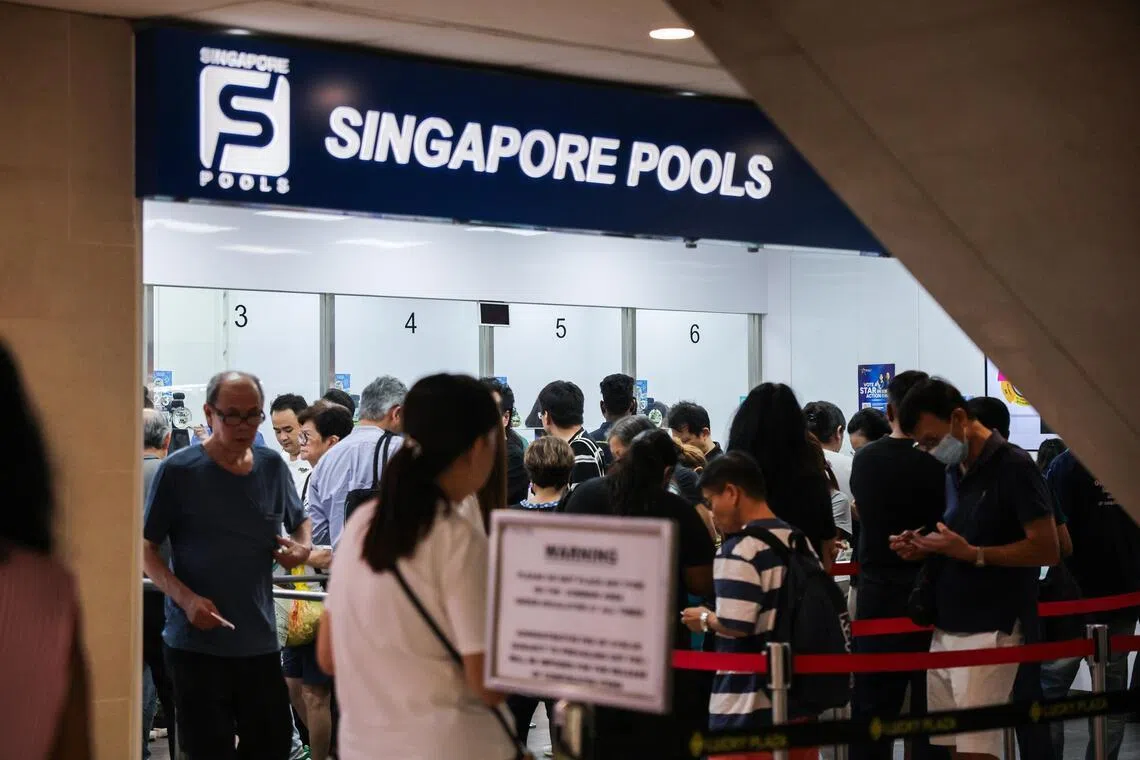
Historical precedent shows occasional multi‑million dollar TOTO pools in Singapore: larger aggregated top-prize events have occurred in previous years, including a S$19.4 million Group 1 aggregation on Feb. 11, 2022, and single-ticket wins in excess of S$13 million in 2023 and 2024. These spikes typically coincide with public holidays or special draws and are accompanied by visible queues at popular outlets, raising recurring questions for policymakers about how aggressively to promote state-managed gambling products even when proceeds are earmarked for social spending.
- Retail channels involved: authorised branches, convenience stores, supermarket outlets and accredited retailers acting under Singapore Pools’ network, which together provide geographically broad access to lottery products.
- Online channels: Singapore Pools account holders transacting via web and mobile platforms, subject to the operator’s social safeguards, verification processes and imposed betting limits.
- Tax and duty framework: gambling duties and reporting obligations apply to operators and promoters; individual winners do not pay income tax on winnings, but remain subject to standard anti‑money‑laundering checks on large transactions.
Prizes are payable through Singapore Pools under its established claims procedures, and the payout and distribution are subject to oversight by Singapore’s gambling regulator. Within that framework, lottery windfalls such as the Jan. 29 TOTO jackpot are designed to function as tightly supervised, non-taxable gains for winners, while the underlying turnover continues to feed into the state’s broader fiscal and social policy objectives through earmarked gaming revenues.
