
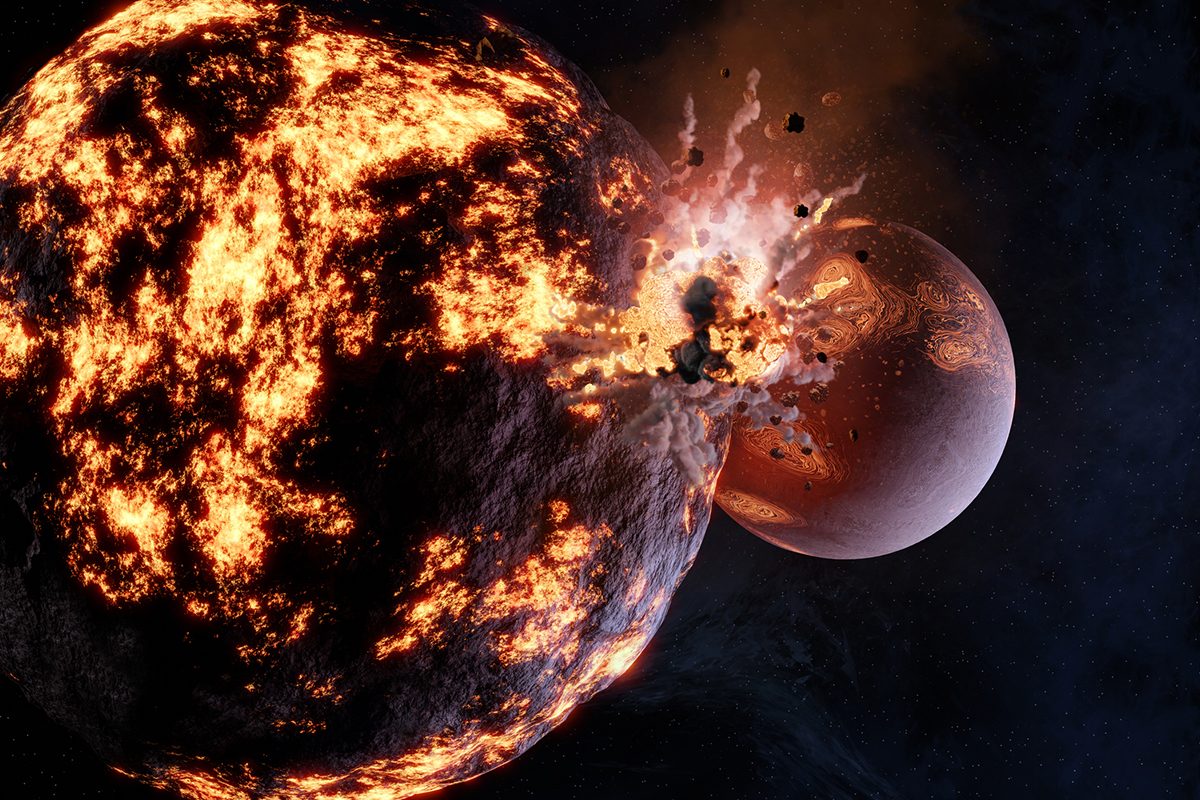
The geological record of early Mars has revealed a history of extreme violence, characterized by a relentless bombardment of asteroids that mirrors the cataclysmic events that shaped Earth. Analysis of ancient bedrock on the Red Planet indicates a prolonged period of atmospheric and surface instability driven by repeated, high-energy impacts, some of which produced debris comparable to the event that ended the reign of the dinosaurs. For planetary scientists and space agencies planning crewed missions, this makes Jezero Crater not just a scientific site of interest but a strategic testing ground for understanding how rocky worlds evolve under extreme conditions.

The Geological Archive of the Broom Point Member
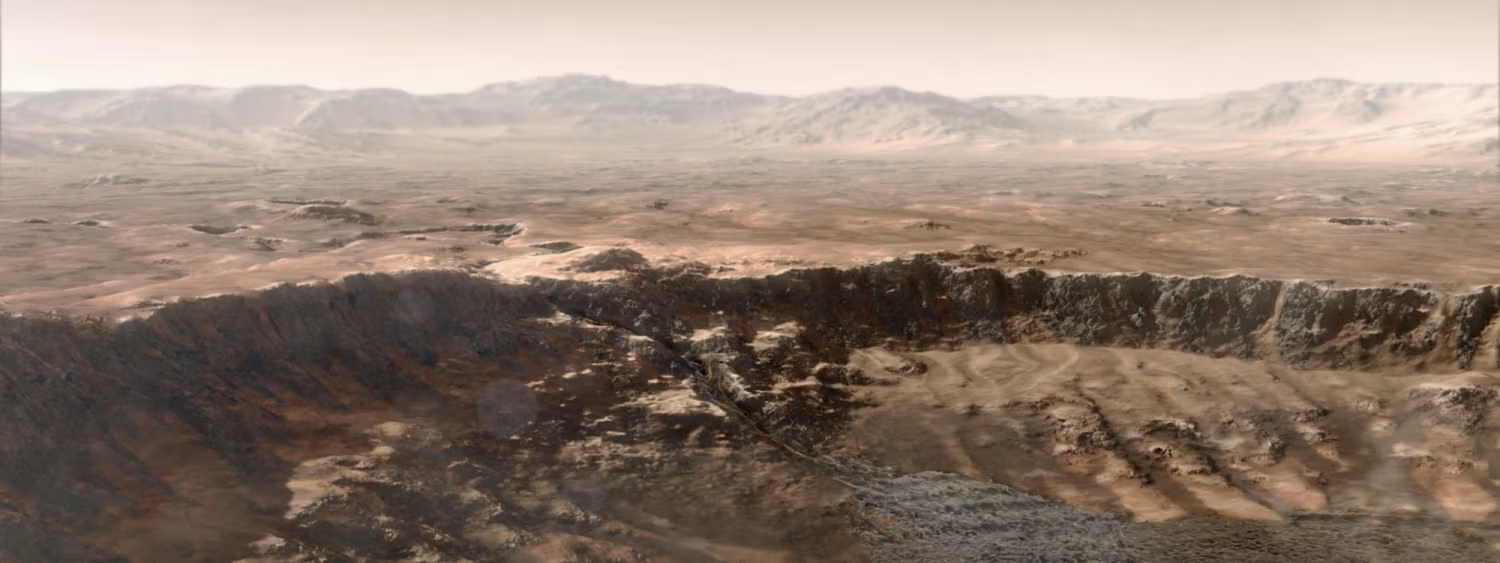
Data recovered from the rim of Jezero Crater has identified a specific geological unit known as the “Broom Point member.” This layered bedrock is estimated to be more than 3.9 billion years old, positioning it as some of the most ancient terrain ever analyzed by a robotic mission. Because Mars lacks the active plate tectonics that constantly recycle and erase the crust on Earth, the planet serves as a pristine museum of the early Solar System, preserving a chapter of planetary history that terrestrial geology can only infer indirectly.
“Since leaving Jezero, Perseverance has been exploring a brand-new frontier, both geographically and geologically – a chapter of Martian time that predates the crater itself,” says Ken Farley, Perseverance deputy project scientist at Caltech.
“On Earth, our earliest geologic history has been fundamentally broken up, deformed and erased by plate tectonics.”
“Because Mars lacks plate tectonics to recycle its crust, this ancient record remains intact, giving us a rare glimpse into a geological time period that doesn’t exist on our own planet.”
That intact record is central to how agencies such as NASA and the European Space Agency set long-term exploration priorities. The rocks Perseverance is interrogating today will help anchor a timeline for when Mars was capable of hosting liquid water, and potentially life, informing everything from landing site selection to future life-detection protocols.
Decoding Impact Signatures Through Robotic Analysis
The identification of these ancient impacts relied on the rover’s onboard suite of spectrometers and imaging systems, which mapped six distinct rock types within a 245-foot-thick sequence. The presence of breccias-rocks composed of fragmented, angular pieces-interspersed with fine-grained, pulverised dust points to a repeated cycle of violent disruption, fallout and burial, rather than a single catastrophic event.
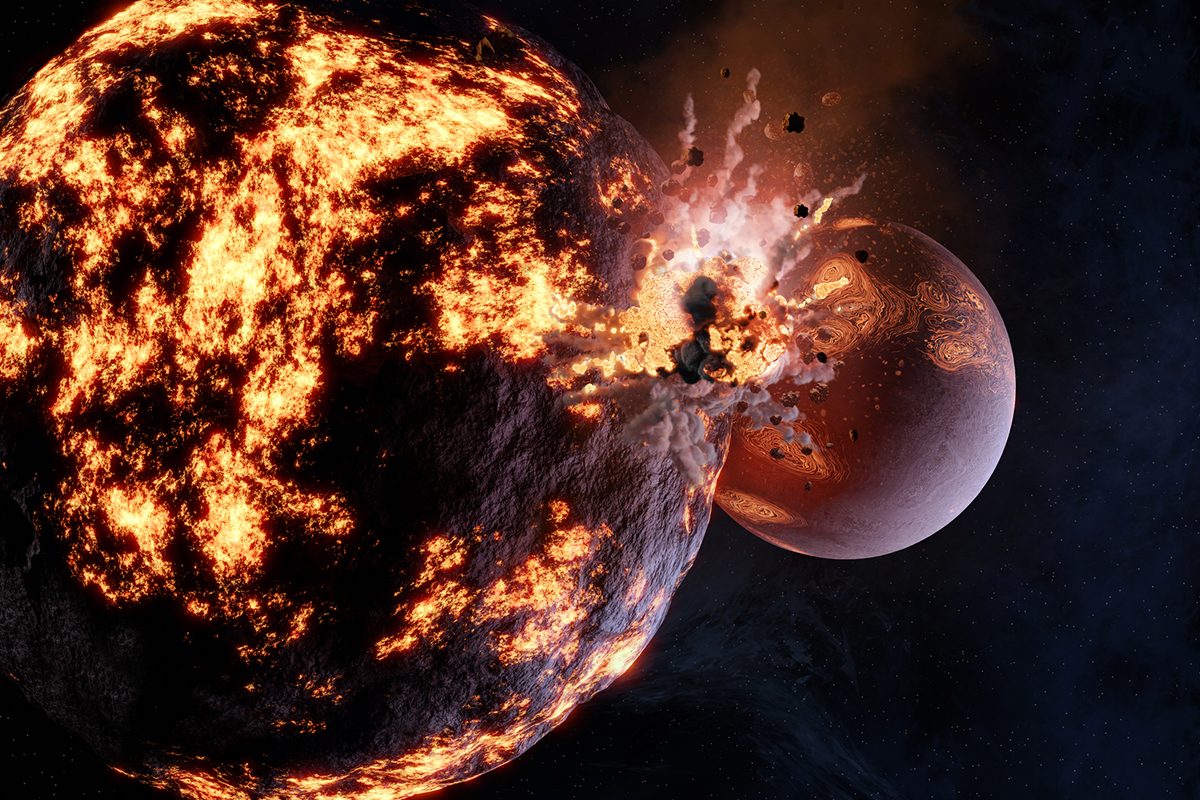
Crucial evidence was found in the form of small, dark glassy beads. These beads are the result of extreme heat and pressure during an impact, which melts rock and flings it into the atmosphere to cool rapidly. Some of these beads are comparable in scale to those created by the Chicxulub asteroid that triggered a mass extinction event on Earth, underscoring how similar physical processes can reshape very different planets.
“The different rock layers are a record of variable-sized impacts occurring at different distances from where this rock sequence was accumulating,” says Alex Jones at Imperial College London and lead author of the paper.
“Some large impacts took place very far away, some small impacts nearby. Their debris all ended up landing here, constructing this thick section of rock.”
For Earth, understanding this impact regime is more than academic. It feeds directly into how governments and international bodies think about asteroid-risk monitoring and mitigation. The same physics that left glassy beads in Broom Point’s rocks underpin today’s planetary defence assessments overseen by bodies such as the United Nations Office for Outer Space Affairs’ planetary defence framework, which coordinates how states share data on potentially hazardous objects.
The ‘One-Two Punch’ of Planetary Transformation
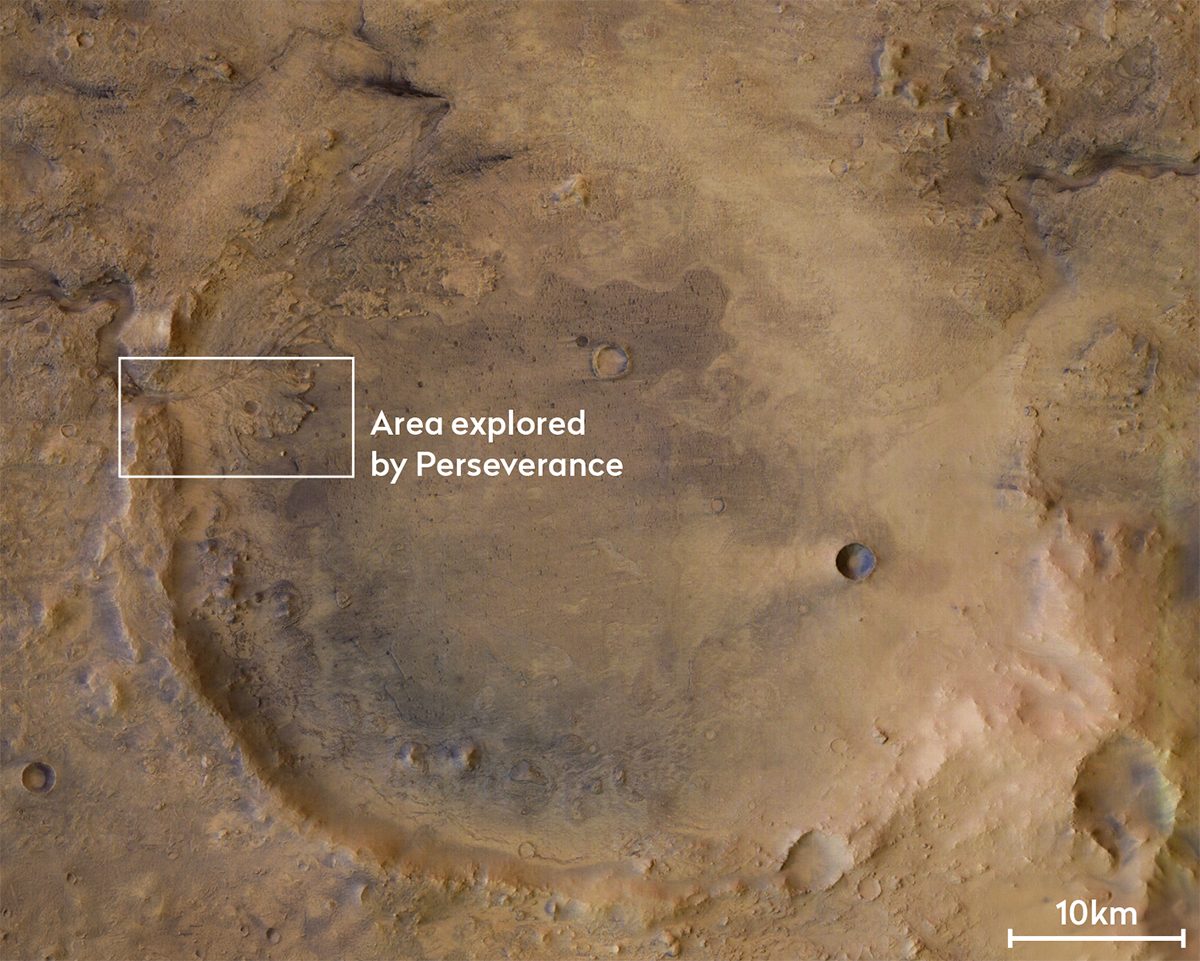
The current topography of the Jezero Crater region is the result of two massive, sequential geological events. First, a colossal impact created the Isidis Basin, a feature spanning 1,900 kilometers, which tilted the existing rock layers. Subsequently, a second impact created the 45-kilometer-wide Jezero Crater, fracturing and uplifting those tilted layers into the formations now being analyzed.
This sequence suggests a period of extreme volatility where the surface was constantly reshaped. The alternating layers of impact debris and finer sediments also hint at the potential presence of water or ice during these transitions, further complicating the early Martian climate model and sharpening questions about when, and for how long, Mars could have supported habitable environments.
Infrastructure for Future Sample Recovery
While the rover can perform sophisticated onsite analysis, the ultimate determination of the timing and frequency of these impacts requires laboratory-grade dating that only Earth-based facilities can provide. To achieve this, the Perseverance mission is designed as the first phase of a complex, multi-stage infrastructure project to return Martian material to Earth, coordinated under long-standing space-governance rules such as the Outer Space Treaty, which sets the legal framework for how states explore and use other worlds.
| Phase | Technical Objective | System Requirement |
|---|---|---|
| Collection | Coring and sealing bedrock samples | Robotic drill & hermetic sample tubes |
| Deposition | Strategic caching for retrieval | Autonomous navigation & waypoint mapping |
| Ascent | Launching samples from surface to orbit | Mars Ascent Vehicle (MAV) propulsion |
| Return | Orbital capture and Earth reentry | Deep-space capture system & heat shielding |
This stepwise architecture is not just an engineering storyboard; it is also a policy roadmap. Each phase-collection, caching, launch and Earth return-requires cross-border agreement on planetary protection standards, handling of extraterrestrial material, and the balance between scientific access and contamination safeguards.
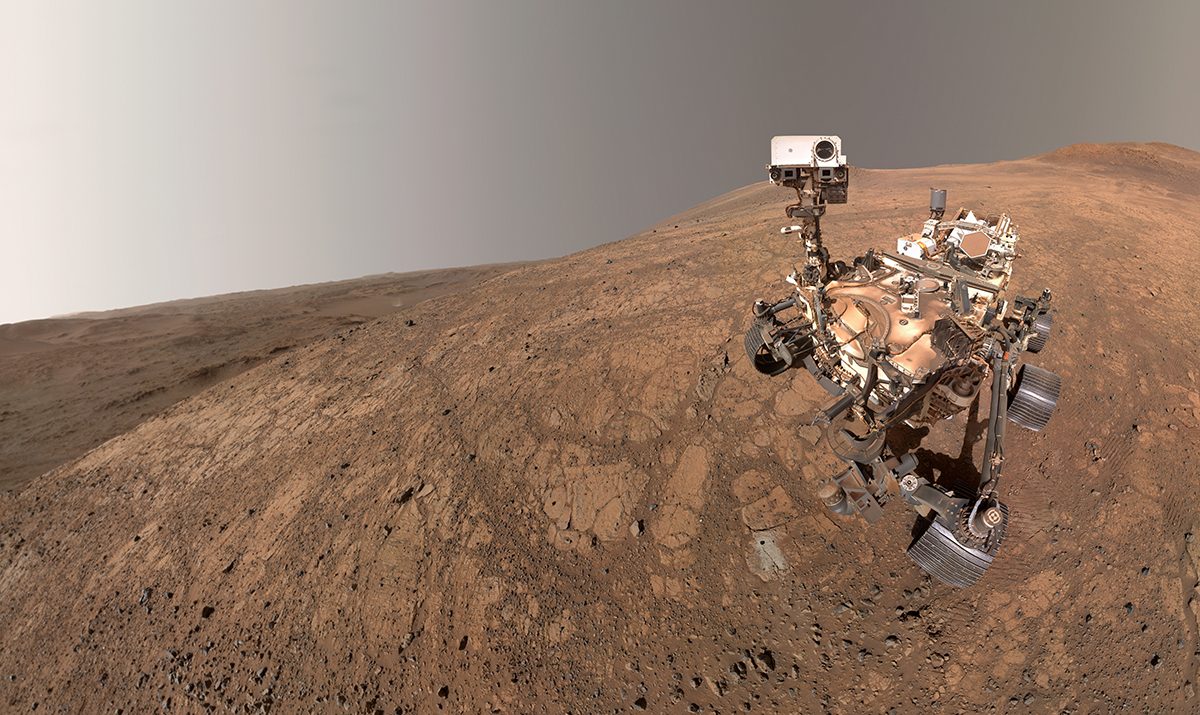
“During this violent era, it wasn’t rain or snow falling from the sky, but an almost constant barrage of molten rock droplets and pulverised dust kicked up by asteroid impacts,” says Jones.
“If we can pin down the ages of these layers, it would be like reading a cosmic weather report from 4 billion years ago.”
That “weather report” will not only reshape textbooks on how planets form and change, it will also feed into real-world decision-making: how agencies prioritise planetary defence budgets, how regulators set standards for handling off-world samples, and how policymakers weigh the risks and rewards of sending humans deeper into a Solar System whose earliest days were far more hostile than today’s calm skies suggest.
