
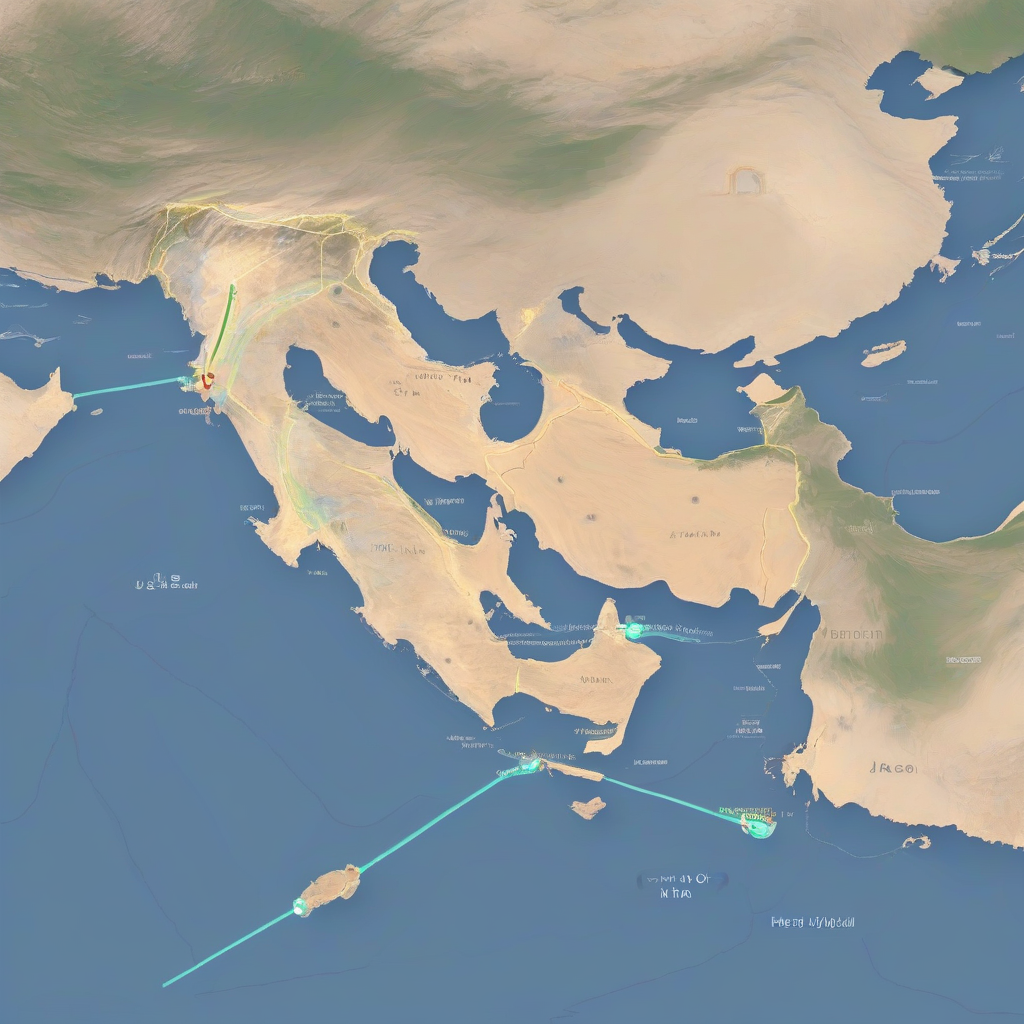
WASHINGTON – The United States intensified military strikes against Iran on July 16, 2026, targeting strategic sites in the north and disabling a merchant vessel to enforce a reimposed naval blockade. Iran responded with missile and drone attacks against U.S.-allied nations including Bahrain, Jordan, and Kuwait.
The escalation marks a collapse of the interim deal intended to end the conflict between the two nations. The renewed hostilities, centered on the control of the Strait of Hormuz, threaten to plunge the Middle East into all-out war.
Iranian officials report that American strikes have killed more than 35 people and wounded over 300. For the first time in this current round of violence, U.S. strikes reached the outskirts of Tehran.
Strategic Targets and Territorial Strikes
U.S. forces shifted their operations to daylight strikes on July 16, increasing the tempo of the campaign and signaling a more overt phase of the conflict. According to state media and military reports, targets included:
- Tehran: Strikes hit areas surrounding the capital city, raising concerns about escalation into heavily populated zones.
- Semnan Province: Attacks targeted the region’s space program and ballistic missile production facilities, which U.S. officials have long described as central to Iran’s strategic weapons infrastructure.
- Greater Tunb Island: Central Command confirmed strikes against Iranian missile and defense sites on this strategic point in the Strait of Hormuz, a chokepoint through which a substantial share of global seaborne oil trade passes.
- Sistan and Baluchestan Province: At least 13 missiles targeted a barracks for Iran’s 388th Mechanised Infantry Brigade, which operates armored vehicles and tanks near the country’s southeastern borderlands.
Iranian state television reported that the attack on the 388th Mechanised Infantry Brigade killed seven people, including career soldiers and conscripts. Casualty figures from the U.S. side have not been independently verified, and Pentagon officials have not yet released their own assessment.
Naval Blockade and the Belma Incident
President Donald Trump reimposed a naval blockade on July 16 after Washington struggled to reopen the Strait of Hormuz, a move framed by U.S. officials as consistent with freedom-of-navigation operations under the long‑standing UN Convention on the Law of the Sea. The waterway was effectively closed by Tehran following the start of the war on February 28.
As part of the enforcement, the U.S. military opened fire on the Belma, a Curacao-flagged oil tanker. The vessel was sailing toward Kharg Island, Iran’s primary oil export terminal in the Persian Gulf, when U.S. naval commanders determined it was violating newly reimposed blockade rules.
U.S. officials stated the ship ignored multiple warnings to alter course or submit to inspection. A U.S. aircraft subsequently disabled the tanker by firing a missile into its smokestack, forcing it to halt without sinking the vessel. Maritime analysts say the incident is likely to fuel legal disputes over the scope of belligerent rights at sea and the safety of neutral shipping.
Regional Retaliation and Military Threats
Prior to dawn on July 16, Iran launched missile and drone strikes targeting Bahrain, Jordan, and Kuwait. Authorities in these countries, which host U.S. forces and are parties to bilateral defense and basing agreements with Washington, confirmed the attacks, though no immediate data on casualties or damage was released.
Mohammad Bagher Qalibaf, the speaker of Iran’s parliament and lead negotiator, stated that Iran is prepared for a fuller military confrontation if the U.S. fails to adhere to the terms of the interim deal that had paused large‑scale operations earlier in the conflict.
The Iranian paramilitary Revolutionary Guard issued a warning regarding the blockade, stating:
“The export of oil and gas from the region will be either for everyone or for no one.”
The statement was widely read by regional diplomats as a threat to broaden attacks on shipping and energy infrastructure beyond Iranian territory if the blockade continues.
Global Energy and Economic Impact
The conflict has caused significant volatility in global commodity markets. The closure of the Strait of Hormuz – a transit route for an estimated one‑fifth of globally traded crude and condensates – has previously driven up the costs of fertilizer and oil, with knock‑on effects for food prices and manufacturing.
During the interim deal, some shipping traffic utilized a U.S.-overseen route near Oman to bypass Tehran’s control. However, recent Iranian attacks on ships using that route led to the current military escalation, as Western and Asian importers pressed their governments for security guarantees and clearer rules of engagement in the Gulf.
Oil price fluctuations on July 16 included:
- Brent Crude: Traded above US$85 a barrel in intraday trading.
- Pre-war Comparison: Current prices are more than 15% higher than before the conflict, adding pressure on inflation‑sensitive economies already grappling with tighter monetary policy.
- Conflict Peak: Prices remain below the nearly US$120 reached at the height of the war, when insurers briefly suspended coverage for some routes through the Gulf.
Energy policy officials in Europe and Asia have begun emergency consultations on strategic petroleum reserves and alternative supply routes, underscoring how quickly battlefield decisions in the Gulf are translating into domestic economic and political risk worldwide.
Diplomatic Friction and Prisoner Release
Amid the strikes, President Trump announced via social media that Tehran released an American citizen who had been detained since 2024. The announcement came without prior notice to several U.S. allies, according to diplomats, highlighting the highly personalized and fast‑moving nature of the current diplomacy.
Human rights lawyer Jared Genser identified the detainee as Dena Karari, a U.S.-Iranian citizen and nonprofit leader who had been charged with espionage. Karari’s case had not been publicly acknowledged by the Iranian government, and her release appears to have taken place outside any formal prisoner‑swap framework.
Speaking at the US Army War College in Pennsylvania, President Trump commented on the possibility of a resolution:
“They don’t like what we’re doing, and they do want to settle. We’ll find out whether or not we settle with them, or we just finish it off.”
U.S. officials have not said whether Karari’s release will be treated as a confidence‑building measure in any renewed talks, or as a unilateral humanitarian step separate from negotiations over sanctions relief and security guarantees. Iran has not yet officially acknowledged the release of Dena Karari.
Diplomats at the United Nations and in European capitals say they are watching closely to see whether the prisoner release opens even a narrow channel for de-escalation, or whether events on the ground in and around the Gulf – particularly the enforcement of the blockade and strikes on regional allies – will continue to drive decision‑making in Washington and Tehran. For now, the conflict remains centered on control of one of the world’s most contested waterways and the legal and political frameworks that govern it, from international maritime law to national security doctrine.
