
WASHINGTON – A fragile interim ceasefire between the United States and Iran has collapsed into a cycle of direct military exchanges, as Washington launches targeted strikes on Iranian soil and Tehran retaliates against U.S. military installations in the Gulf.
The escalation marks the most significant breakdown of diplomatic efforts in months, threatening to transform a localized dispute over maritime transit in the Strait of Hormuz into a broader regional conflagration. With the world’s most critical energy chokepoint now a primary theater of war, the volatility risks destabilizing global oil and liquified natural gas (LNG) markets, which rely on the strait for roughly one-fifth of their total supply.
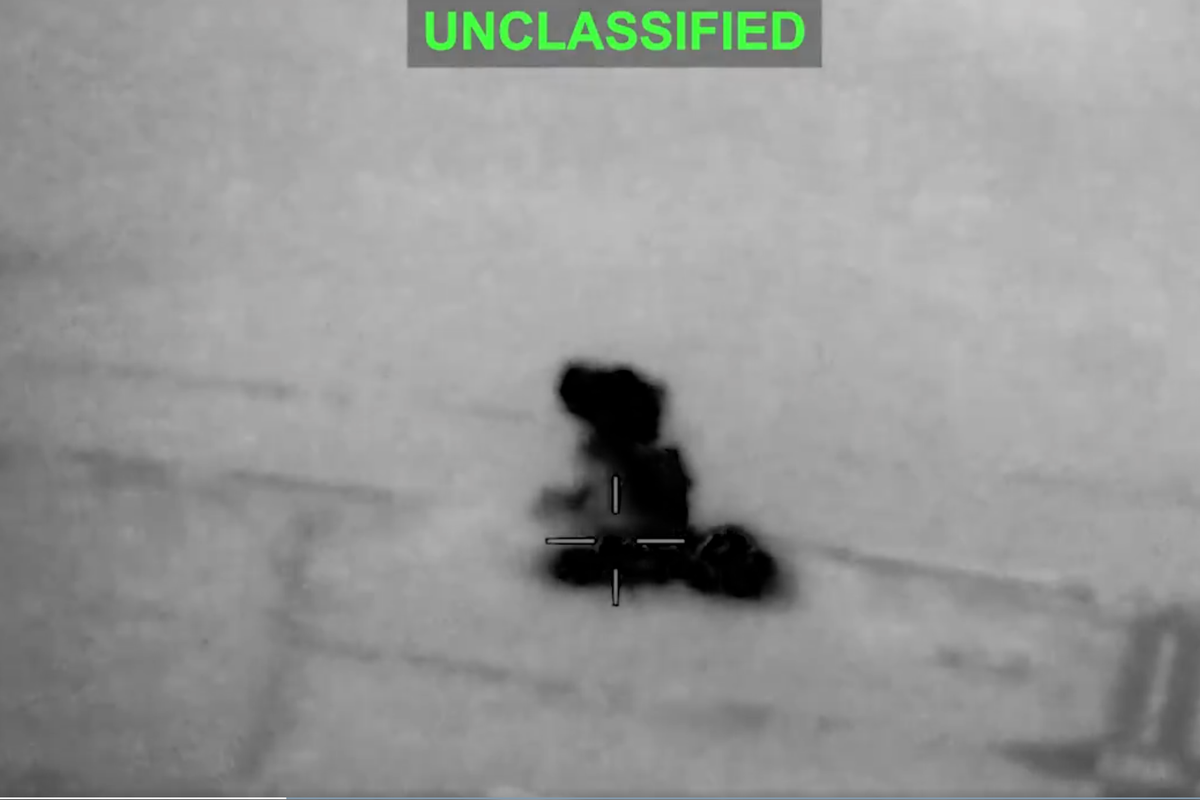
The current spiral was triggered by a series of Iranian drone attacks on commercial shipping, including a recent strike on a Panama-flagged tanker and a cargo vessel earlier in the week. In response, U.S. Central Command executed a series of strikes targeting ten Iranian military installations. According to officials, the operations focused on neutralizing the operational capacity of the Islamic Revolutionary Guard Corps (IRGC), specifically targeting surveillance hubs, communications arrays, air defense systems, drone storage facilities, and mine-laying infrastructure.
The U.S. military maintains that the strikes were a measured necessity. Central Command stated that “Iran was given a chance to honor the ceasefire agreement but elected not to,” adding that the operations were “in direct response to continued Iranian aggression against commercial shipping.”
Tehran has responded with a strategy of regional projection. The IRGC launched missile and drone operations targeting U.S. military sites in Bahrain and Kuwait, signaling a willingness to expand the conflict beyond Iranian borders.
“America’s blind shots at Sirik will not resolve our dominance over the Strait of Hormuz. But our shots at violators will remind the rest of the vessels of the clear passage route,” the IRGC stated.
In Bahrain, air raid sirens sounded multiple times as the kingdom’s foreign ministry condemned the strikes as a “deliberate and repeated violation” of its sovereignty, calling for an urgent session of the U.N. Security Council. While a U.S. official confirmed the attacks on regional facilities, they reported no American casualties or major structural damage. However, the IRGC navy command warned that American bases in the region “will experience hell in the coming days.”
The military friction is rooted in a fundamental strategic disagreement over the control of the Strait of Hormuz. Tehran seeks to assert total dominance over the waterway, aiming to force shipping through a northern route within its territorial waters, which would allow the Islamic Republic to impose transit fees and exercise political leverage over global energy flows. Conversely, Washington has promoted the use of a southern lane along the coast of Oman to bypass Iranian interference.
At the heart of the standoff is the question of who polices one of the world’s busiest maritime corridors. The Strait of Hormuz is recognized under the U.N. Convention on the Law of the Sea as an international strait, where ships of all states enjoy a right of transit passage even through overlapping territorial waters – a principle now being tested by the competing security claims of Washington and Tehran.
The geopolitical stakes have been further heightened by rhetoric from the White House. In a post on Truth Social, President Donald Trump confirmed the U.S. strikes and issued a stark warning regarding the future of the Iranian state.
“There may come a point when we are no longer able to be reasonable, and will be forced to militarily complete the job that we very successfully started,” Trump wrote. “If that happens, the Islamic Republic of Iran will no longer exist!”
For U.S. allies and energy-importing nations in Asia and Europe, the confrontation has rapidly shifted from a distant security crisis to an immediate policy challenge. Governments are weighing emergency stockpile releases, rerouting options around the Arabian Peninsula, and potential coordination through the International Energy Agency to steady markets and reassure domestic consumers.
Amidst the threats, neighboring states are attempting to prevent a total regional collapse. In Baghdad, Iraqi Foreign Minister Fuad Hussein met with his Iranian counterpart, Abbas Araqchi, to urge the reopening of the strait and the lifting of the U.S. naval blockade. Hussein emphasized that Iraq “does not support expanding the scale of the war on the Gulf states, and does not back attacks on Iran.”
Diplomats in the region say Baghdad’s outreach is part of a broader effort by Gulf and Arab capitals to restore deconfliction channels that had only recently begun to function, including backdoor talks on maritime security and prisoner exchanges.
Despite the violence, some commercial arteries remain tentatively open. The CMA CGM container ship Galapagos successfully exited the strait on Sunday, a move the shipping giant described as “an important milestone,” though it cautioned that the regional context requires “constant vigilance.” Maritime insurers have already raised risk premia for hull and cargo policies transiting the Gulf, and several shipowners are quietly reviewing contingency plans to suspend sailings if the situation deteriorates further.
The IRGC has declared that the U.S. strikes “will result in the complete halt of all diplomatic processes,” effectively ending the interim deal signed less than two weeks ago. That statement directly undercuts parallel efforts at the United Nations, where Security Council members are expected to debate whether additional resolutions on freedom of navigation in strategic chokepoints, such as the Strait of Hormuz, are needed to reinforce existing norms.
U.S. forces remain on high alert across the Gulf, while the IRGC continues to monitor commercial transit in the Strait of Hormuz. As both militaries posture for potential further confrontation, shipping companies, energy traders and policymakers are left to price in the risk that the world’s narrowest energy lifeline – classified as a strait precisely because it connects two larger bodies of water and constricts passage between them – could become the focal point of a prolonged great-power test of wills, rather than merely a hazardous transit route.
