
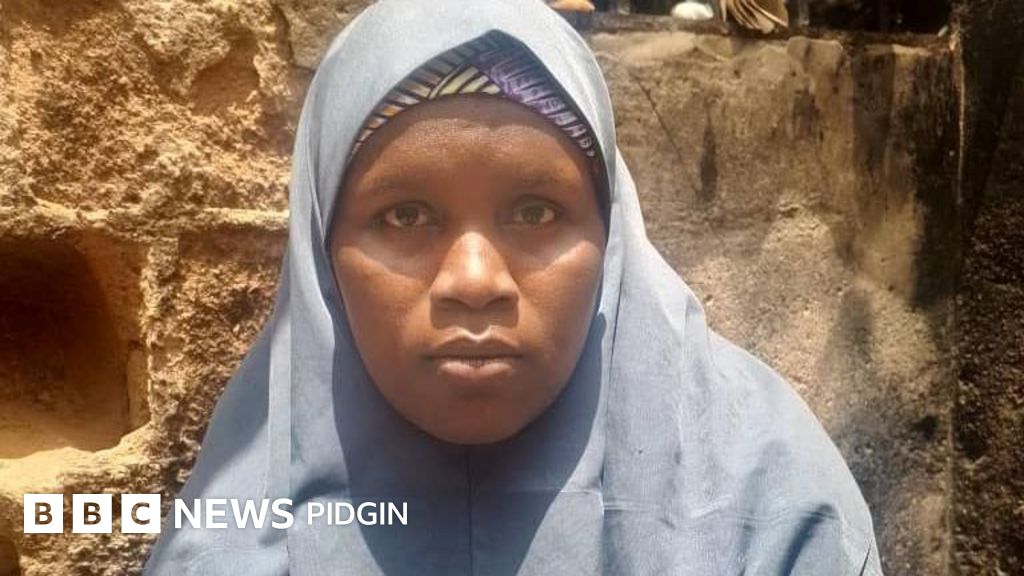
GOMBE – A woman in northern Nigeria has accused medical professionals at a state-run facility of illegally removing one of her kidneys during a Caesarean section, sparking a contentious dispute over medical ethics, patient records, and the integrity of healthcare delivery in Gombe State.
The allegations, brought forward by Barira Alhassan, highlight a profound breakdown of trust between patients and providers in a region where healthcare infrastructure is often strained. While the patient’s family points to prior medical imaging as proof of her health, the hospital administration maintains that the woman was born with a single kidney, characterizing the accusations as a calculated attempt to damage the institution’s reputation.
This case emerges against a backdrop of systemic fragility within the Nigerian health sector, which has been plagued by a chronic “brain drain” of skilled clinicians migrating to Europe and North America-a phenomenon locally known as “Japa.” This exodus has left many state hospitals understaffed and under-resourced, frequently exacerbating tensions between medical staff and the public during adverse clinical outcomes.
Mrs. Alhassan underwent the C-section on April 8, 2026, at the Gombe State Specialist Hospital, the main state-run referral facility in the capital city of Gombe, which serves patients from across Gombe State and neighbouring communities. She reports that shortly after the procedure, she experienced a rapid decline in health.
“Few days afta di operation, I come sick seriously. I begin dey vomit, get serious stomach pain, my bodi come swell, and I dey feel pain anytime wey I pee,” she said.
The patient noted that as a mother of ten children, she was familiar with postpartum recovery, yet the severity of these symptoms prompted her to seek comparative accounts from other women who had undergone similar surgeries. Her suspicions were confirmed when a physician informed her that she possessed only one kidney.
“I bicome very anxious when di doctor tell me say I get only one kidney. E even ask me whether I sell am,” Alhassan recalled. “I tell am say no. Na den e begin comfort me, tell me say person wey get one kidney fit still live normal life like evri bodi, e come give me some medicine.”
The family’s claims are supported by a medical scan from 2015, which they assert proves that Mrs. Alhassan previously had two healthy kidneys. However, the pursuit of clinical evidence has been hampered by the disappearance of her official medical files, a gap that has become central to the dispute over what exactly happened in the operating theatre.
Zakaria Alhassan, the patient’s brother, stated that the hospital was unable to produce her records despite her history as a long-term patient of the facility.
“Even when di hospital check dia records, dem no fit find anytin about Barira, despite say she dey go di hospital and na for dia she born,” Zakaria said. “Dis one make our concern and e increase our suspicion about wetin dem do to our sister.”
“Wetin I want na make dem carry out proper investigation to explain how I take lose my kidney and make I get justice,” said Barira Alhassan.
Institutional Denial and Clinical Counter-Claims
The management of the Gombe State Specialist Hospital has categorically denied the allegations, describing them as “completely false, misleading and dem no get support from medical facts, clinical evidence and hospital records.”
According to the hospital, the theatre logs for the procedure confirm that only an emergency Caesarean section was performed. “At no point wey di team carry out any procedure wey involve di kidneys,” the management stated, arguing that standard surgical protocols and documentation would have recorded any additional procedure.
To help resolve the dispute, the hospital funded a CT Intravenous Urogram (CT-IVU) at a Federal Teaching Hospital. The administration claims the results were “consistent wit a likely congenital absence of one kidney,” suggesting that Mrs. Alhassan was born with a single kidney and that the current diagnosis reflects a lifelong biological condition rather than a surgical complication or criminal act.
Hospital officials say they have met the family twice to review these findings, including with senior clinicians present, and have agreed to allow a second, independent investigation at a center of the family’s choosing. The administration maintains that this openness to external review demonstrates confidence in its clinical processes.
At the same time, the hospital expressed concern that the case is being used to fuel a social media campaign designed to erode public confidence in healthcare workers, warning that viral allegations-if later disproved-could deepen mistrust in an already fragile public health system.
Regulatory and Legal Oversight
The dispute has now moved into the purview of the Gombe State Ministry of Health. Zakaria Alhassan confirmed that he submitted a formal petition to the ministry seeking a transparent investigation into the surgery, the missing medical records, and the conflicting kidney diagnoses.
“Later, I bicom directly involved for di case and write petition dey seek justice and asking for investigation. Later, di ministry invite my sister, her husband and hospital staff, wia dem ask make di mata no go public until dem finish di investigation,” Zakaria said.
The family remains unsatisfied with the pace and transparency of the government’s intervention, arguing that delays and closed-door meetings risk undermining confidence in the outcome. For the ministry, the case is a delicate test of its ability to balance public pressure, the rights of a complainant, and due process for health workers in a politically sensitive environment.
In Nigeria, medical malpractice and allegations of organ theft are handled through a combination of the Medical and Dental Council of Nigeria (MDCN)-the statutory regulatory body responsible for licensing and disciplining practitioners-and the civil court system, where patients may seek damages. Serious criminal allegations can also trigger investigations by law enforcement and, in some cases, state-level panels of inquiry.
The controversy has also revived debate among health-policy advocates over the country’s slow transition from paper-based records to digital systems. The case underscores the critical importance of robust Electronic Health Record (EHR) systems in Nigeria, as the alleged loss of physical files often leaves patients unable to prove clinical history in malpractice disputes and makes it harder for regulators to reconstruct events.
Gombe, one of Nigeria’s newer states with a predominantly rural population, relies heavily on its main specialist hospital and a handful of secondary facilities for advanced care. In that context, the outcome of this case is being closely watched by local civil society groups as a potential precedent for how complaints against powerful public hospitals are handled in the region.
The Gombe State Ministry of Health continues its investigation, while the hospital awaits the results of the independent secondary scan requested by the Alhassan family. Any findings from that scan are expected to feed into both the ministry’s internal review and any subsequent petitions that may reach the MDCN or the courts, setting the stage for a broader reckoning over accountability and patient protection in the state’s health system.
Related reading
