
TOKYO – Japan has formally downgraded its diplomatic characterization of China in its 2026 Diplomatic Bluebook, signaling a cooling of relations following provocative rhetoric regarding a potential military contingency in the Taiwan Strait.
The shift in terminology within the annual policy review reflects a deepening rift between Tokyo and Beijing, as Japan increasingly aligns its security posture with a more assertive defense of the regional order. The move underscores the fragility of a relationship defined by a paradoxical dependence on Chinese trade and a growing fear of Chinese strategic expansion, even as both countries remain bound by the principles of the 1978 Treaty of Peace and Friendship.
The annual report, submitted by Foreign Minister Toshimitsu Motegi during a Cabinet meeting on April 10, now refers to China as an “important neighbouring country.” This represents a notable step back from the 2025 edition, which described the connection as “one of the most important bilateral relations.” In Japan’s diplomatic lexicon, such calibrations are closely watched by foreign governments and investors as an indicator of where the country is placing its strategic bets.
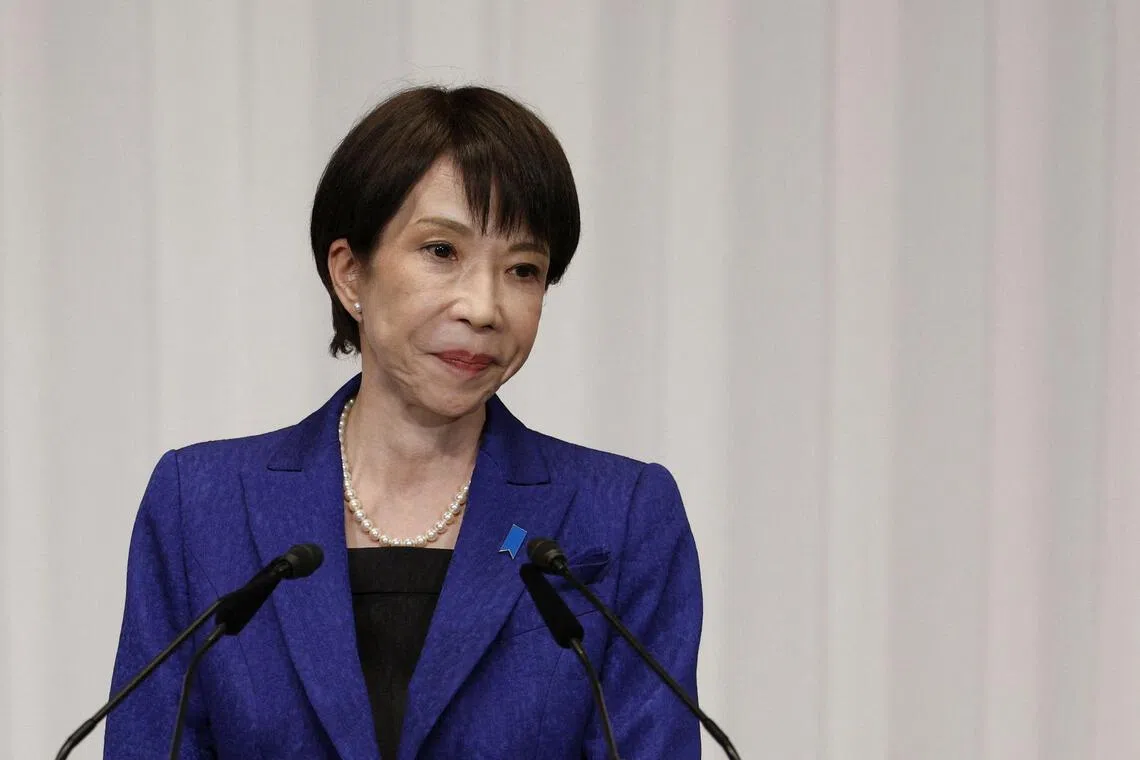
The diplomatic friction was triggered by comments made in November by Prime Minister Sanae Takaichi during a parliamentary session. Ms Takaichi asserted that
a Chinese attack on Taiwan could constitute a survival-threatening situation for Japan and prompt a response from the country’s Self-Defense Forces (SDF).
Her remarks echoed the language of Japan’s security legislation, which allows collective self-defense in scenarios deemed to threaten the nation’s survival, and signaled to both allies and rivals that Tokyo is prepared to interpret regional contingencies more expansively.
Beijing, which claims Taiwan as a province and views the island’s status as a strictly internal matter, has reacted sharply to the notion of Japanese military involvement in the strait, accusing Tokyo of interfering in China’s core interests and warning of countermeasures.
The 2026 Bluebook, which analyzes foreign policy developments from January to December 2025, documents a period of heightened volatility. Tokyo reports that China has intensified “unilateral criticism and coercive measures” against Japan, framing these actions as challenges not only to bilateral ties but also to regional stability and the rules-based maritime order that underpins global trade.
Specific grievances cited in the report include:
- The use of radar illumination by Chinese military aircraft targeting Japanese SDF planes, described as a dangerous act that increases the risk of miscalculation.
- The imposition of export restrictions on dual-use items destined for Japan, complicating supply chains critical to advanced manufacturing and defense-related technology.
- Increased maritime incursions into Japan’s exclusive economic zone, particularly around the Senkaku Islands, testing Japan’s law enforcement capacity and crisis-management protocols.
Despite the downgraded status, the Japanese government maintains that it has not severed ties. The report emphasizes that Tokyo remains open to dialogue and has not “closed the door to engagement with Beijing,” suggesting a strategy of “de-risking” rather than a total decoupling. Officials frame this as an attempt to safeguard economic interdependence while reducing exposure in sensitive sectors such as semiconductors, critical minerals, and telecommunications.
Global Security and Energy Stability
Beyond the East Asian theater, the Diplomatic Bluebook highlights Japan’s anxiety over the volatility of the Middle East. The document underscores the urgent need to de-escalate the US-Israel war with Iran, noting that peace and stability in that region are vital for Japan’s energy security, given its enduring dependence on seaborne oil and liquefied natural gas imports that transit the Strait of Hormuz.
The report explicitly reaffirms Japan’s position that Tehran cannot be permitted to develop nuclear weapons, linking Middle Eastern stability to the broader global non-proliferation framework anchored in the Treaty on the Non-Proliferation of Nuclear Weapons. Tokyo presents its own diplomatic outreach to Iran and Gulf states as part of a long-standing policy of balancing alliance commitments with an independent, stability-focused role in the region.
Simultaneously, Tokyo is doubling down on its strategic vision for the Pacific. The report reaffirms Japan’s commitment to the Free and Open Indo-Pacific (FOIP) initiative. Now entering its 10th year, FOIP serves as the cornerstone of Japan’s effort to maintain a rules-based order, secure sea lanes, and ensure freedom of navigation in the face of an “increasingly severe global security situation.” The Bluebook situates FOIP alongside Japan’s alliance with the United States and its growing defense cooperation with partners such as Australia, India, and Southeast Asian nations.
The report also identifies a worrying trend in the Eurasian landmass, specifically the expanding military cooperation between Russia and North Korea. Tokyo cited North Korea’s ongoing nuclear and missile programs as a primary threat to national security, warning that transfers of military technology or materiel between Moscow and Pyongyang could further complicate deterrence and missile-defense planning.
Multilateral Engagement
While the security narrative is dominated by tension, Japan continues to leverage soft power and multilateral diplomacy to diversify its international partnerships and reduce overreliance on any single major power.
The Bluebook features two special sections detailing diplomatic efforts centered on:
- The World Exposition in Osaka, intended to showcase Japanese innovation, green technologies, and cultural appeal while attracting global investment and tourism.
- The ninth Tokyo International Conference on African Development (TICAD) in Yokohama, aimed at strengthening economic ties across the African continent through infrastructure, digital connectivity, and human-capital initiatives.
These initiatives reflect Tokyo’s broader ambition to position itself as a leading partner for the “Global South,” countering China’s Belt and Road Initiative through what Japanese officials describe as high-quality, transparent infrastructure investment aligned with sustainable development goals and fiscal prudence.
The 2026 Diplomatic Bluebook remains the primary official guide for foreign embassies, international institutions, and corporate boards seeking to interpret Japan’s strategic priorities for the coming year. Its recalibrated language on China, sharpened focus on energy and non-proliferation, and emphasis on Indo-Pacific and Global South engagement together signal how Tokyo intends to navigate an era of overlapping geopolitical and economic shocks.
Related reading
