
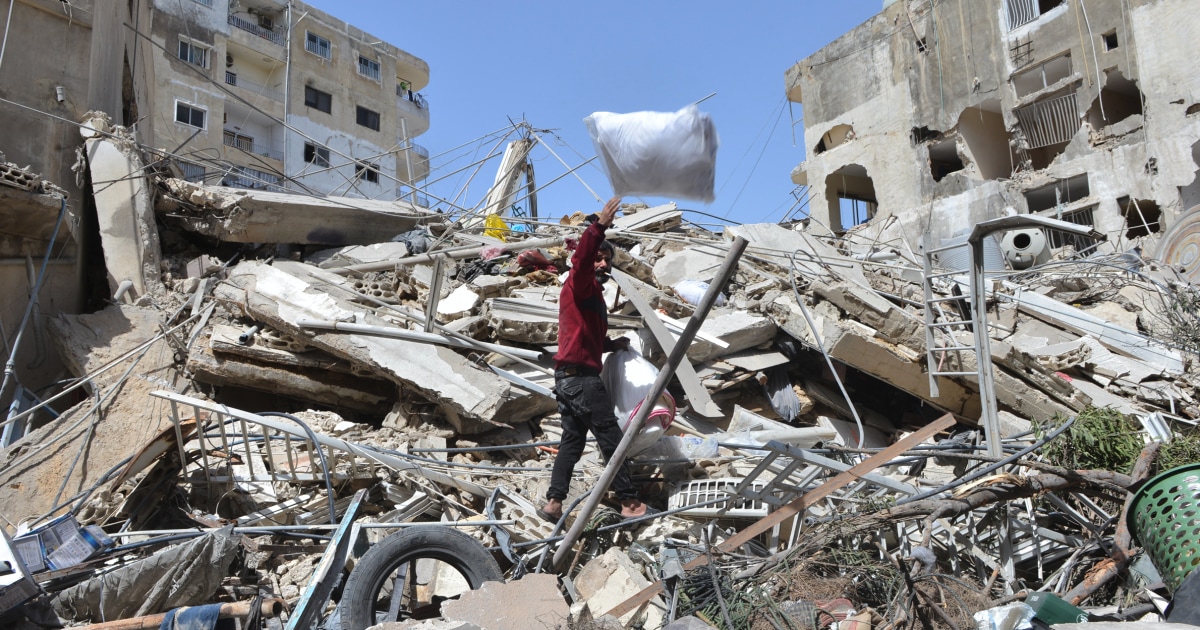
BEIRUT – The death toll from the latest escalation of hostilities between Israel and the Iranian-backed Hezbollah militia has surpassed 3,000, according to Lebanon’s health ministry.
The updated figure stands at 3,020 killed, including 292 women and 211 children. The carnage underscores the volatility of a region where a fragile ceasefire has failed to halt daily airstrikes and ground operations.
This surge in violence represents a critical inflection point in the broader geopolitical struggle between Israel and the “Axis of Resistance” led by Tehran. The conflict threatens not only the stability of the Lebanese state but also the viability of international diplomatic frameworks intended to prevent a full-scale regional war.
The current cycle of violence began on March 2, when Hezbollah launched rockets into Israel. This attack followed two days after coordinated strikes by the United States and Israel against targets in Iran, illustrating the tightly linked nature of the fronts in the Middle East.
Since the outbreak of fighting, Israel has conducted a ground invasion of southern Lebanon and launched repeated bombardments of the capital, Beirut. The Israeli Defense Forces (IDF) maintain that these operations are essential to dismantle Hezbollah’s infrastructure and prevent the group from rearming.
Hezbollah, which functions as both a paramilitary force and a dominant political party within the Lebanese government, has consistently resisted demands to disarm. Under U.N. Security Council Resolution 1701, the group is formally required to stay north of the Litani River and cede control of the southern border area to the Lebanese Armed Forces and U.N. peacekeepers, a provision that has never been fully implemented.
The humanitarian impact has been catastrophic:
- More than one million people have been displaced across Lebanon, overwhelming already fragile public services and local governance structures.
- Thousands are currently sheltering in improvised tents along the coast of Beirut and throughout the south, with municipal authorities warning of mounting health and sanitation risks.
- Six U.N. peacekeeping forces have been killed while operating in southern Lebanon, raising fresh questions about the safety and mandate of the long-standing U.N. mission along the border.
The Military Standoff in Southern Lebanon
Despite a ceasefire that began on April 17 and has been extended through June, the border remains a combat zone. Israeli troops continue to occupy significant portions of southern Lebanon, while Hezbollah utilizes low-tech drone warfare and short-range rockets to target IDF positions and northern Israeli border towns.
The de facto front line now cuts across villages and farmland that, under Resolution 1701, were meant to be demilitarized and patrolled by Lebanese forces and U.N. peacekeepers. Instead, heavy armor, artillery batteries and Hezbollah launch sites remain in close proximity to civilian areas, complicating any discussion of safe returns for displaced residents.
On Monday, Israeli military Arabic spokesperson Avichay Adaree issued evacuation orders for several towns near the coastal city of Tyre, warning residents to leave ahead of imminent airstrikes. Local officials say the rolling evacuations have emptied schools, shuttered hospitals and driven thousands toward Beirut and the Bekaa Valley with little clarity on when they can go home.
The violence has also drawn in other regional actors. The Palestinian Islamic Jihad group reported that one of its officials and his daughter were killed during an Israeli strike on a residence in Baalbek, near the Syrian border, underscoring how quickly the Lebanon front has become a staging ground for wider proxy confrontation.
On the Israeli side, the cost of the operation includes:
- 20 Israeli soldiers killed in action.
- Two Israeli civilians dead within Israel’s borders.
- One defense contractor killed in southern Lebanon.
Israeli officials argue that the toll, while significant, is the price of restoring deterrence along a border that has seen persistent, low-level exchanges of fire since the early days of the Israel-Hezbollah confrontation in the 1980s.
The Washington Track and Diplomatic Deadlock
Diplomatic efforts to resolve the crisis are currently centered in Washington, though the parties remain deeply divided over the endgame and over how any deal would be enforced on the ground.
Israeli officials have conditioned a lasting peace on the total disarmament of Hezbollah, viewing the current negotiations as a prerequisite for the eventual normalization of diplomatic relations between Israel and Lebanon. They are pressing for security guarantees that would push Hezbollah’s missile arsenal far from the border and establish verifiable monitoring mechanisms, potentially through a strengthened U.N. role.
Conversely, Lebanese officials are pursuing a security agreement or an armistice. Their priority remains the full withdrawal of Israeli troops from Lebanese soil and a reaffirmation of state sovereignty over the south. While Lebanon maintains a formal commitment to disarming Hezbollah, the state lacks the practical capacity to compel the militia to do so, in part because Hezbollah is integrated into the country’s political institutions and maintains a parallel social-services network in Shiite-majority areas.
The diplomatic friction extends to the highest levels of leadership. U.S. President Donald Trump has pushed for a direct summit between Lebanese President Joseph Aoun and Israeli Prime Minister Benjamin Netanyahu, framing it as a breakthrough that could unlock a broader regional security architecture.
President Aoun has declined the invitation to meet or speak directly with Netanyahu in Washington. The refusal stems from the high risk of domestic political blowback, as any perceived legitimacy granted to Israel through direct talks has historically sparked widespread protests across Lebanon and strained the country’s sectarian power-sharing system.
Hezbollah remains excluded from the Washington talks. The group continues to align its strategy with Iran, which is currently engaged in separate, Pakistan-mediated negotiations with the United States, leaving Lebanese state negotiators to balance external pressure with internal political constraints.
Military delegations from Israel and Lebanon are scheduled to engage in direct talks on May 29, following a Friday agreement to extend the current ceasefire by another 45 days. U.S. and European diplomats say those talks will test whether the ceasefire can evolve into a more durable border arrangement, or whether the latest lull will give way to yet another, potentially wider, round of conflict.
Related reading
