
TEHRAN – A public rift has emerged within the Iranian political establishment following a social media announcement by Foreign Minister Abbas Araghchi regarding the accessibility of the Strait of Hormuz, triggering a sharp rebuke from hardline media outlets linked to the Islamic Revolutionary Guard Corps (IRGC).
The disagreement highlights a recurring tension in Tehran between the diplomatic efforts of the Foreign Ministry and the ideological rigor of the IRGC, occurring at a moment of extreme sensitivity regarding regional ceasefires and the return of U.S. geopolitical pressure.
The controversy began when Araghchi posted a statement in English on X (formerly Twitter), signaling a gesture of maritime openness tied to regional stability.
“In line with the ceasefire in Lebanon, the passage for all commercial vessels through [the] Strait of Hormuz is declared completely open for the remaining period of ceasefire, on the coordinated route as already announced by Ports and Maritime Organisation of the Islamic Rep. of Iran.”
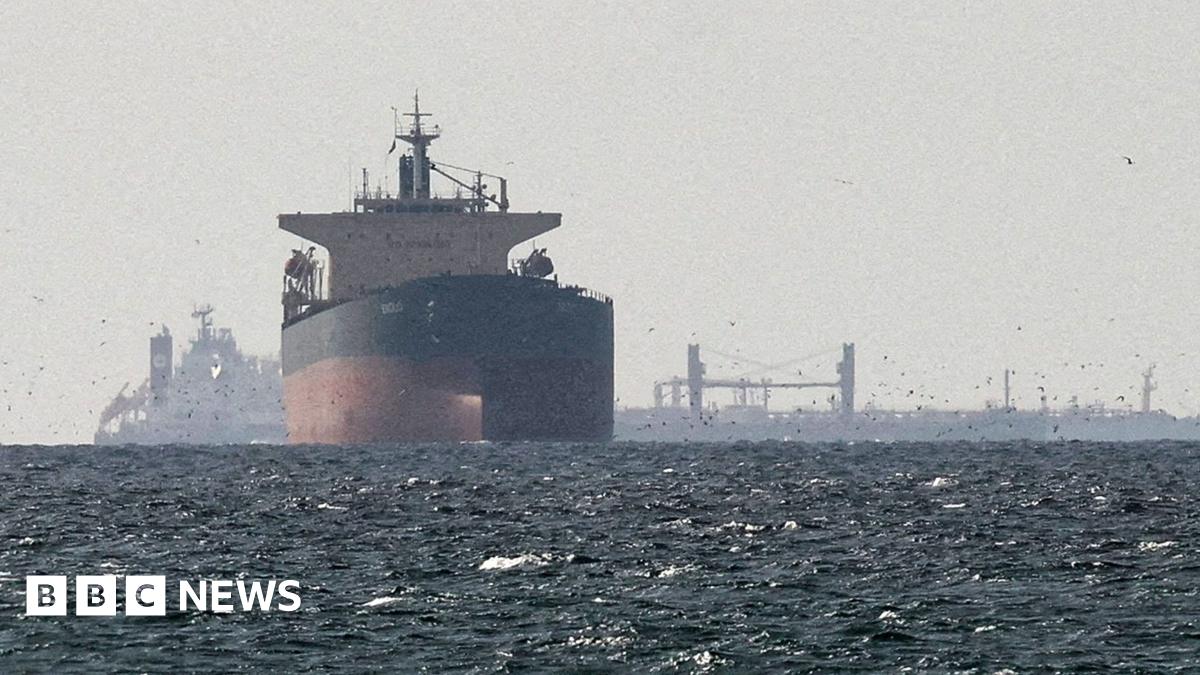
The Strait of Hormuz is the world’s most critical oil chokepoint, with approximately one-fifth of the global petroleum supply passing through the narrow waterway. Because of its economic importance, any official statement regarding its status is viewed by global markets and foreign navies as a primary indicator of Iran’s strategic intent. Under international law, including the transit passage regime reflected in the [United Nations Convention on the Law of the Sea](https://www.un.org/depts/los/convention_agreements/texts/unclos/unclos_e.pdf), the strait also carries legal significance for freedom of navigation, even though Iran and some neighboring states contest aspects of that framework in practice.
While Araghchi’s post was aimed at an international audience to signal compliance and stability, it was viewed by domestic hardliners as a sign of weakness or a failure in communication strategy. The message was also interpreted as an informal policy signal rather than a formal directive, exposing the gap between real-time social media diplomacy and Iran’s opaque internal decision-making channels.
Internal Fractures and IRGC Backlash
The reaction from IRGC-affiliated media was immediate and severe, focusing on the perceived lack of conditions attached to the announcement and the risk that it could be read as an unconditional concession to Western military pressure.
Tasnim News Agency, which maintains close ties to the IRGC, characterized the post as “bad and incomplete.” The agency argued that the declaration of open passage would be considered “void” should the United States continue its naval blockade of Iranian interests.
Tasnim further urged that “the Foreign Ministry itself should reconsider this kind of communication,” suggesting that the diplomatic wing of the government is overstepping or failing to coordinate with the military security apparatus and with decision-making bodies such as the Supreme National Security Council, which formally oversees major security and regional policy.
Other hardline outlets focused on the perception of the announcement in the context of U.S. domestic politics:
- Student News Network (SNN): Linked to the Basij Student Organisation, the network demanded “clarification” from authorities to ensure that the “interpretation” of Donald Trump’s “victory” regarding the matter is “challenged and dismantled,” warning that any impression of U.S. triumph could weaken deterrence.
- Fars News Agency: Also affiliated with the IRGC, Fars argued that “short, pithy statements” on X are “not suitable” for persuading the “domestic public opinion” of Iranians and risk ceding the information space to foreign media.
Fars further claimed that Iranians “call on the authorities not to allow the enemy’s narrative and hostile media to fill the narrative vacuum,” effectively accusing the Foreign Ministry of creating that vacuum with an under-explained message.
The Strategic Divide
The dispute reflects a deeper institutional struggle within the Islamic Republic. The Foreign Ministry typically operates as the pragmatic face of the state, utilizing diplomatic channels and international platforms to mitigate sanctions, manage energy exports, and prevent direct military conflict. In contrast, the IRGC views the Strait of Hormuz as a primary lever of deterrence, routinely invoking the threat of disruption or closure to pressure Western powers and regional rivals.
By announcing the strait was “completely open” in English, Araghchi sought to leverage the Lebanon ceasefire to project an image of Iranian responsibility to the global community and to signal predictability to commercial shippers and insurers whose risk assessments shape the cost of regional trade. However, the IRGC-linked outlets viewed this as a premature surrender of a strategic asset without receiving a reciprocal guarantee from Washington or an explicitly framed linkage to Iran’s own red lines.
The focus of state television further illustrated this divide; while the broadcaster mentioned the “coordinated routes” for shipping, it largely omitted Araghchi’s explicit statement that the passage was “completely open,” effectively narrowing the scope of his message for the domestic audience.
The clash is unfolding against the backdrop of long-running debates over who ultimately controls Iran’s regional posture: uniformed commanders and IRGC economic interests tied to the security of the Gulf, or diplomats attempting to manage sanctions relief and avoid escalation. It also raises questions about how policy on critical waterways is communicated-through formal channels such as maritime notices and government gazettes, or through rapid-fire social media posts that can be walked back or contradicted.
The conflict underscores the difficulty the Iranian government faces in maintaining a unified narrative when communicating simultaneously to a global audience that prioritizes freedom of navigation and energy security, and to a domestic base that demands a posture of defiance and leverage over Western powers.
The Iranian Foreign Ministry has not yet issued a formal correction or further clarification regarding the status of the Strait of Hormuz, and no updated guidance has been published by the [Ports and Maritime Organisation of Iran](https://www.pmo.ir/en) to reconcile Araghchi’s statement with the hardline pushback.
Keep reading
- Global Food Security Alliances: How Climate-Resilient Agricultural Corridors Are Stabilizing Wheat and Rice Supplies
- Cross-Border Renewable Energy Grids: North Sea and Mediterranean Subsea Cable Networks Enter Phase Two
- Two Iranian nationals charged with terror plot targeting Manchester Jewish community (globallypulse.com)
